History
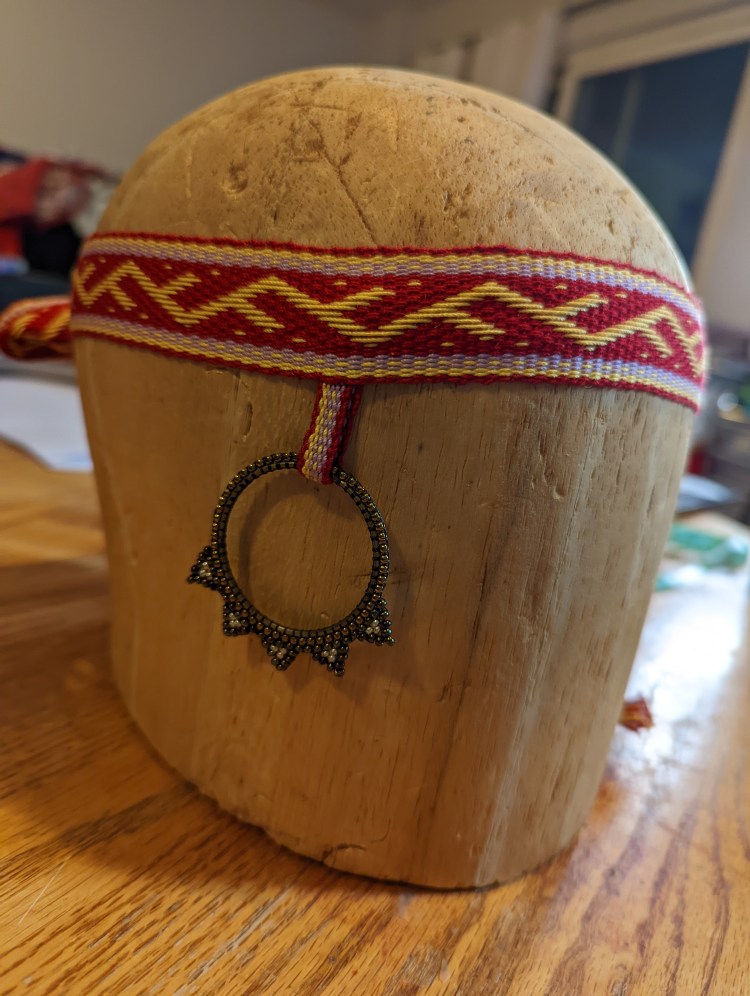
Baltic Weaving or Pick-up style is generally referred to as Northern Europe, Baltic region, Eastern Europe, and Ural mountains region types of bands/cloths with geometric patterns, where for the pattern, there were thicker threads used than for the base.
According to the research of fellow weavers, belts and trims completed in the same technique were found in South America, Chili.
Methodology
This method can be performed on an inkle loom, heddle, vertical or horizontal loom, you call it. I do it on an inkle loom or with the heddle if it lets me keep threads tight to present the design without damaging the quality of the weaving.
If you tried simple pattern weaving, you are already familiar with the terminology, but for those who are new to this or not as familiar with it, here is a quick rundown:
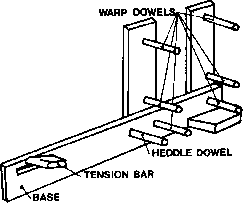
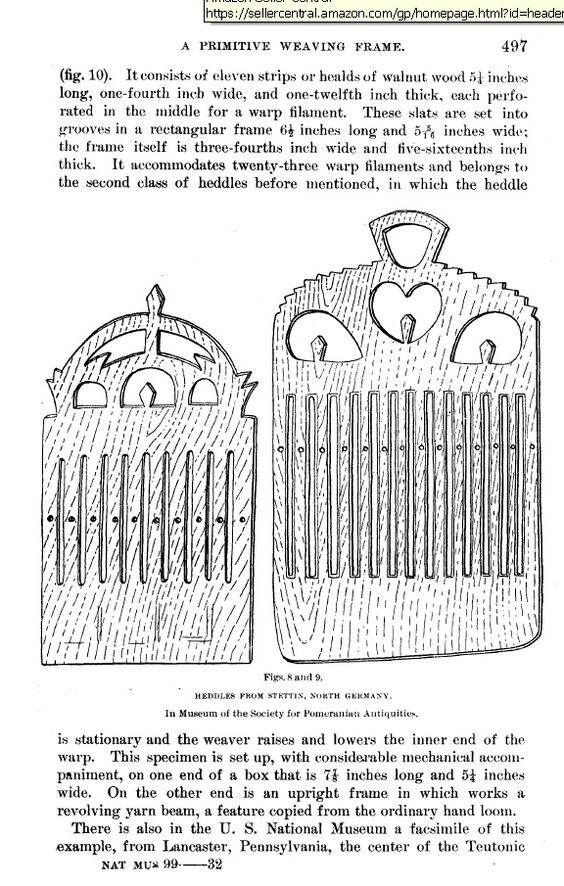
Heddle (either wooden or strings)
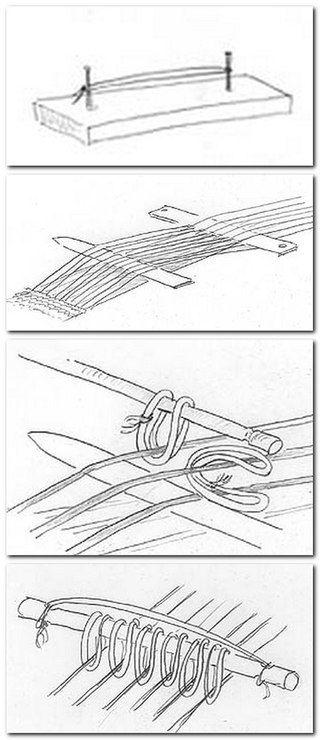
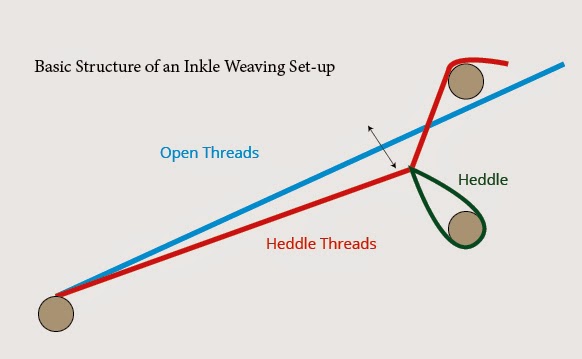
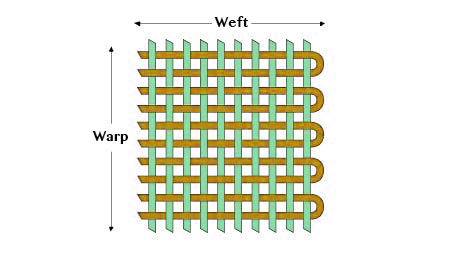
Wrap (Heddled) and Wrap (open)
Weft
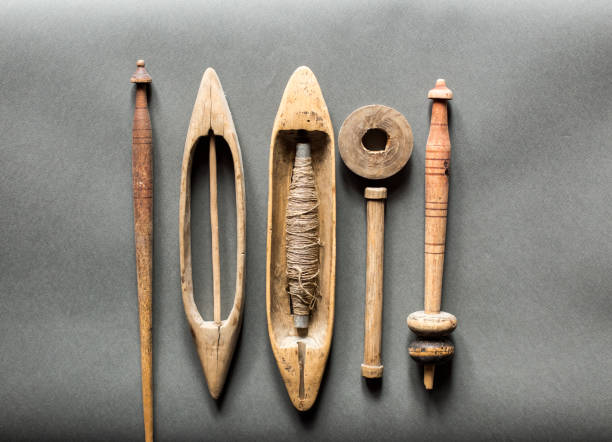
Shuttle
Pattern
Baltic weaving pattern usually looks like a pixel model of a design. I LOVE creating those designs because it is math, and I love math. It is so straightforward, and after a couple of runs, I do not need to look at the pattern; I make simple arithmetic in my head.
Where was I? The schemas have two or more colors. One is the base, and one is the pattern itself.
If you create one pattern, try not to leave more than five “empty” cells or five “full” cells. Also, try your best to make your designs in odd numbers. What I mean by that is when you count design or base patterns’ length or width, it should be an odd number, not even.
Material selection
Select appropriate natural threads before you think of setting up your loom. Threads should hold good tension, should be smooth, and preferably don’t get fluffy in the process. Do not use acrylic. You will hate yourself so learn from my mistakes.
Preferably, your “pattern” threads should be twice as thick as your base ones. But I love to play around, and sometimes I use the same thickness, and it comes out just as beautiful.
Loom set up
Setting up your loom will be the same as the inkle looms except for one thing. In the Celtic knot pattern, you will see 13 counts of threads – white and blue at the same time. For each blue thread, you will have to set up 1 other white thread on the side. Thus, when you set up the loom, you have 1 blue thread after 2 white ones. Otherwise, it goes simple, one wrap open – one heddled. For borders, I use either some inkle patterns or simple Baltic patterns.
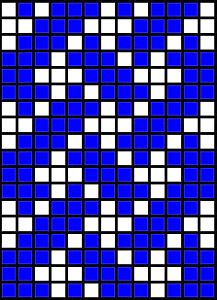
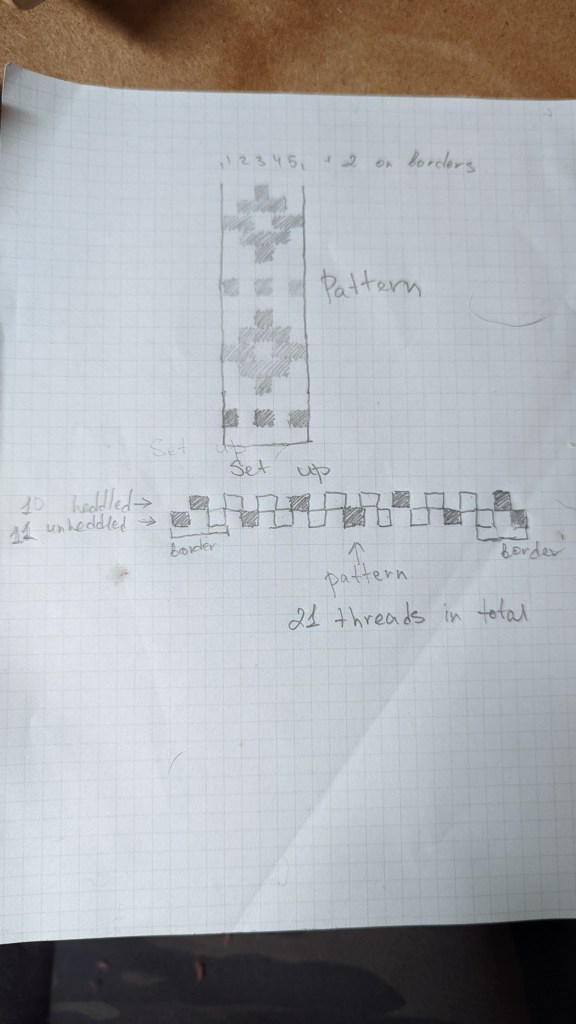
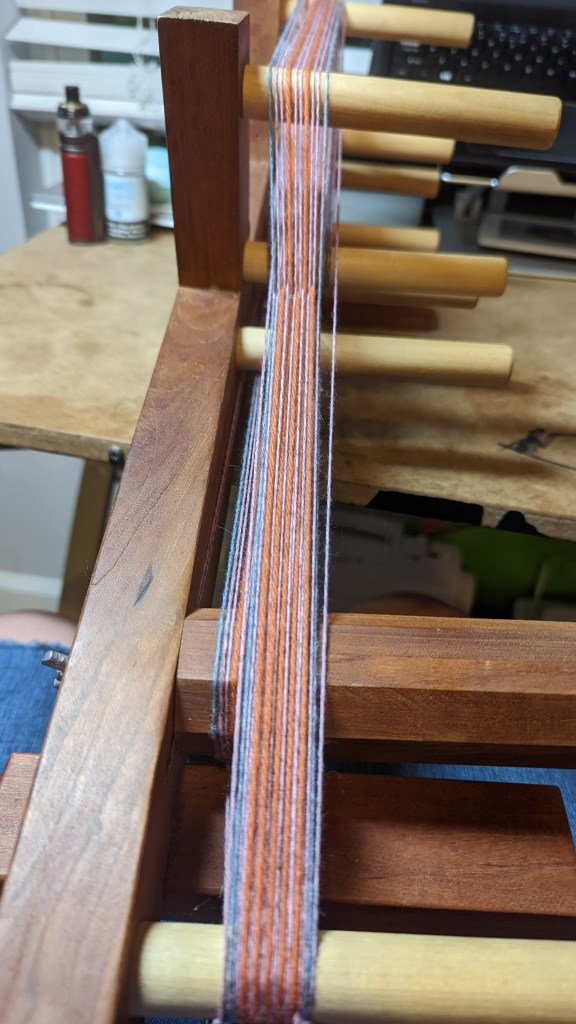
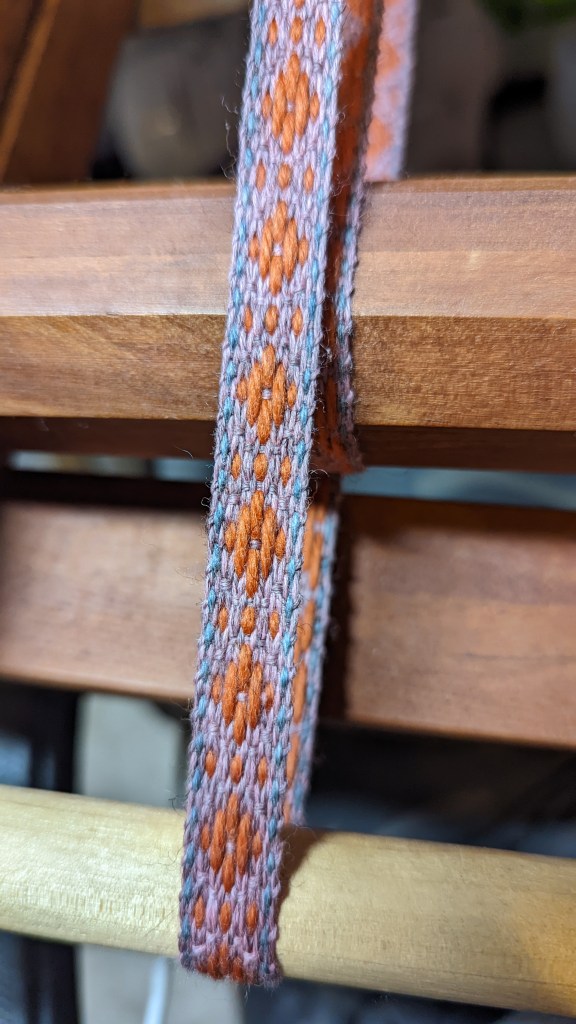
Yet another example with a better setup representation. The pattern is a simple diamond. The whole pattern is 5 threads; however, after the total setup, it ended up being 21 threads altogether.