
Last year, I took upon myself a task, a challenge, you may say, to make three necklaces from the pre-Tudor and Tudor time period. All three had different skills, materials, and techniques I planned to use. I discussed the ideas with the customer and got to work. It took about 6 months from the beginning until I finished it. It was a trial-and-error process, so I learned a lot.
This post is a journey description that may help you avoid my mistakes, but it does not mean you won’t make your own.
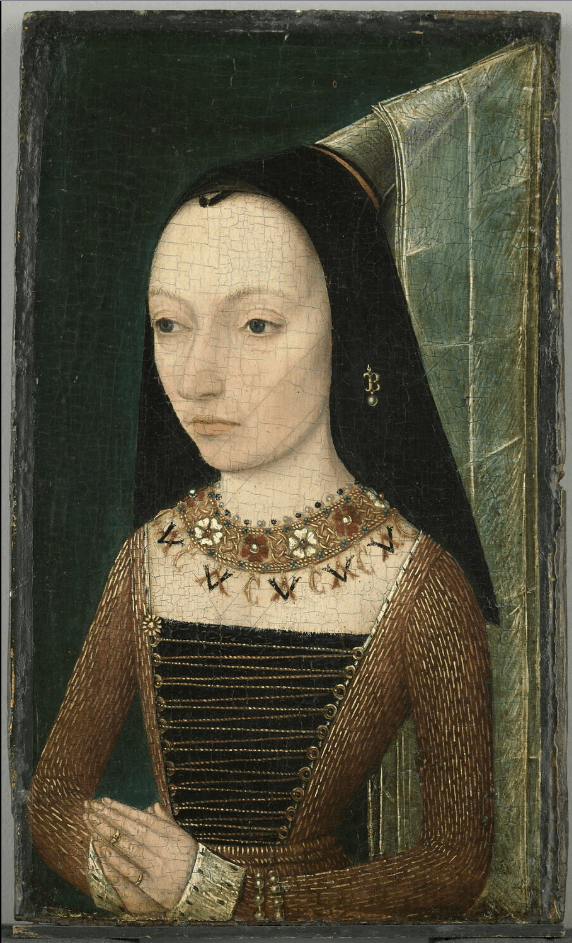
Portrait of the young girl

Have you ever had a project you looked at and said to yourself, “Oh, it will be super easy”, and then it turned out to be the most brain-breaking disaster? This is one of them.
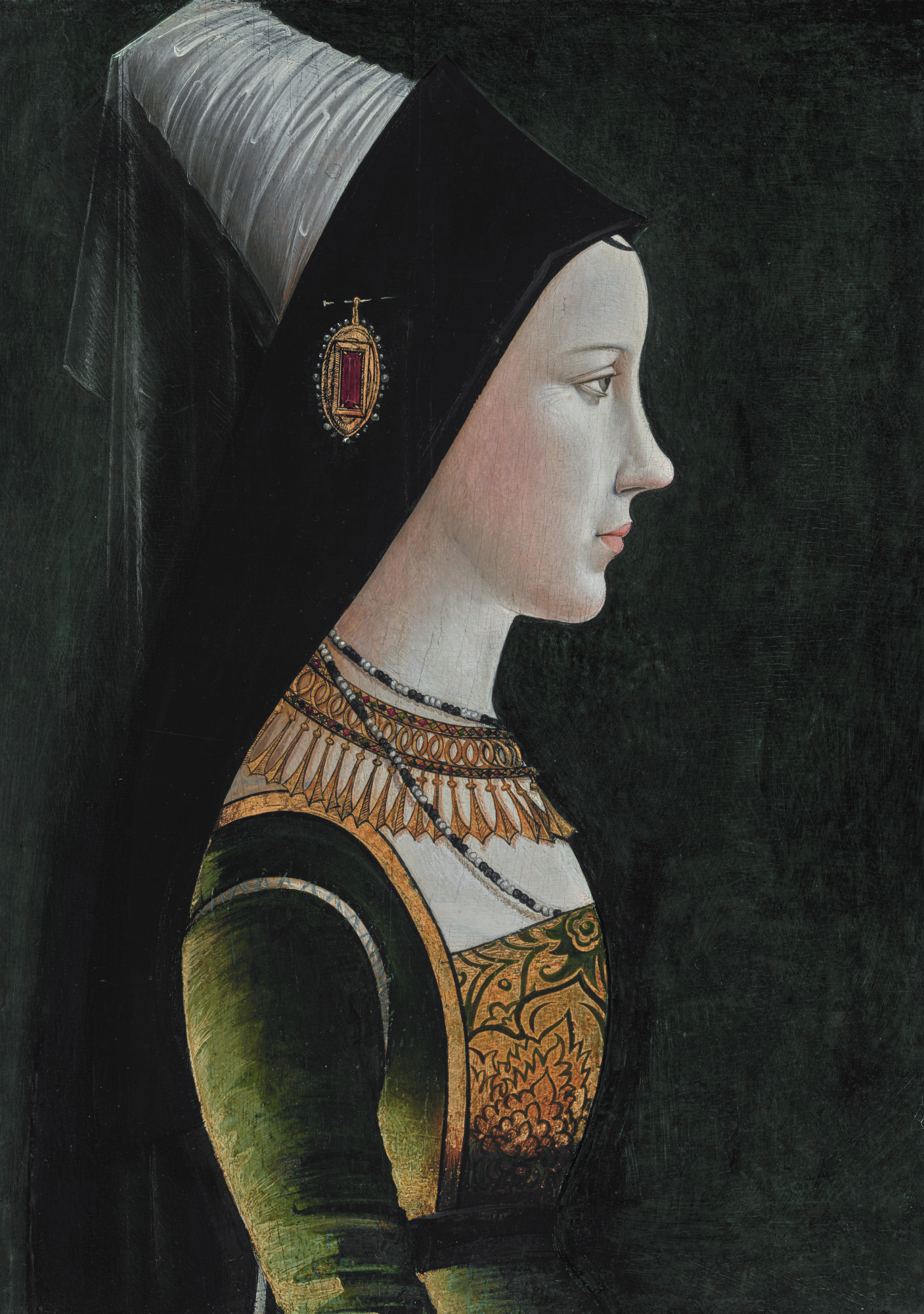
I examined the portrait as closely as possible and drafted the exact schema of the necklace and the pattern.
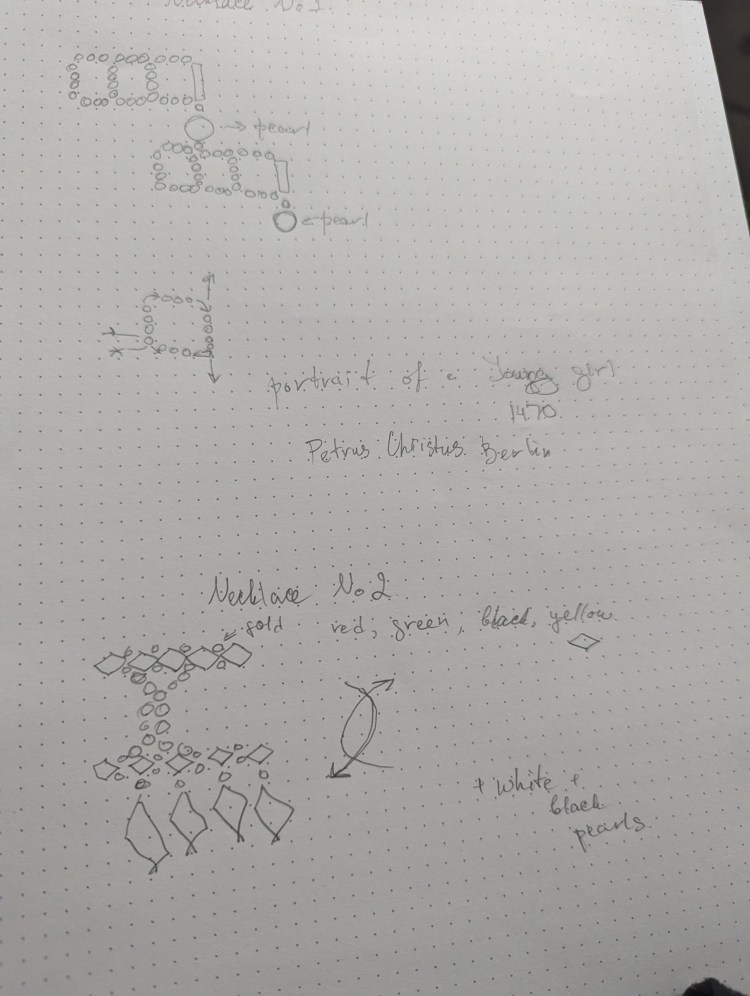
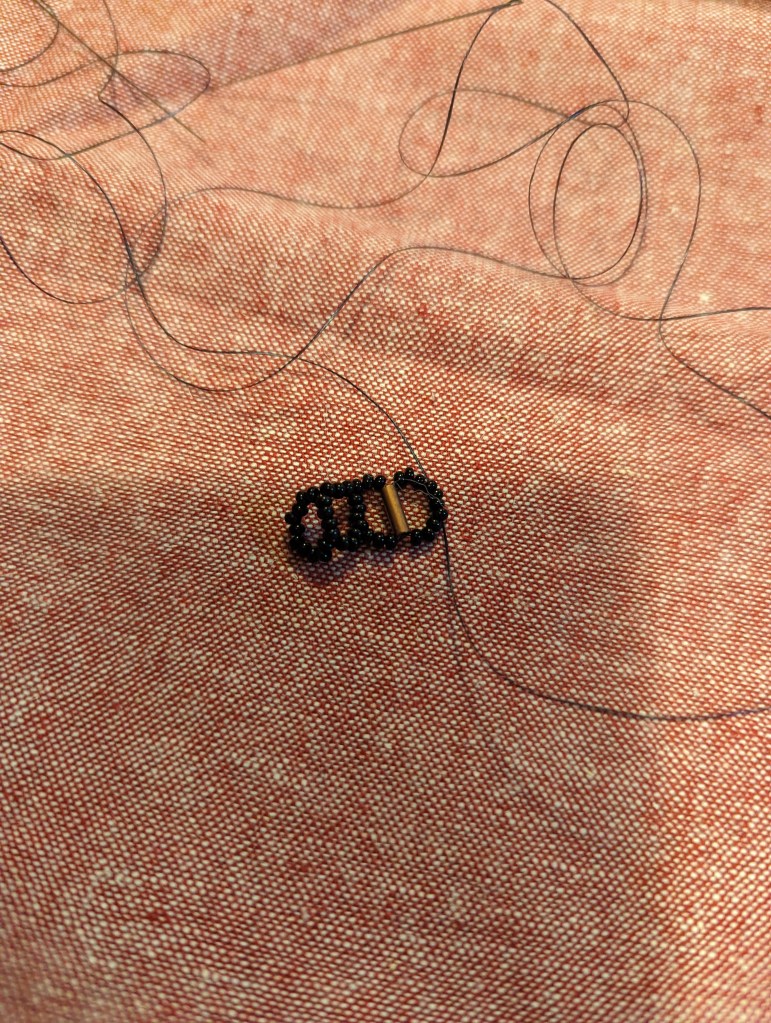
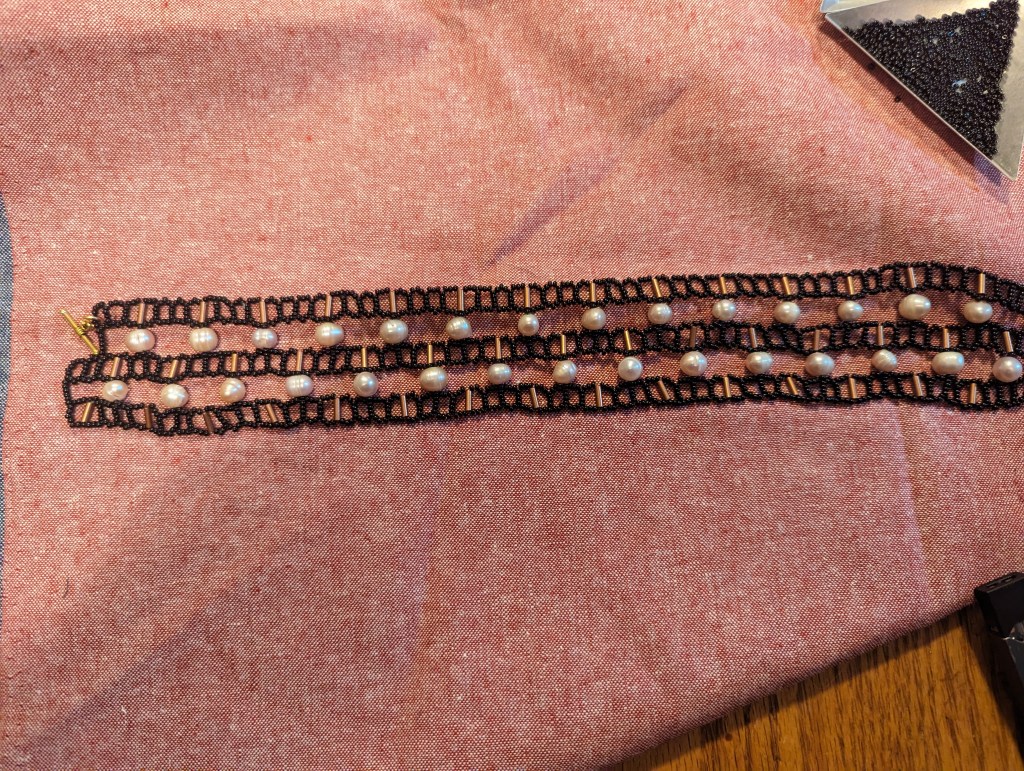
However, when I finished and put the necklace on the mannequin, it did not lie like it was in the portrait. As a matter of fact, it did not lie at all. I could not figure out what went wrong until a couple of days later, it came to me. The girl in the portrait has anatomically incorrect shoulders and neck. She has NO shoulders. Back in the time period, the long neck and small shoulders were considered to be the beauty standard judging by the portraits, but I had a task to create a necklace for a real woman with real existing shoulders.
I have remade the pattern three times, trying to figure out which way it will lay best. The problem is, in this particular style, you cannot see if the necklace will lay or not until all three rows are made in a decent length.
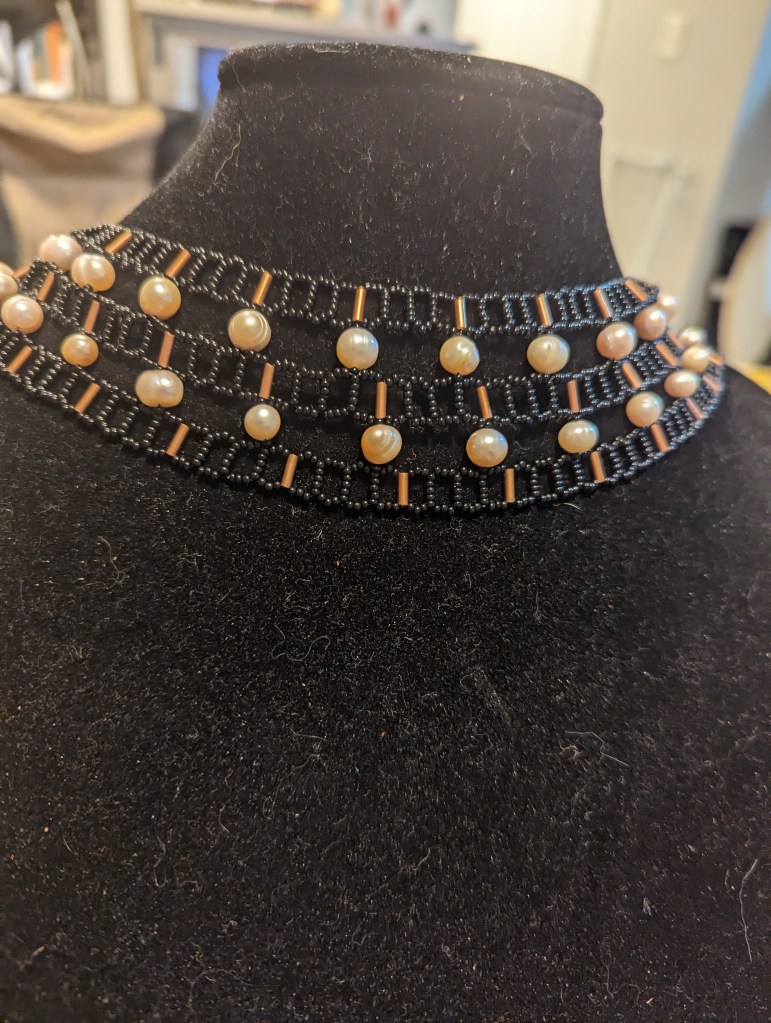
Four attempts later, I made it happen, but I won’t tell you how many times I cursed and walked away from it.
Despite all the heartache, this is the most period necklace I have made from these three.
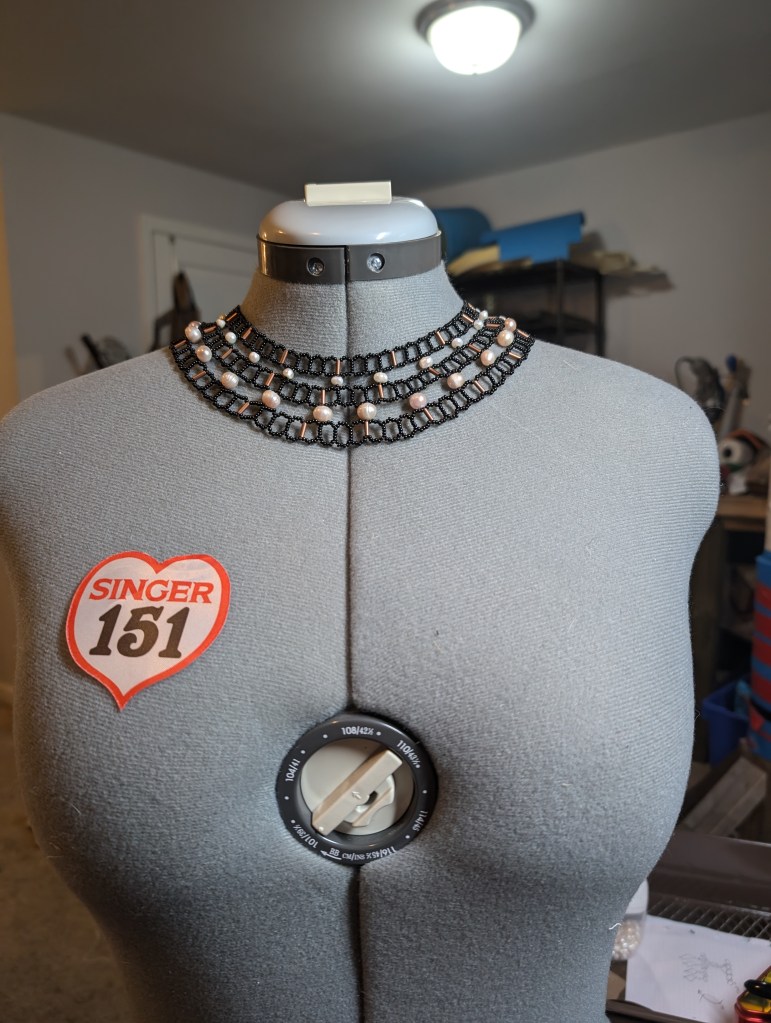
Materials used were glass beads (black, size 11/0 and 15/0) and steelarius tubes with bronze covers, saltwater pearls, silk thread, and gold accessories.
Brooch and golden necklace
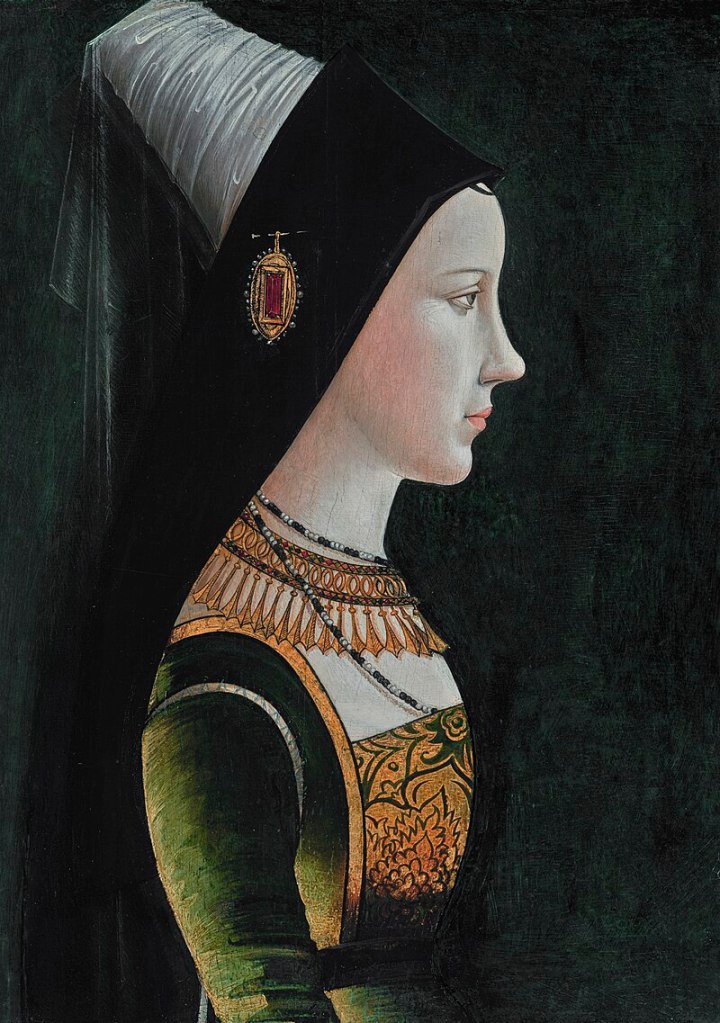
Mary of Burgundy
52 languages
Add topic
1 ⁄ 41

Mary of Burgundy (1458–1482), oil on oak panel. Possibly by Michael Pacher – Sotheby’s
Oh, this brought me true joy because I actually had to use my degree with my hands, not my brain. I am an engineer, but since I build software and software systems, I essentially build sand castles in the sky. This is my engineering solution, my creation, that you can actually touch.
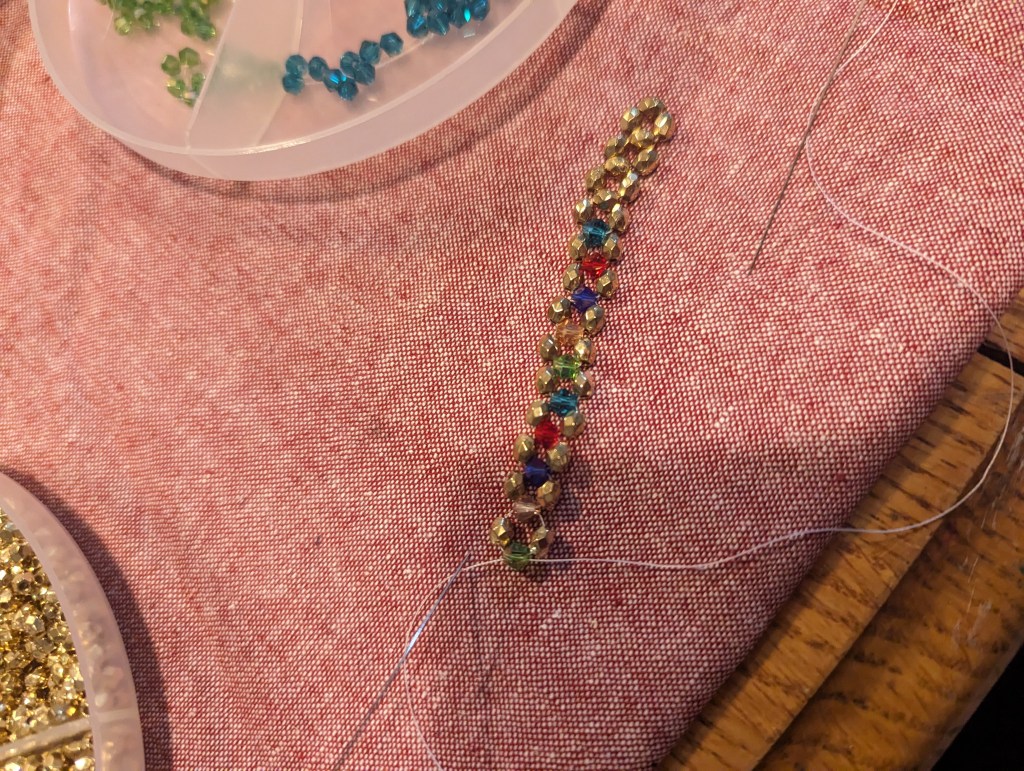
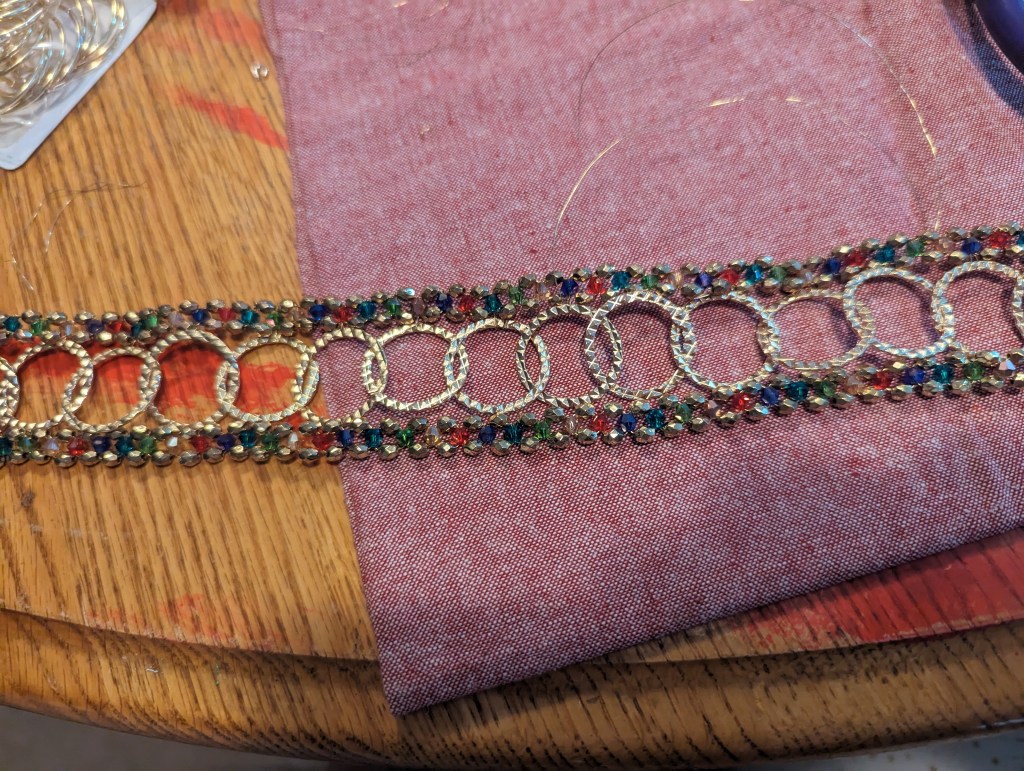
From the start, I had a pretty clear idea: many metal rings connected to each other and two woven rows of metal and glass beads, with the gold pendents at the bottom. I realized I cannot use the thread because it will not hold this monstrosity, no matter how many layers (ok, I didn’t know, I tried though). So, instead, I experimented with different gold wires and found the one that was thin enough to bend as I wished, but strong enough to hold all this weight.
First, I made two rows using simple monastery stitch. The rings were gold connectors I cut on one side and connected between each other like a chain. After all were connected as I wanted, I ran a golden pin through each colored bead of the bottom row and connected the golden pendant.
Every step was carefully calculated and measured with the help of my Brunhilda. She was my rock throughout the whole adventure.

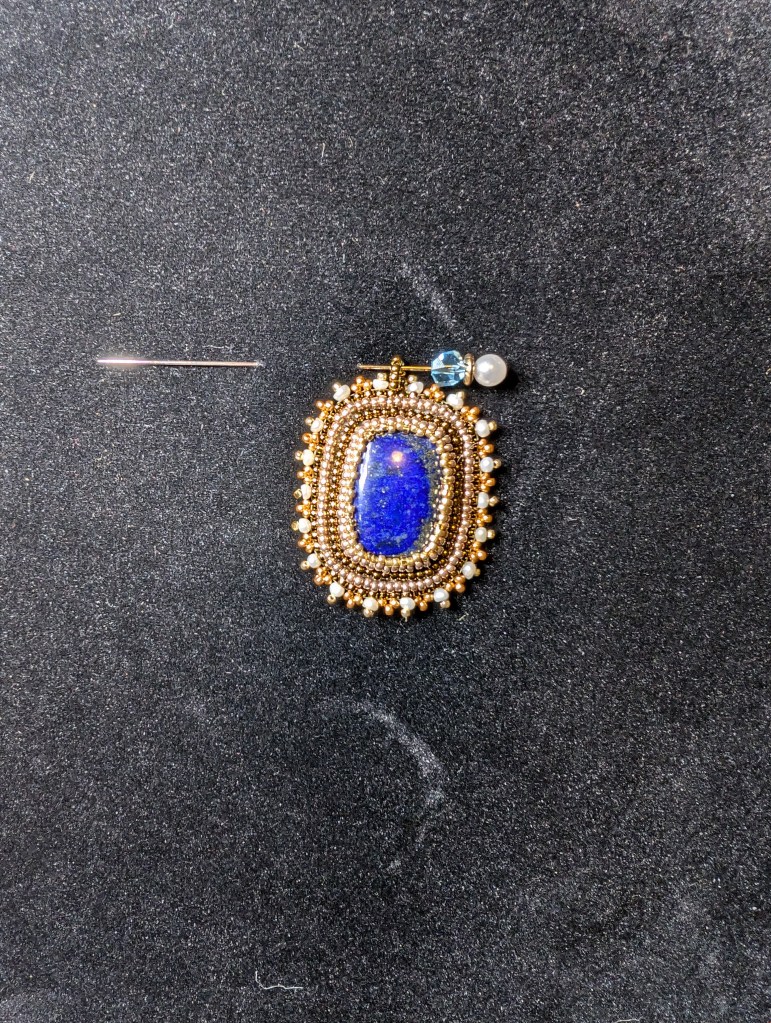
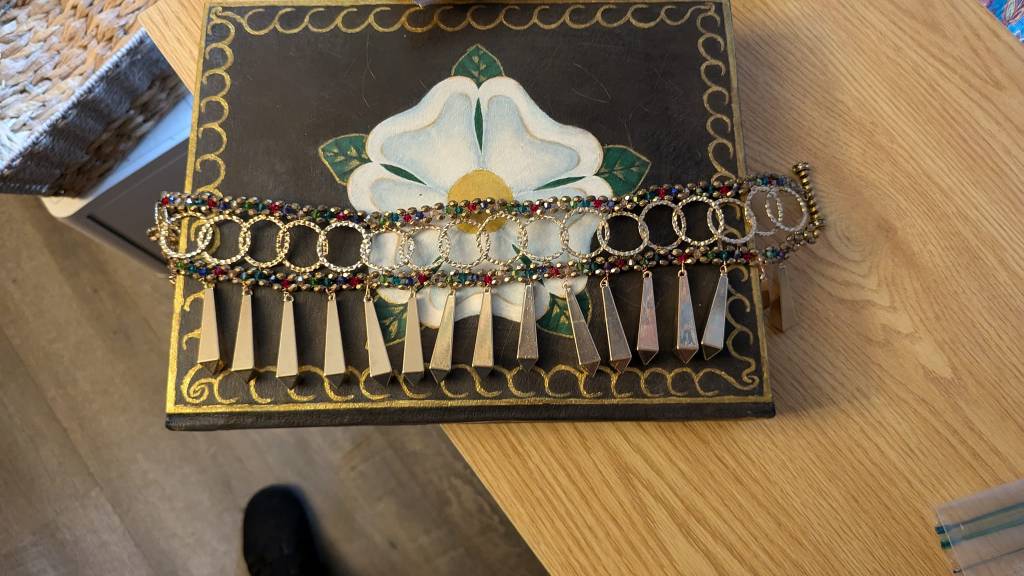
The broch was the usual. I made another post on production, so if interested, click here (LINK)
Marguerite’s necklace
This one I had to improvise with. I had a slight idea of what I wanted to make, but I have 0 sketching skills. So I called up my student and a friend, Lady Zofia, and she graciously agreed to make me a base which I will use for embroidery.
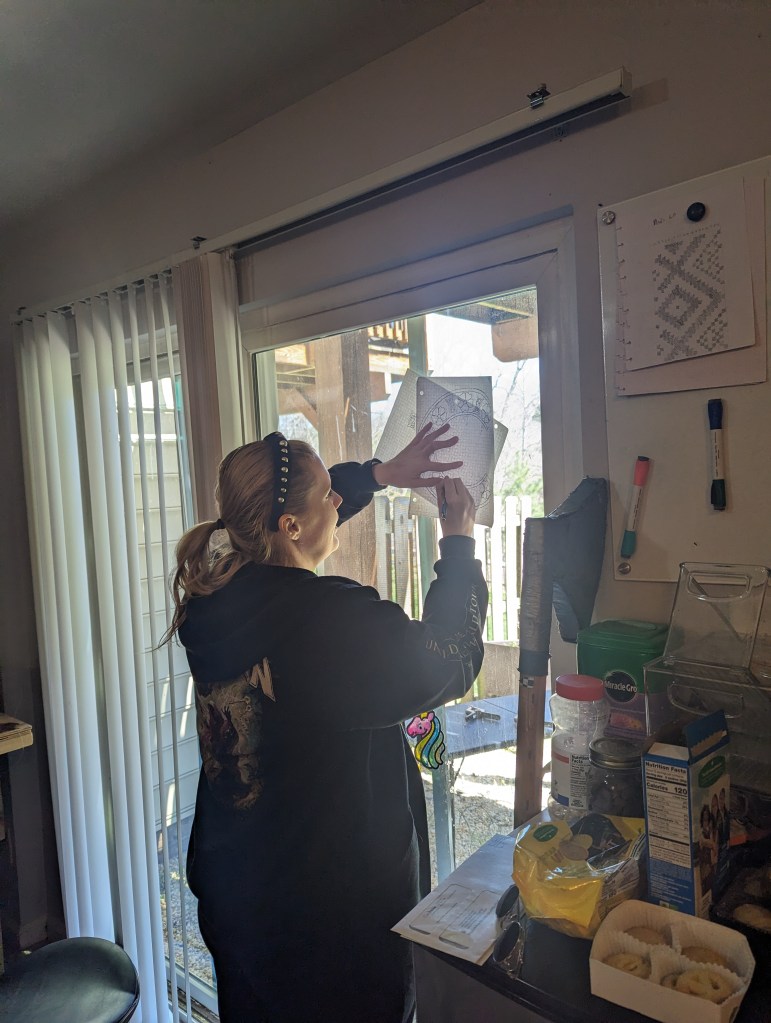
One slight problem was ahead of me. As I learned here, silk and sticky paper do not work well together. Instead, I tried this: I stitched the outline with a constant thread, then removed the paper, and went from there.
Firstly, I did the bottom and top outline, imitating the design and what is called the Ndebele technique in the beading world (more about this one—link).
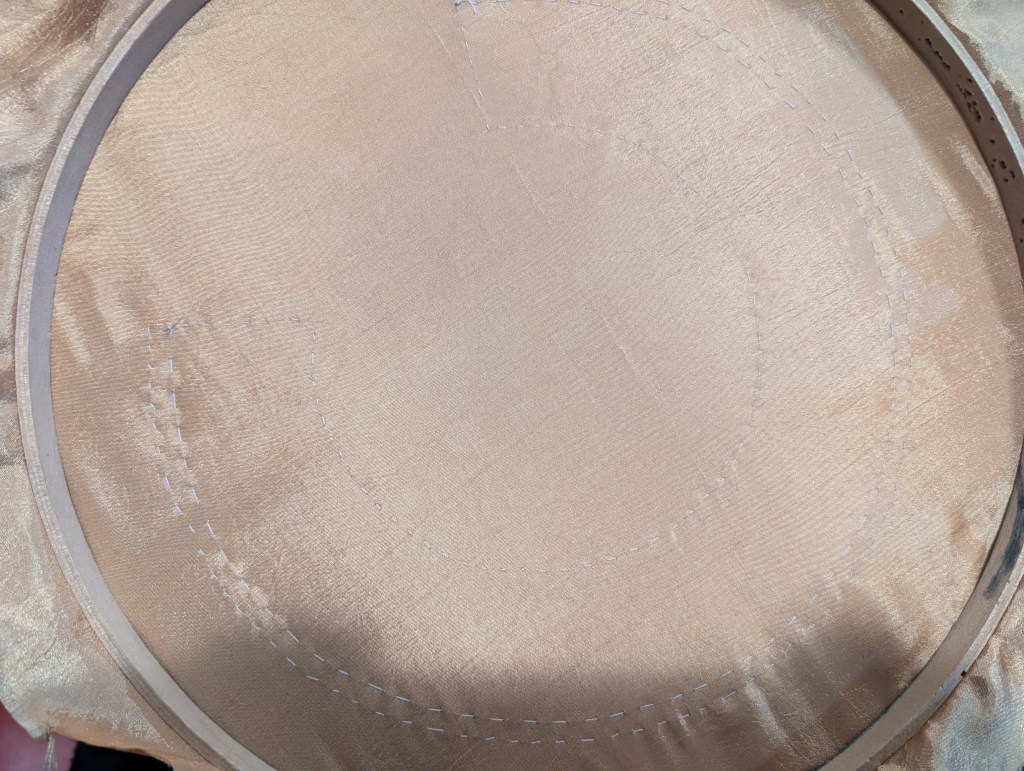
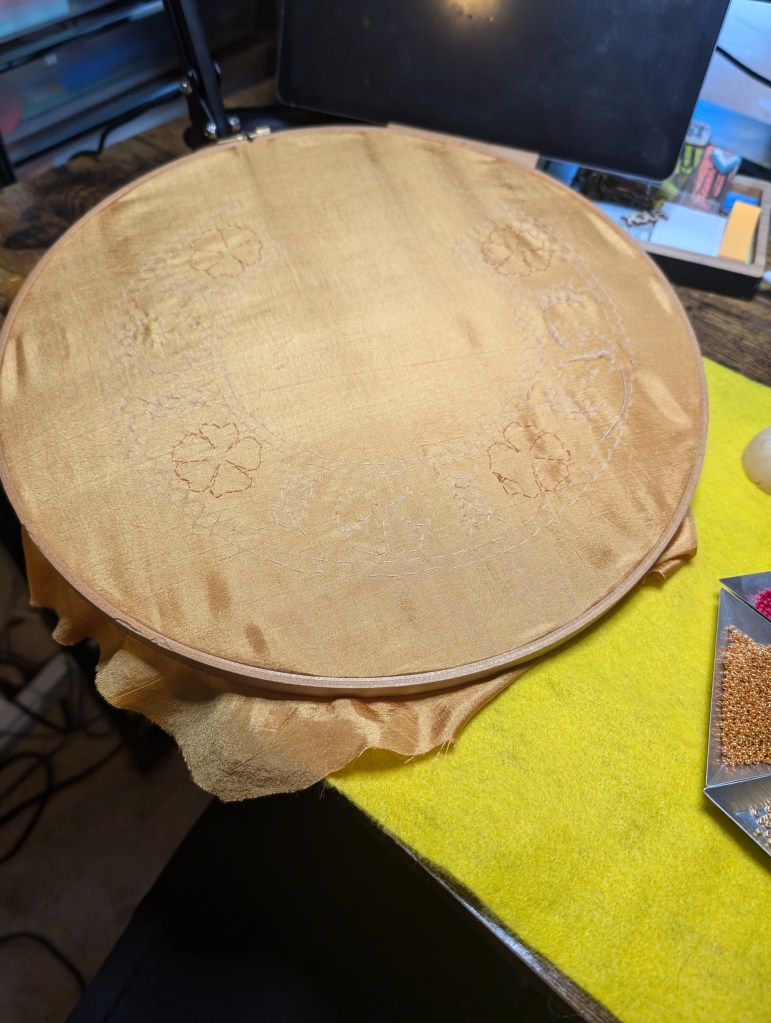
Then, I embroidered each rose, filling them from the borders inside. This was the moment I decided to learn tambour embroidery (more about this journey later).
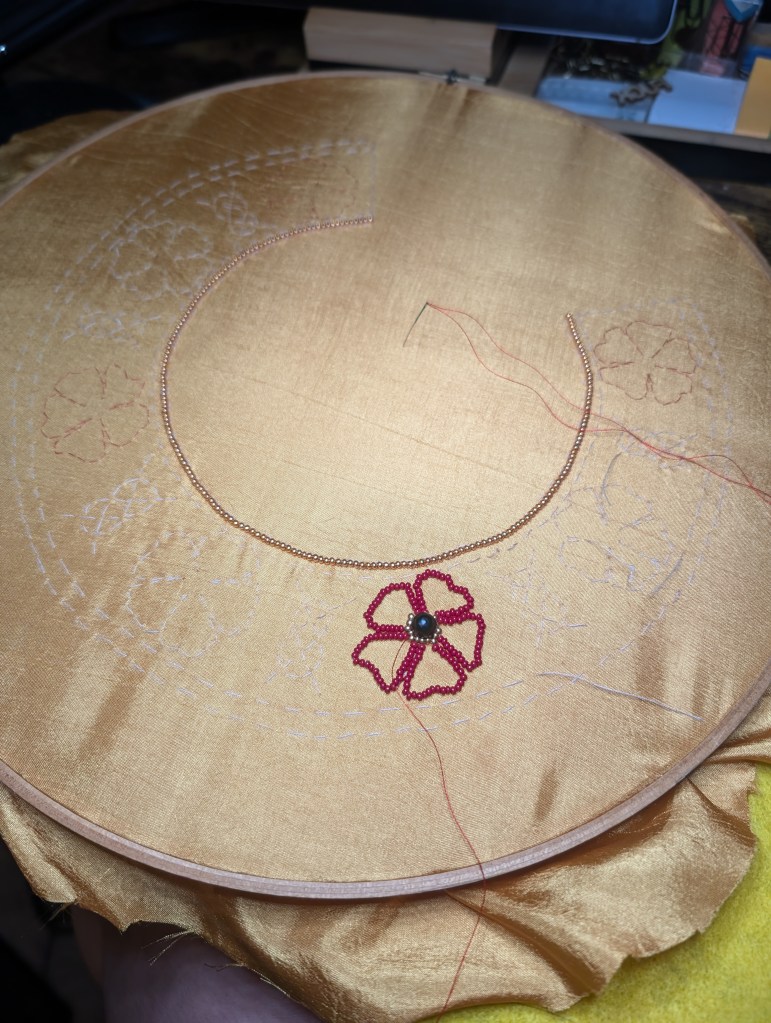
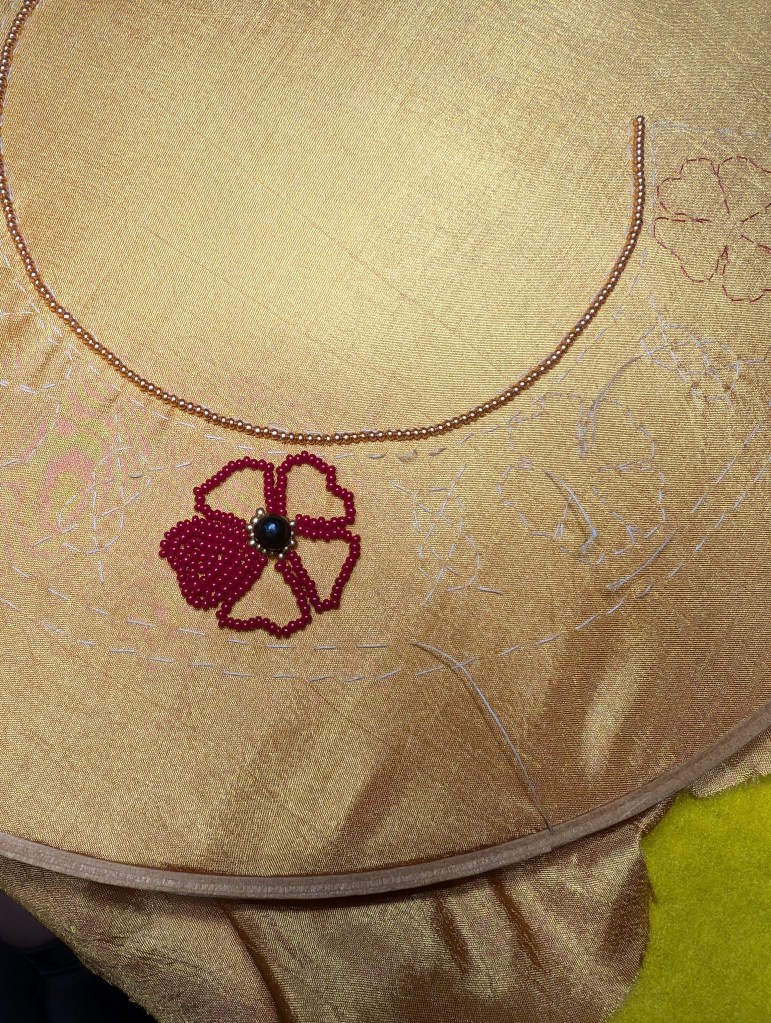
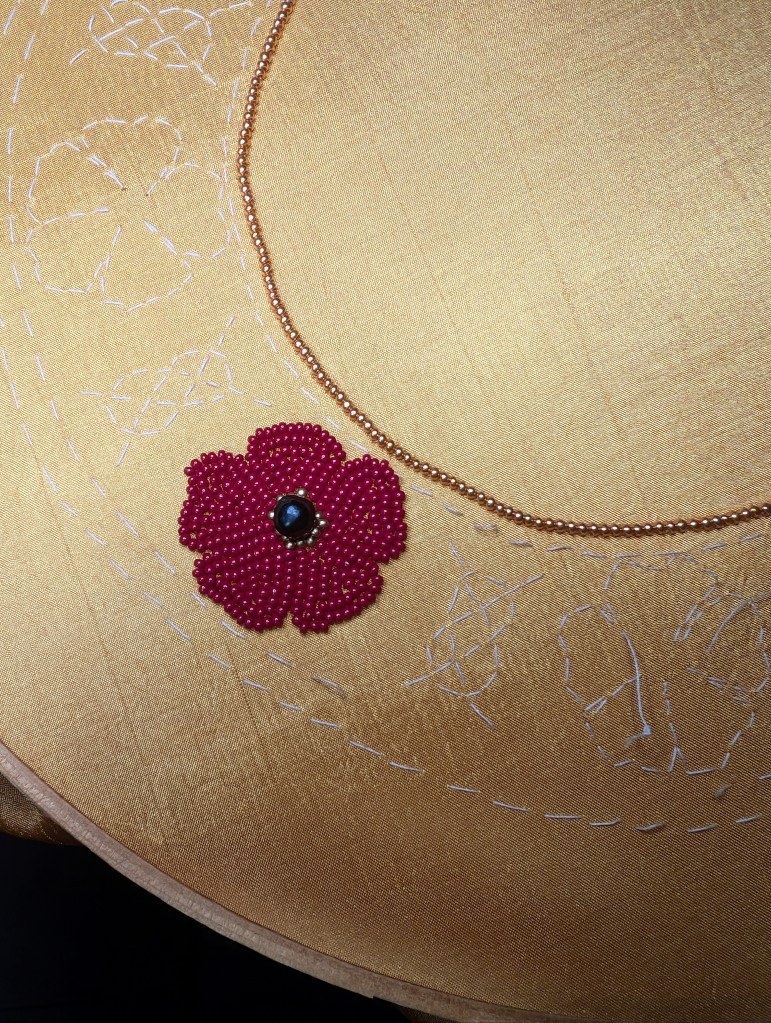
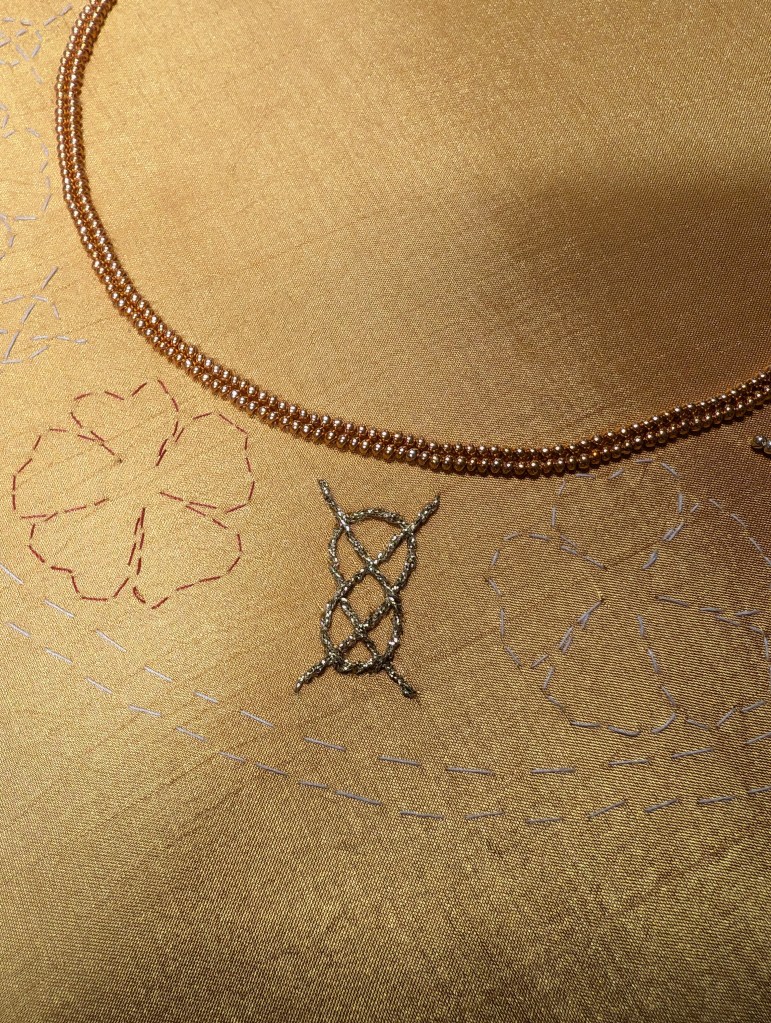
The Tudor knots were made using the golden thread and good old stem stitch.
Once completed, I stitched two pieces of silk together to make a “case” and put a piece of leather inside so the necklace would hold its form. All of this was done with silk thread, on silk, so there was a lot of remaking there as well.
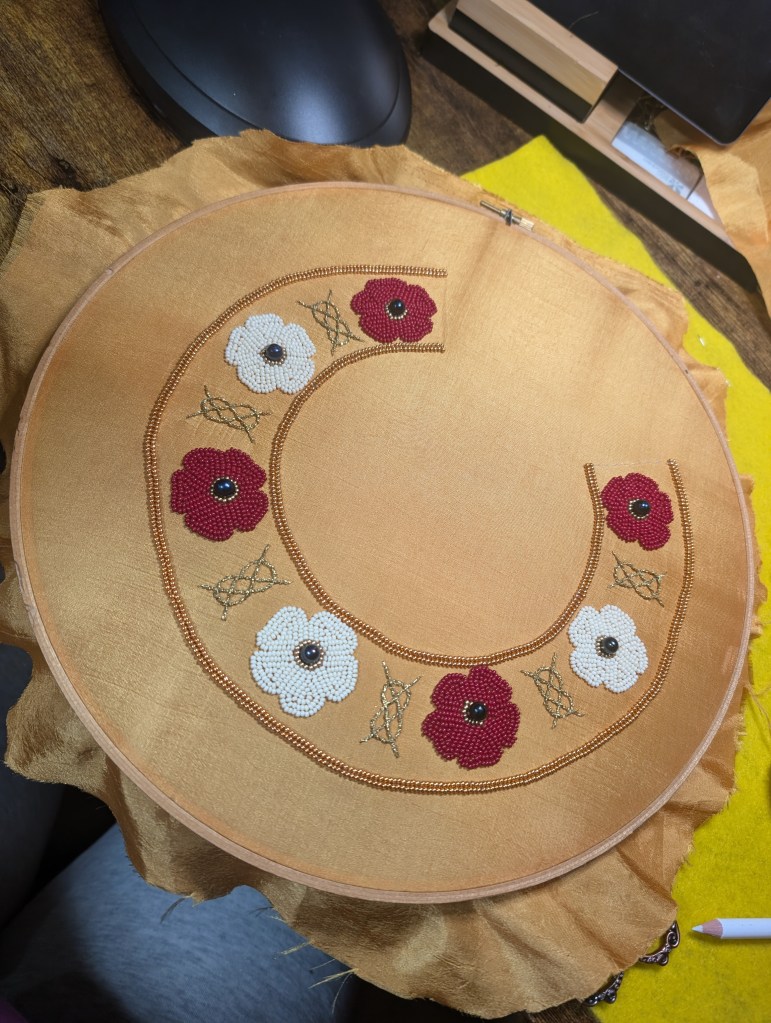
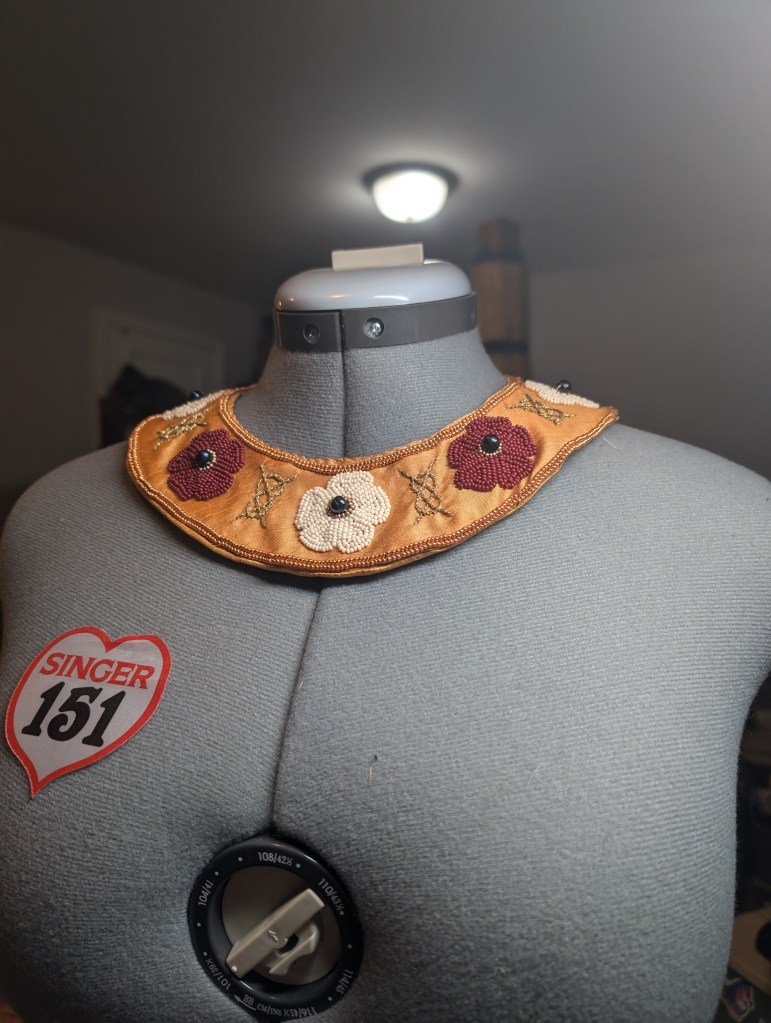
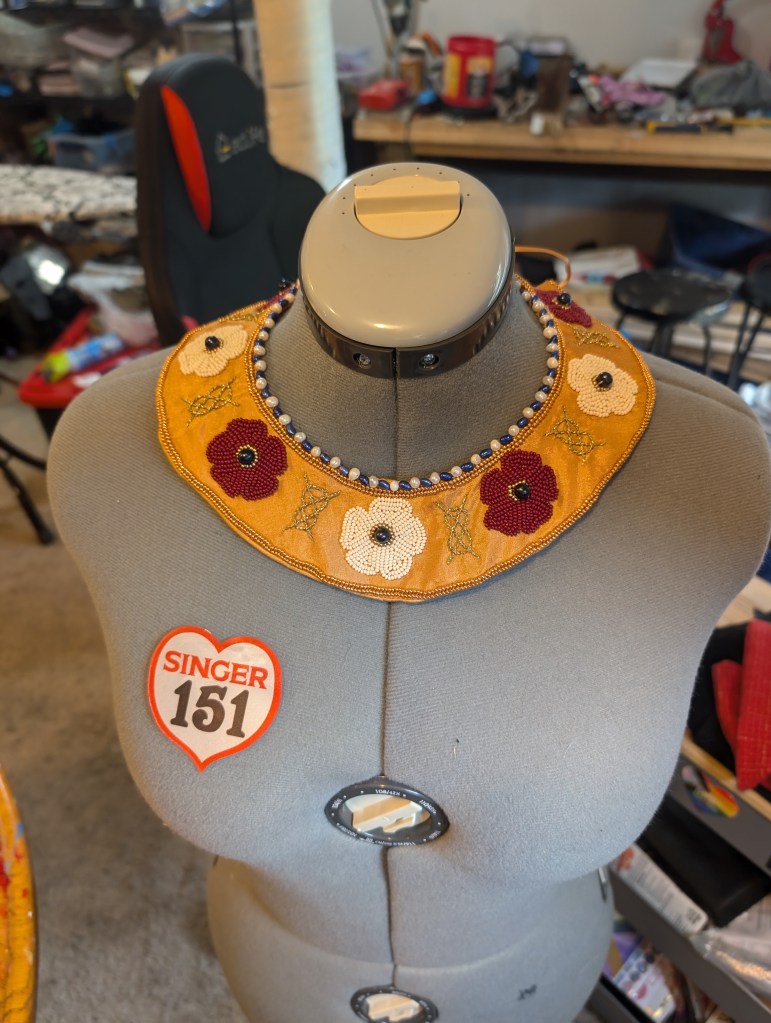
Obviously, this is not how the original piece was made—not even close—but it was not the idea. The idea was to make a wearable replica with skills available and check how close I could get to the original.
The pendants were removed from the equation due to time restraints and weight. I was trying to make it light.
 Phoenix Safe Place
,_by_Netherlandish_or_South_German_School_of_the_late_15th_Century.jpg)