

Buckwheat with mushrooms and onions.
Buckwheat is one of the most popular Wheats available in the European part of Eurasia. However, the Fagopýrum (Latin name for the plant) was probably domesticated in southwest China and then was adopted by northern tribes and was carried to the western land over 3000 years ago, before Slavs settled between Dunay and Ural Mountains.
Archeology and visual anthropology analysis.
The first culinary book in Eastern Slav culture was Domostroy (the direct translation of house built) by Sylvester, the confessor of Ivan IV. The book included the recipes and the rules on how to run the house, how the man shall treat his wife and children, etc. Overall, this book was the alma mater of patriarchates and Orthodox church ruling.
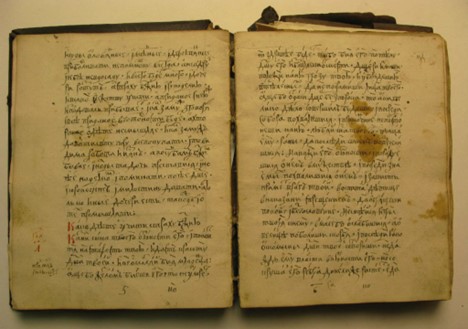
Domostroy, XVII century. Moscow
However, the official dormitory was not the first one. There is evidence of many small “Domostroys” that literate people created to pass knowledge to their kids on how to keep the livestock alive, raise and harvest food, and cook it.
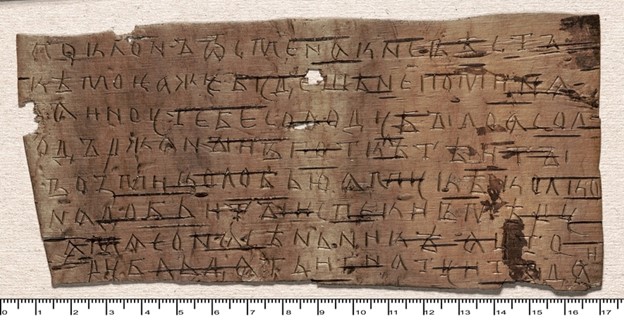
Birch bark No.363, where it is described how the daughter-in-law is trying to cook a pie XIV century (Alpatov).
Based on the currently discovered information, primary food sources for Slavs were wheat, fruits (mainly apples) during the season, and primarily vegetables like cabbage, carrots, onion, and beets. In addition, town citizens harvested the forests rich with mushrooms, nuts, and berries.
Grains would be collected at the end of the harvest season and worked in the mortar to make the wheat. For example, mortars found in the Vitebsk area related to the XI-XIII century (Koledinskiy, 1991). Mainly, wheat would be used to make meals and soups. Most grains were oats, barley, peas, lentils, and buckwheat.
Spices were unavailable in many variations to the Slavic tribes and would be used carefully. Salt also was available to Slavs from plenty of water sources around them. Salt would be used to preserve food during long winter seasons and in addition to food in smaller amounts than we used to.
Butter is an excellent source of fats; resources mention the 2 pots as a paid transaction.
The meal would be made in the oven, where the grain would be cooked in the clay pot or above the fire in the iron pot on chains. Both ways, the meal will be cooked on the coals, and it would take a long time for the wheat to absorb the water
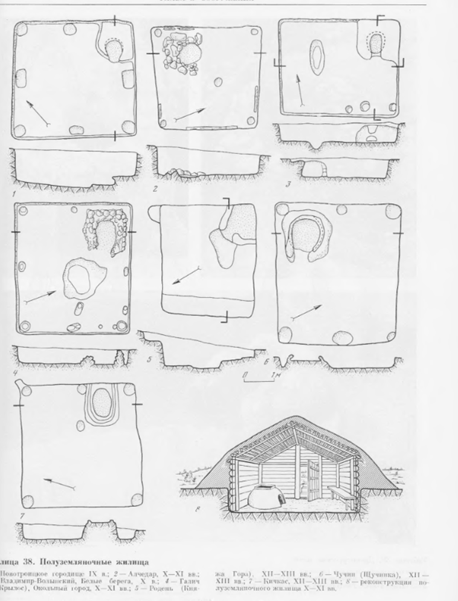
Houses with oven placements inside.

Ovens in the house. X-XI century.
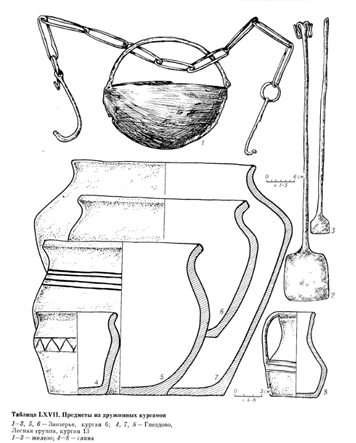
Objects from warriors’ kurgans with cooking gear.
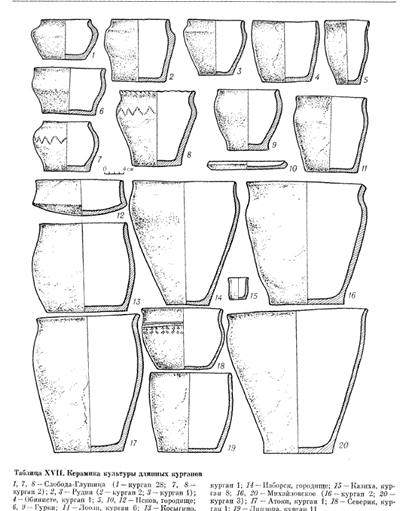
Clay pots. IX-XII century.
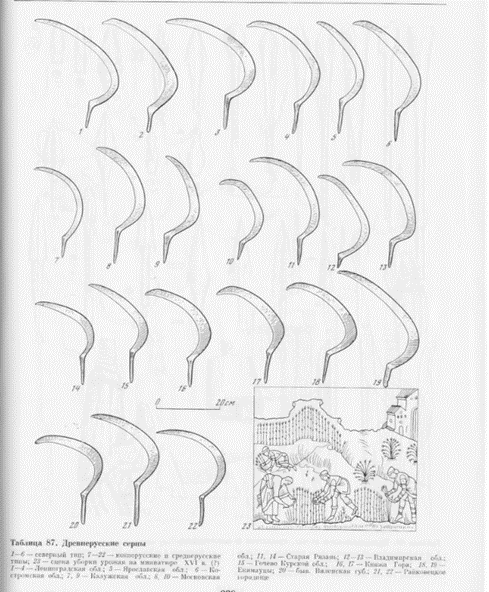
Serpents.
Production.
I have no access to a good oven where I live, so I attempted to recreate a simple and tasty recipe that used all the ingredients available to the town citizens in the X-XII century. I used buckwheat, unsalted butter, mushrooms, and onion with a pinch of salt.
First, I measured wheat and water in proportions 2 to 1. After that, I added salt to the water and wheat and started boiling on a medium fire. The goal is to wait for all water to be absorbed by the wheat and the rest to evaporate.
Meanwhile, I melted butter in the cast iron and sautéed diced mushrooms and onions until golden.
Once the buckwheat was ready, I mixed it well with mushrooms and onions covered in butter from the skillet.
Serve hot or cold.
References
Alpatov, S. V. (n.d.). Birch Barks in the context of folklore and literacy culture. Folklore and Ethnography, 123-128. Retrieved from http://www.drevnyaya.ru/vyp/stat/s4_18_10.pdf
Kochkurkina, S. I., & Orfinskaya, O. B. (2014). Ladoga’s Kurgans culture – Technological textile reasearch. Petrozavodsk: Korelian science center.
Koledinskiy, L. V. (1991). Vitebsk Upper Castle.
Kuzmina, O. V. (n.d.). Women Costumes in XIII cetury. Retrieved from https://slavmoda.com/jenskiy-kostum-xiii-veka/
Lozina-Lozinskya, A. S. (1936). In Flora URSS (pp. 702-704). Kiev: Academy of Sciense USSR .
Nahlik, A. (n.d.). Novgorod Textiles. Research Materials in USSR Archeology, 228-313.
Orfinskaya, M. A. (1997). Ancient Rus. Customs and culture.
Orfinskaya, O. (2020). Old Ladoga Textile during the era of Vikings.
Orfinskaya, O. V., & Engavatova, A. (2009). Medieval textiles from the necropolis of Dmitrov Kremlin, Russia. Archaeological Textiles Newsletters.
Procopius. (VII). History of Wars.
Prohorov, V. (1881). Historical materials about clothes and folk customs. St. Petersburg.
Rybakov, B. A. (1953). After Ancient Cultures: Ancient Rus.
Saburova, M. (1997). Ancient Rus. Customs and culture.
Saburova, M. A. (1997). Ancient Rus costume. Moscow: Science.
Sedov, V. (n.d.). Ancient East Slavic Garb in VI-IX cc.
Sedov, V. V. (1982). Eastern Slavs in Vi-XIII century. Moscow: Science.
Sitdikov, A. G. (2017). The Volga Region Archeology. Tatarstan.
Štih, P. (2010). V. Wiped Out By The Slavic Settlement? The Issue Of Continuity Between Antiquity And The Early Middle Ages In The Slovene Area.
Strekalov, S. (1877). Russian historical Clothes X-XIII century. Saints Petersburg.
Zvelev, N. N. (1996). Flora Europae Orientalis. St. Petersburg, Russia. doi: ISBN 5-90016-28-X
 Phoenix Safe Place