
This blog post is a documentation adaptation of my entries for the Kingdom Arts and Science Festival 2023 persona pentathlon. The series will have 5 blog posts for each item separately.
Paneva.
Paneva is a skirt worn by town citizens during the warm summer month and during work around the house. Visual anthropology analysis shows that during ceremonies and important moments (mainly captured events), women wore the overdress instead, but the archeology found paneva assemblies in the houses and burials.
Archeology and visual anthropology analysis.
Paneva skirt fabric, more than like, was a simple weft, however, with added decorations with the use of pick-up weaving and used different colors of wool or linen. Essentially, the paneva is the fabric sawn together or attached to the cord/belt to hold three pieces together.
The fabric width is no more than 40 cm, so you need at least three pieces to wrap the human body around. Panevas comprise 2 or 3 pieces that wrap around the body on the waist/hip line. There could be trim and embroidery added to it as decorations. However, as highly functional clothes, they more than likely kept simple.
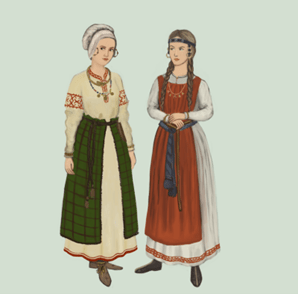
Paneva skirt on the left reconstruction based on Saburova analysis. Kyiv.
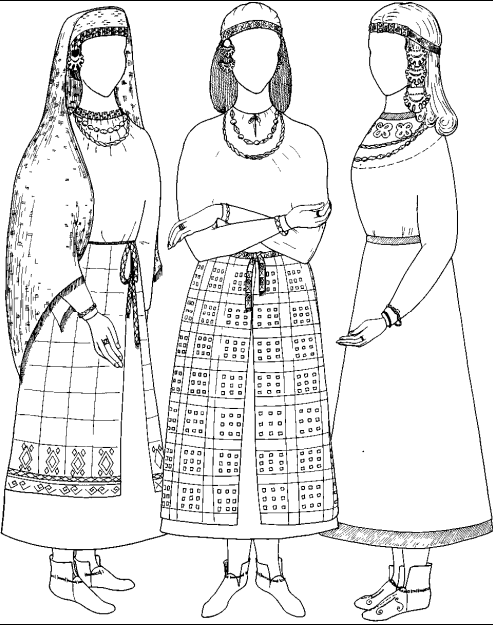
The complex of townswoman and village woman clothes. XI-XII century.
Production.
I have attempted to proceed with self-woven paneva fabric based on the research of the textile form Orfinskaya.
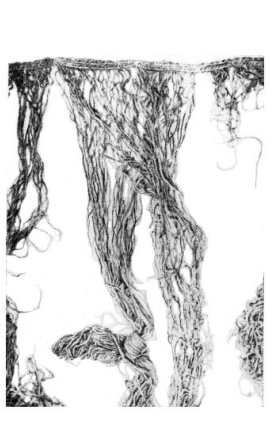
I have worked with the Drop Weight loom we have assembled ourselves.
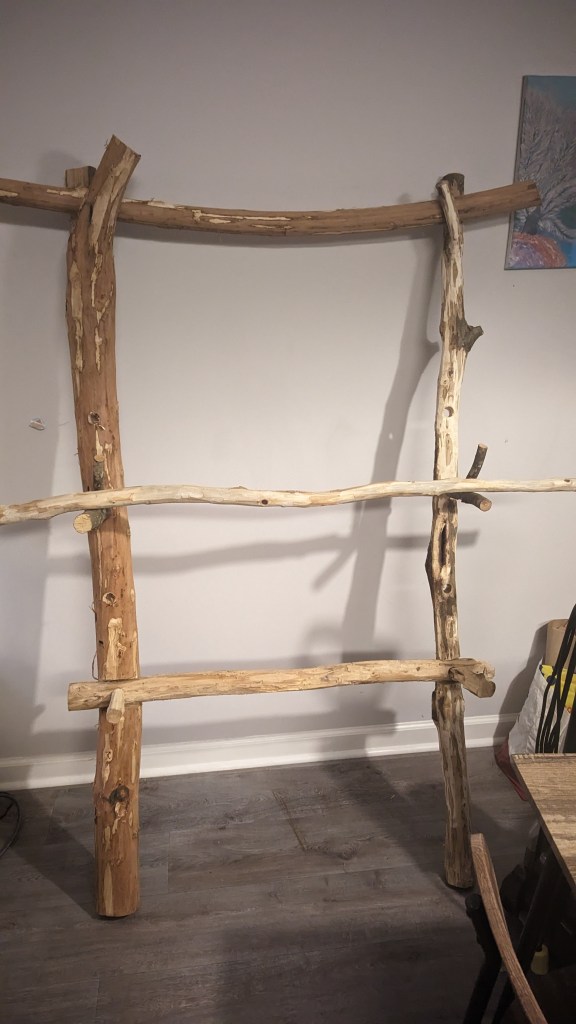
Loom assemble.
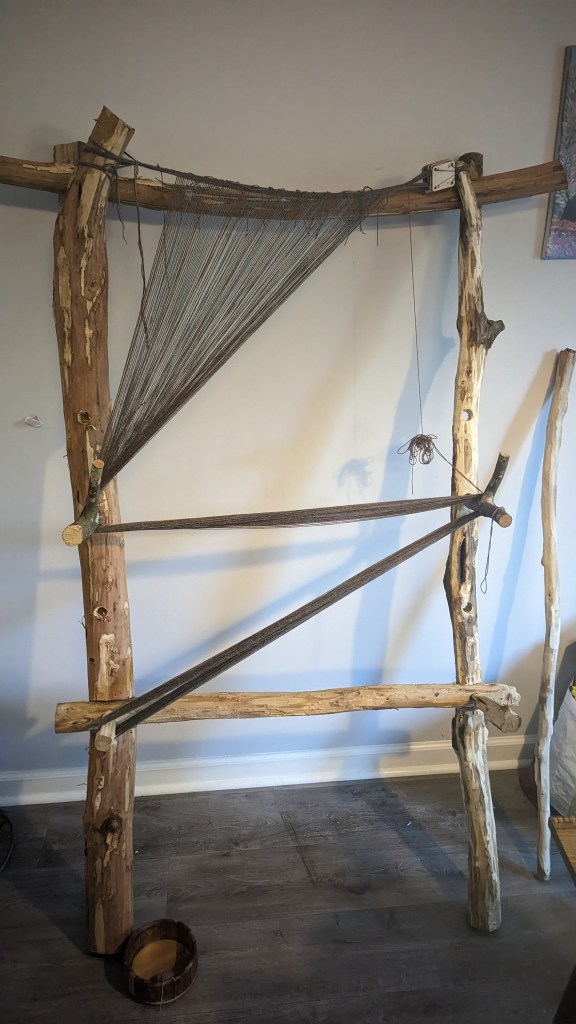
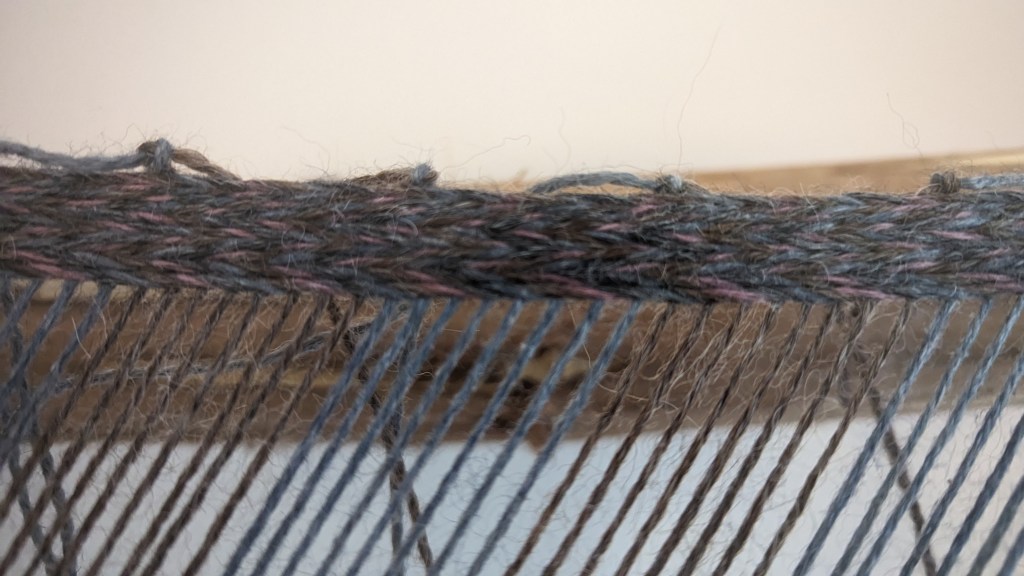

Loom wrap set up.

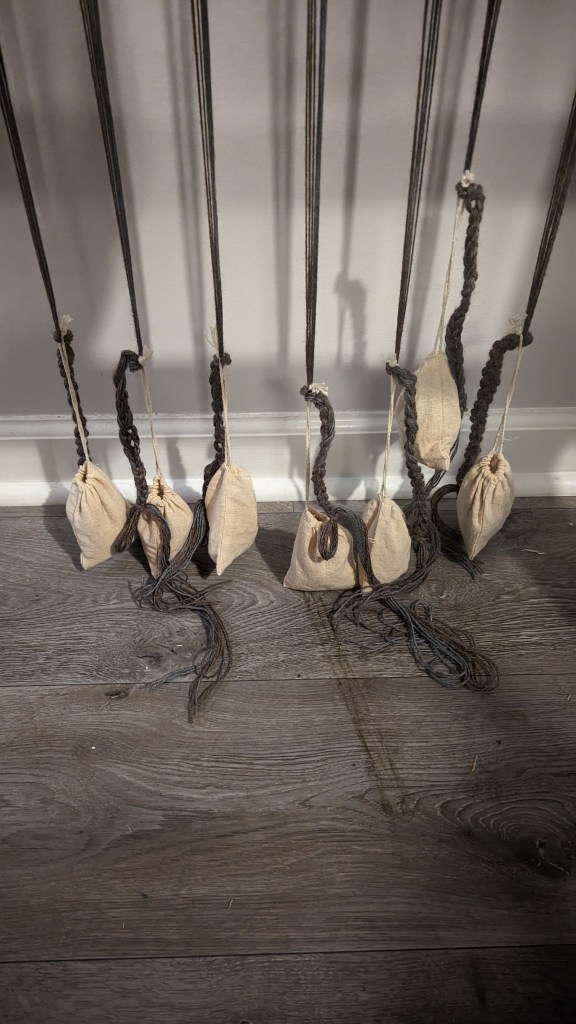
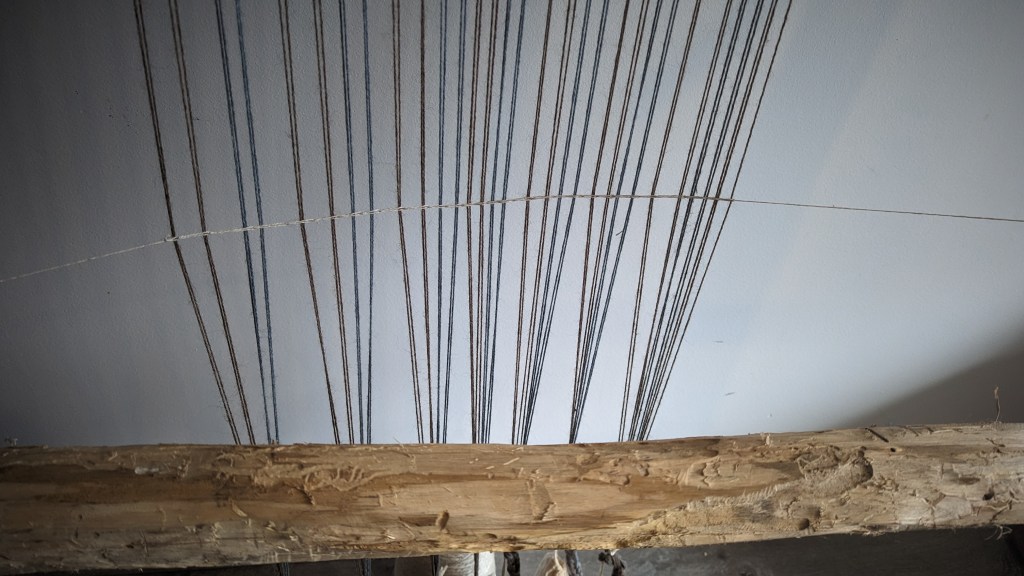
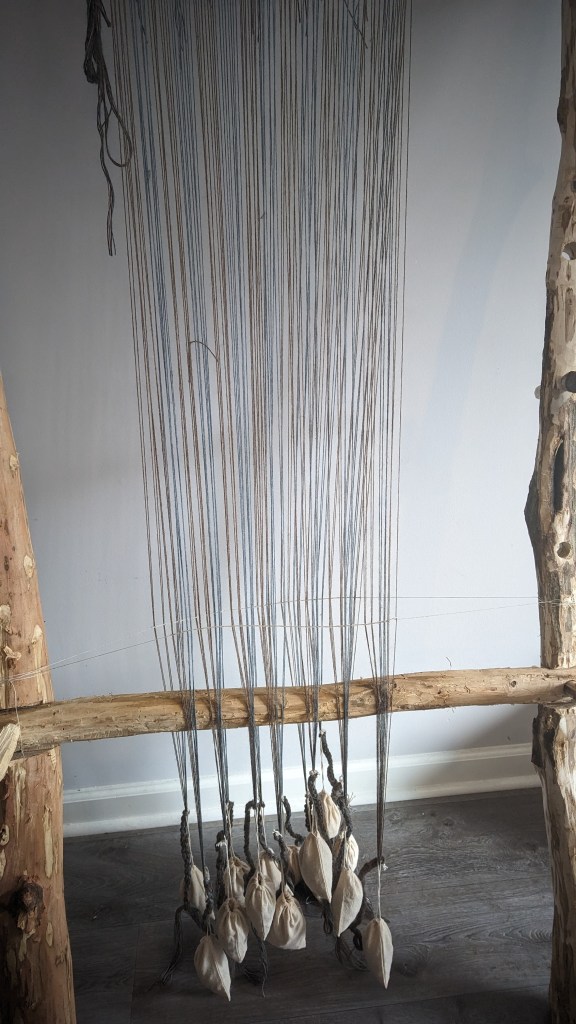

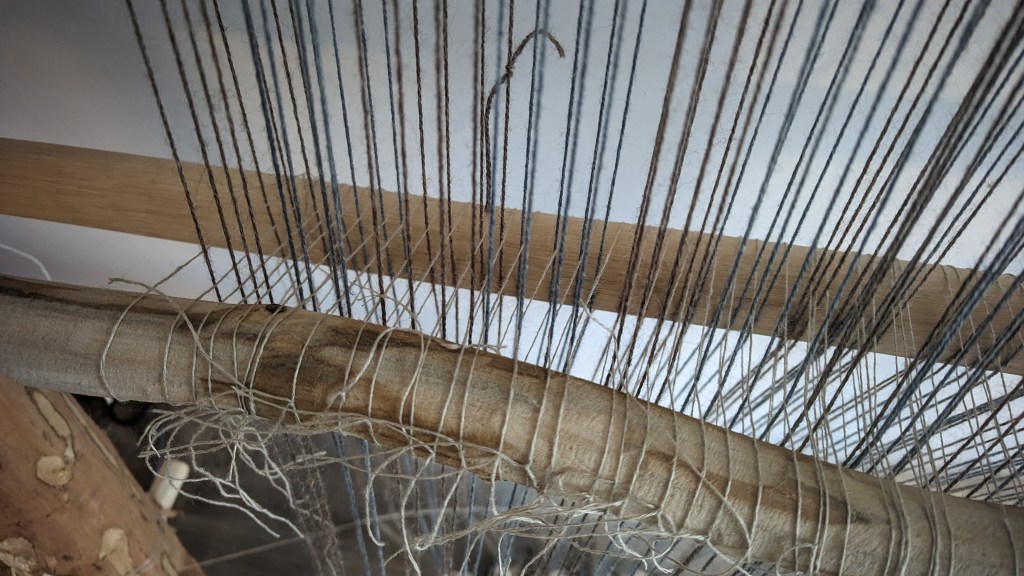
Chaining and weights.
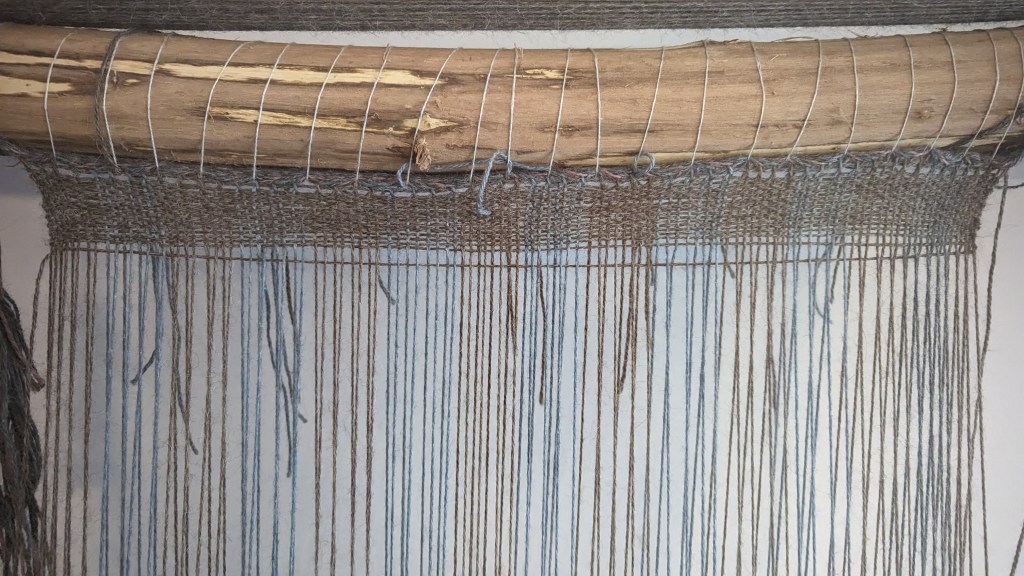

Weaving.
During production, I have run into issues with tension due to weights having uneven weight and the hardship of controlling the loom’s width.
Possibly I proceeded with too wide of a piece for the selected loom. More research is needed.
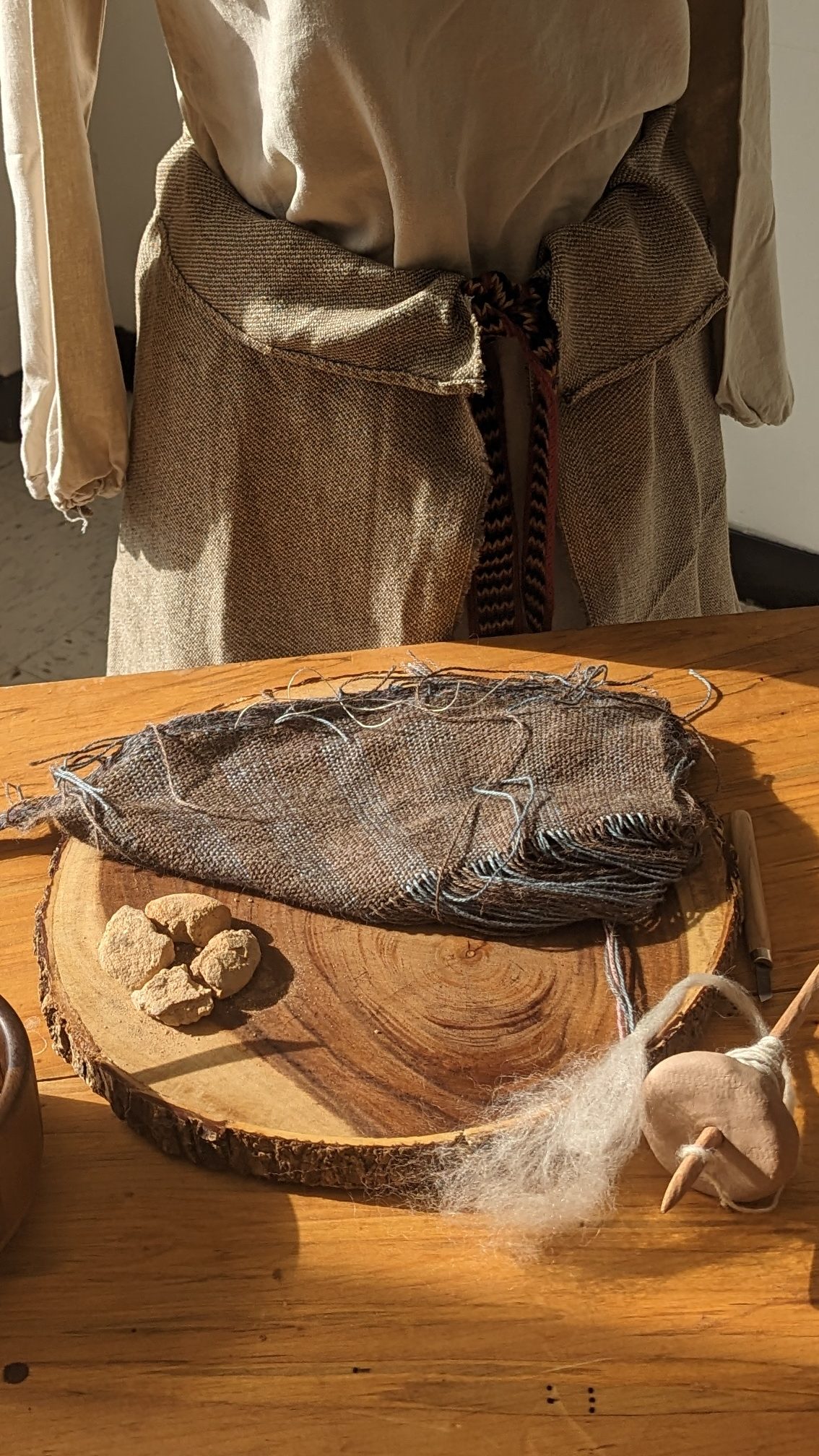
Due to production difficulties, but with lessons learned, I used the wool in my stash with a pattern close enough to the period. This is manufactured-produced wool, not hand woven.
I have cut out two rectangles and hemmed them on 3 sides. One side needs no hemming. I decided to leave it as is for aesthetic reasons.
The paneva is held by the belt, not sawn to the belt like one option from Saburova reconstruction.
References
Alpatov, S. V. (n.d.). Birch Barks in the context of folklore and literacy culture. Folklore and Ethnography, 123-128. Retrieved from http://www.drevnyaya.ru/vyp/stat/s4_18_10.pdf
Kochkurkina, S. I., & Orfinskaya, O. B. (2014). Ladoga’s Kurgans culture – Technological textile reasearch. Petrozavodsk: Korelian science center.
Koledinskiy, L. V. (1991). Vitebsk Upper Castle.
Kuzmina, O. V. (n.d.). Women Costumes in XIII cetury. Retrieved from https://slavmoda.com/jenskiy-kostum-xiii-veka/
Lozina-Lozinskya, A. S. (1936). In Flora URSS (pp. 702-704). Kiev: Academy of Sciense USSR .
Nahlik, A. (n.d.). Novgorod Textiles. Research Materials in USSR Archeology, 228-313.
Orfinskaya, M. A. (1997). Ancient Rus. Customs and culture.
Orfinskaya, O. (2020). Old Ladoga Textile during the era of Vikings.
Orfinskaya, O. V., & Engavatova, A. (2009). Medieval textiles from the necropolis of Dmitrov Kremlin, Russia. Archaeological Textiles Newsletters.
Procopius. (VII). History of Wars.
Prohorov, V. (1881). Historical materials about clothes and folk customs. St. Petersburg.
Rybakov, B. A. (1953). After Ancient Cultures: Ancient Rus.
Saburova, M. (1997). Ancient Rus. Customs and culture.
Saburova, M. A. (1997). Ancient Rus costume. Moscow: Science.
Sedov, V. (n.d.). Ancient East Slavic Garb in VI-IX cc.
Sedov, V. V. (1982). Eastern Slavs in Vi-XIII century. Moscow: Science.
Sitdikov, A. G. (2017). The Volga Region Archeology. Tatarstan.
Štih, P. (2010). V. Wiped Out By The Slavic Settlement? The Issue Of Continuity Between Antiquity And The Early Middle Ages In The Slovene Area.
Strekalov, S. (1877). Russian historical Clothes X-XIII century. Saints Petersburg.
Zvelev, N. N. (1996). Flora Europae Orientalis. St. Petersburg, Russia. doi: ISBN 5-90016-28-X
 Phoenix Safe Place