
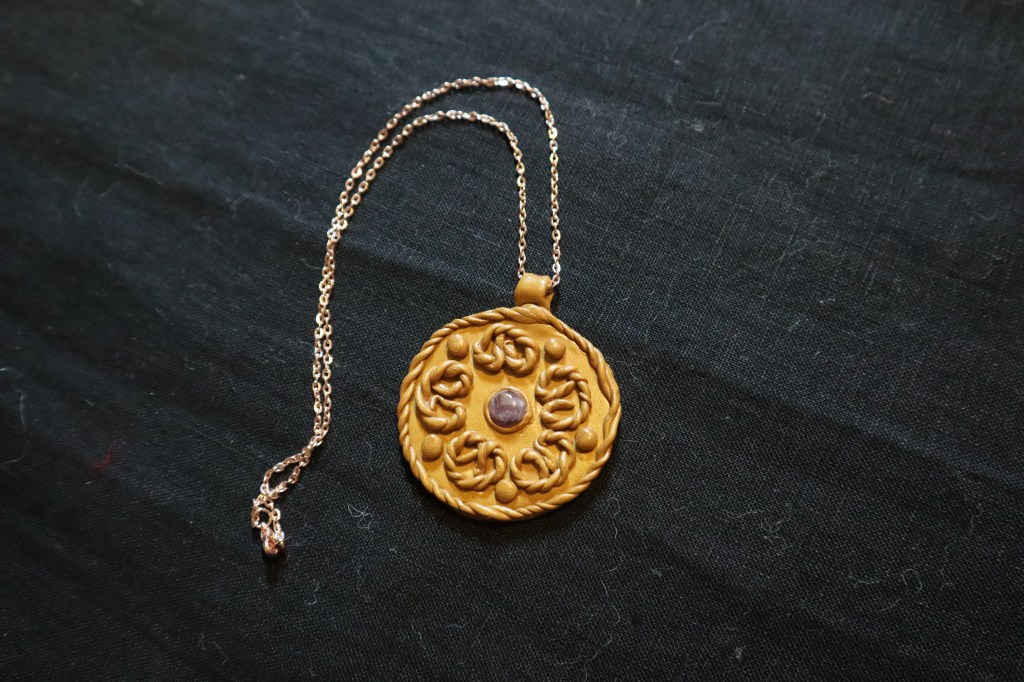
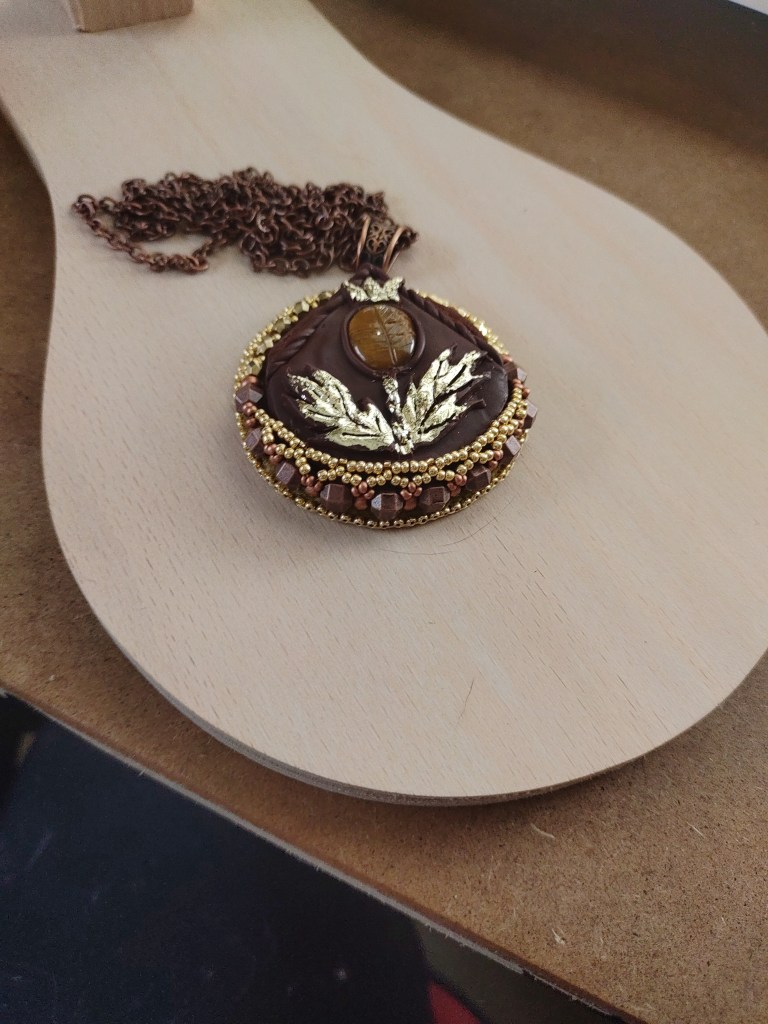
This post concerns an ongoing experiment I started about a year ago when I decided to make a pendant for my apprentice sister’s ceremony representing our household name, “House Golden Thistle.” I have never worked with clay; the closest I got to clay-making was in elementary school when I worked with play dough.
But isn’t art a journey?
Jewelry making in history
Most period pieces are made with the use of Lost wax casting, soapstone casting, sand casting, and welding. I am focusing on Eastern Slavs research, and primarily I can find information on tools and methodologies from that region. The jeweler will make the mold out of soapstone or clay and then melt the metal using special cups and pour it into the forms.
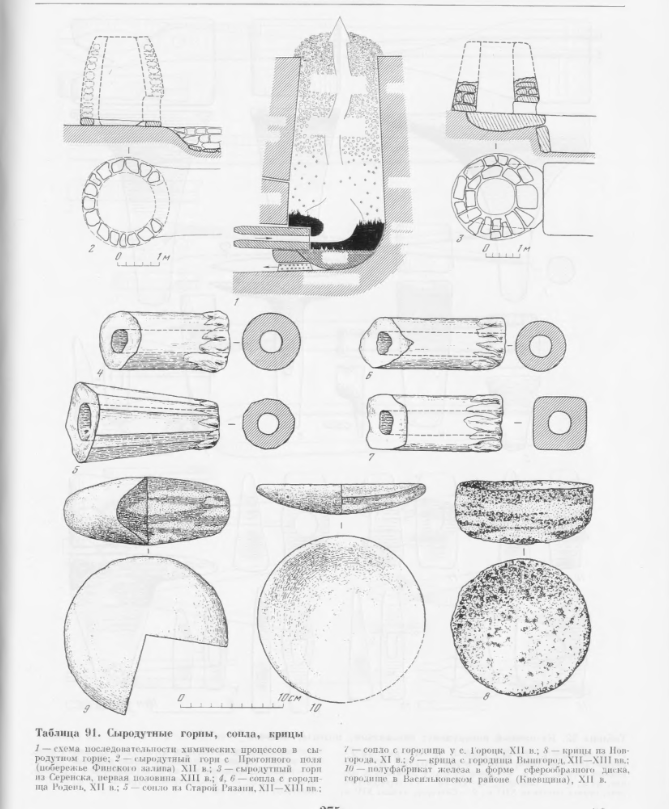
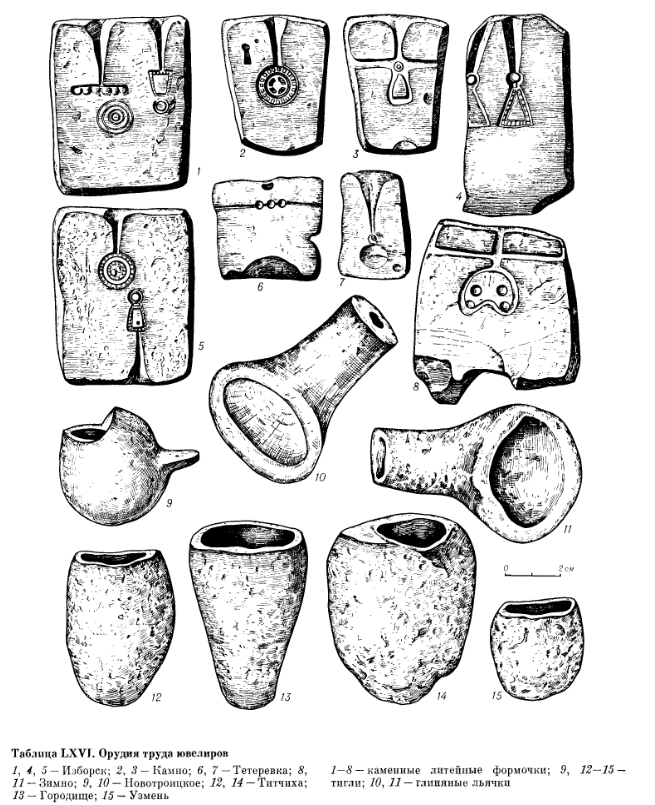
Technically my steps with the clay could be used in order to make an actual piece mold that would be placed in clay/oil-covered sand, but that was not the goal.
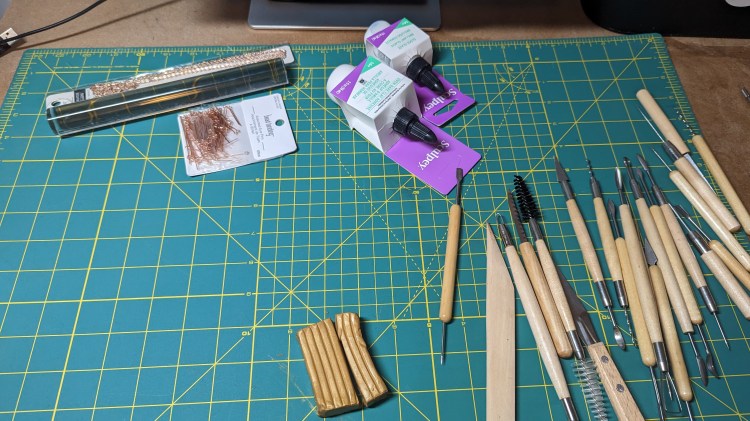
Materials I used
- Polymer Clay
- Gold leaf
- Seed beads for decoration
- Natural stones for central pieces
- Gloss glaze
- Metal chain
Process
Sketch and pattern
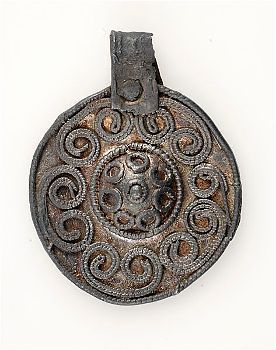
Firstly, I sketch the piece, make a detailed design, and then make a detailed design of leveled pieces separately. Those pieces then being cut out of the paper or transferred to the parchment paper. Below is the period piece I used for my sketch.
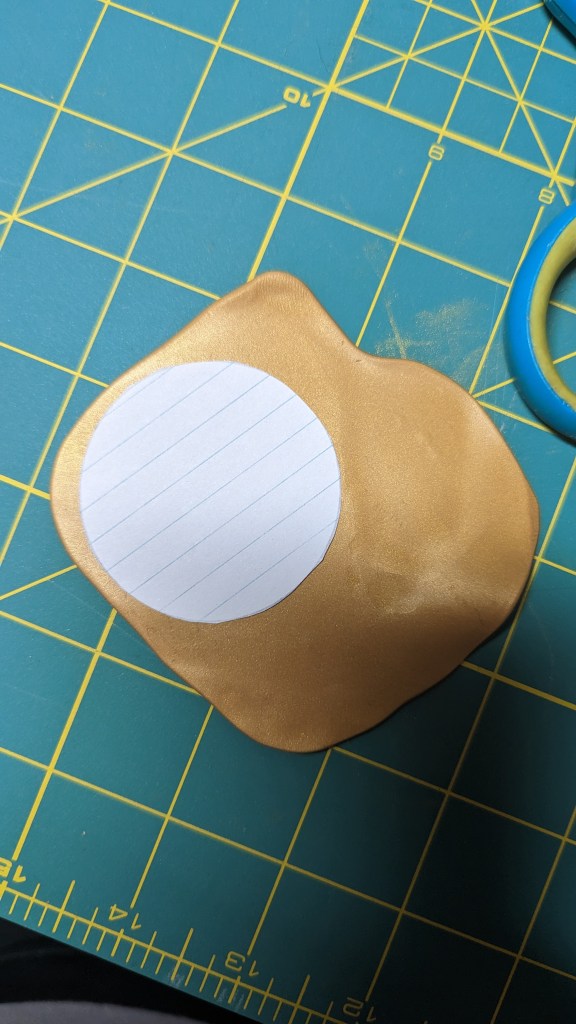
The pattern on the clay
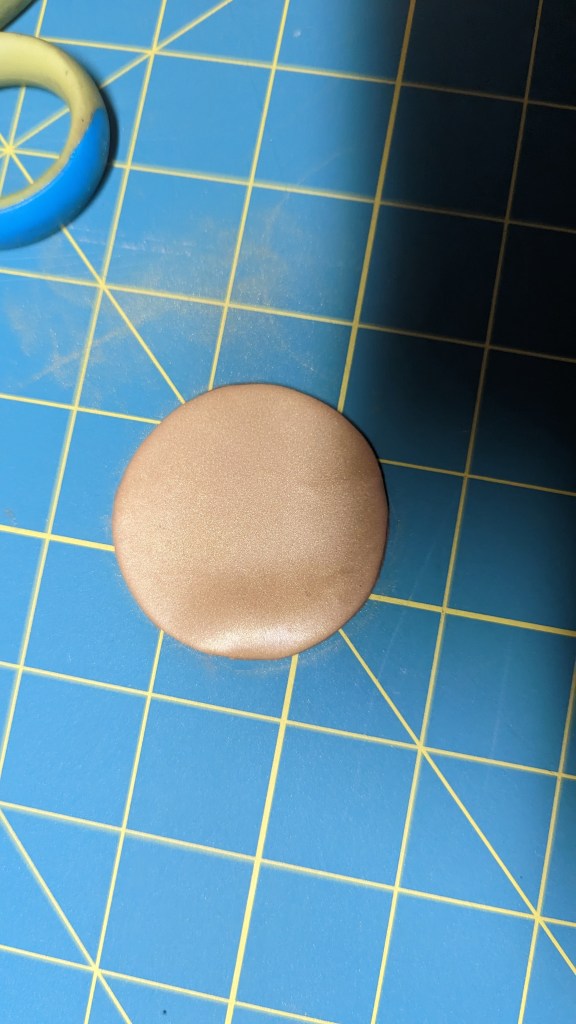
Clay, after being promptly prepped, I make a thin layer using my acryl roller and clean an even surface.
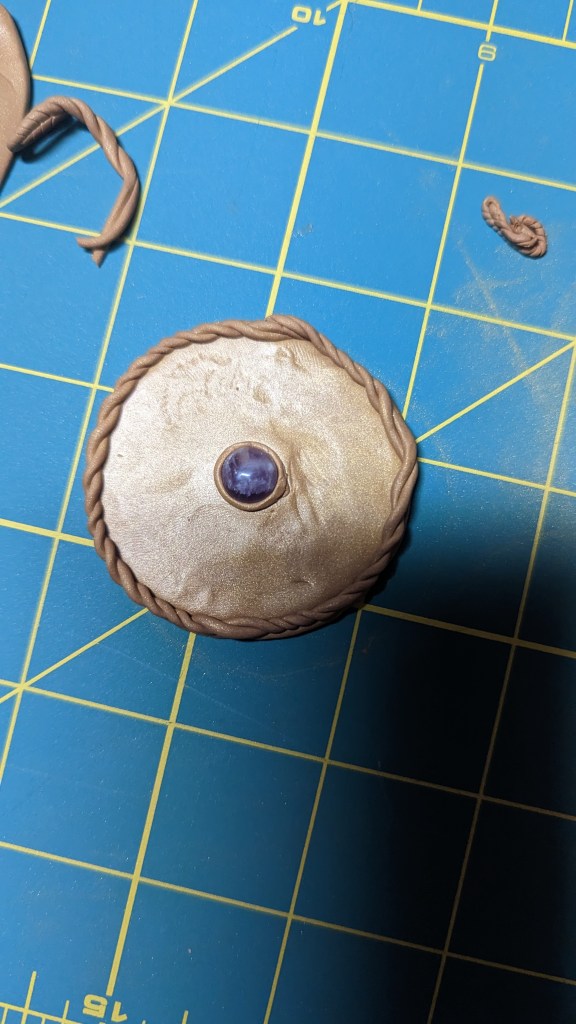
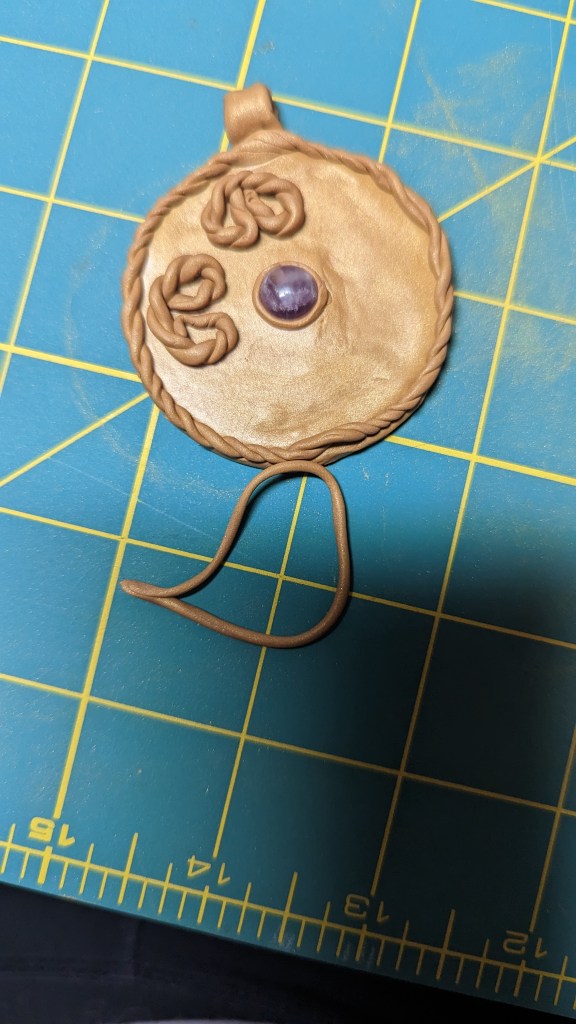
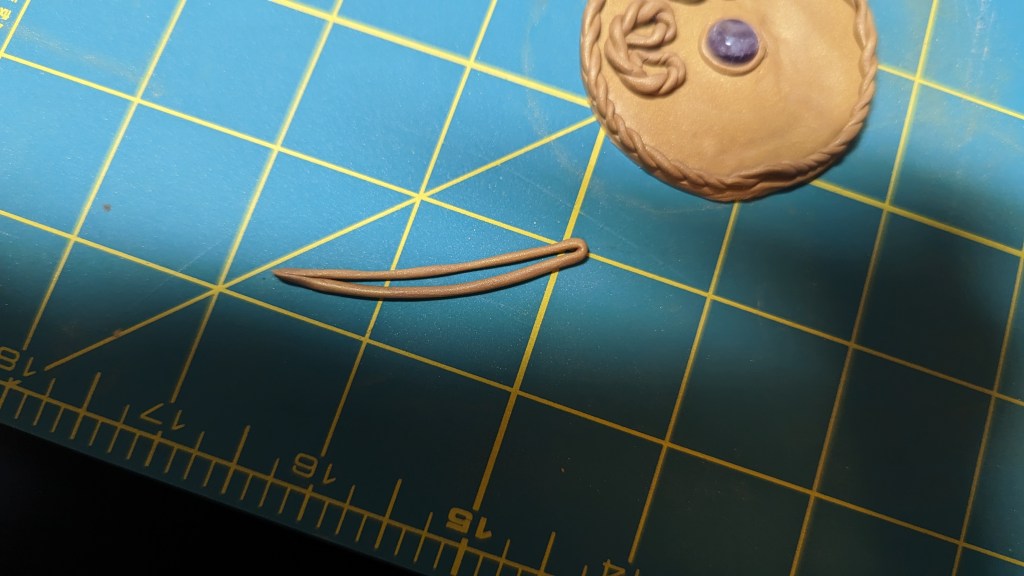
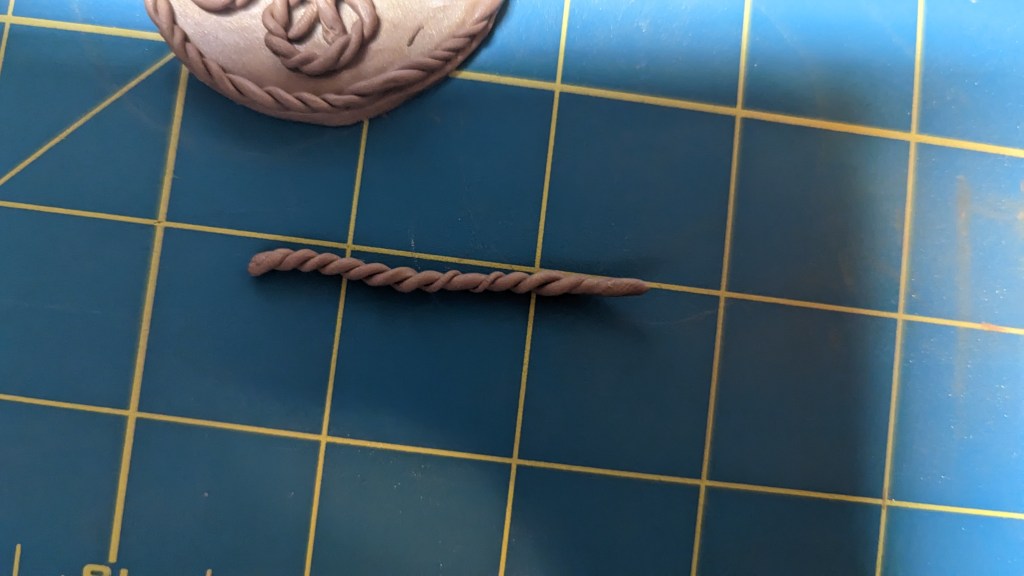
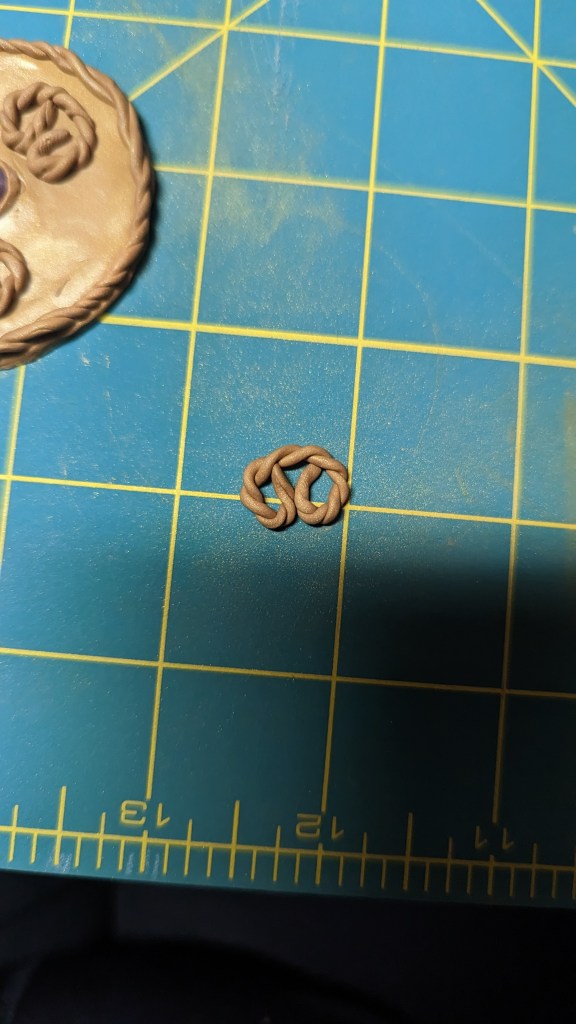
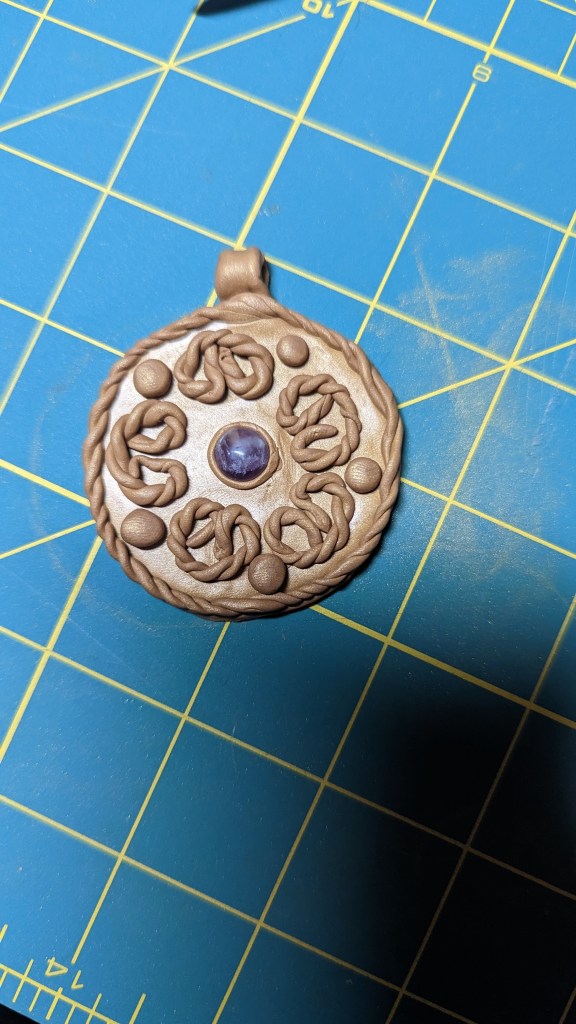
Once the sheet of clay is made, I distribute the pieces, and using clay tools, I cut them out from the clay and did all the additional modeling according to my design.
Assemble
When pieces have been modeled, I attached them together, slightly pushing them down.

Bake
I placed a piece on the parchment paper and backed it according to the instructions on the clay package. Usually, it is about 15 minutes for each 1/4 inch of clay thickness at 275 degrees F.
Silver/gold leaf
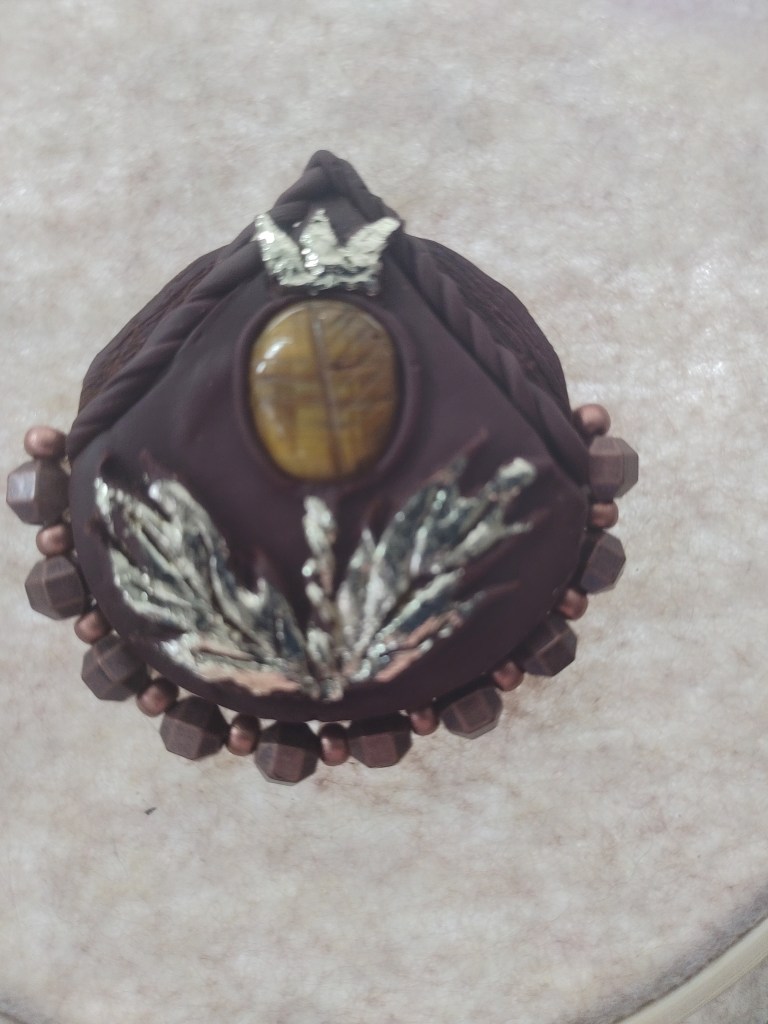
After the piece was baked, I used the special gold leaf adhesive on the pieces I wanted to cover with gold leaf. After applying, it takes about 24 hours to completely dry the surface with gold leaf.
Cover
I used the Gloss glaze I bought in order to provide additional protection level.
Additional “pretty”
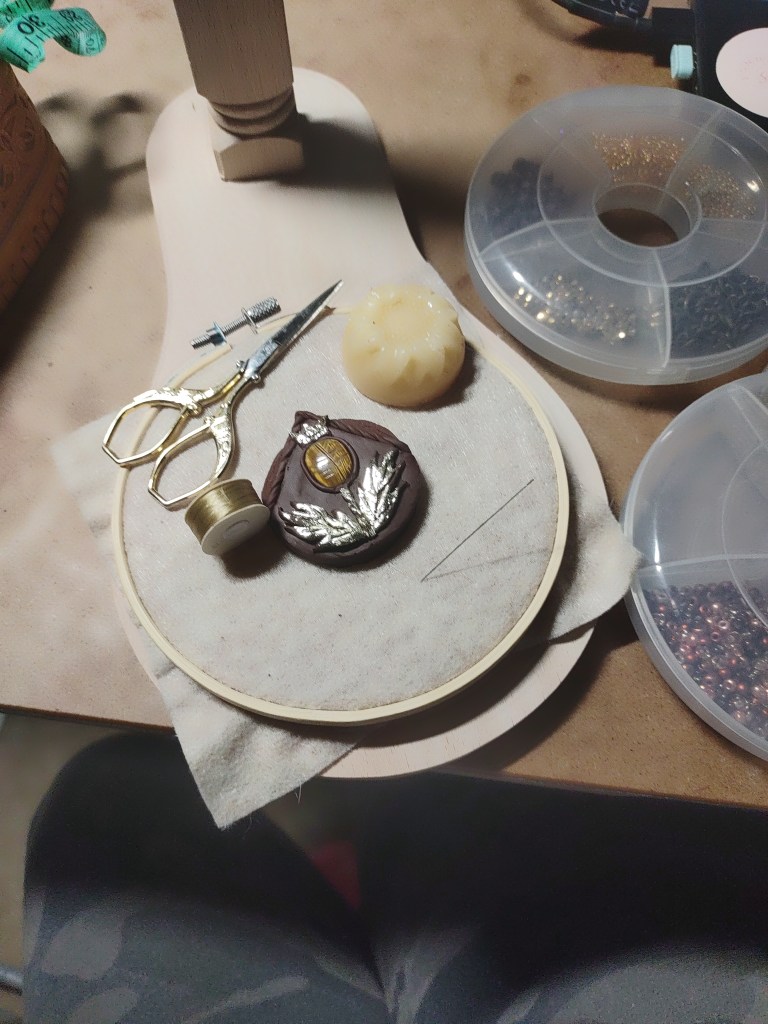
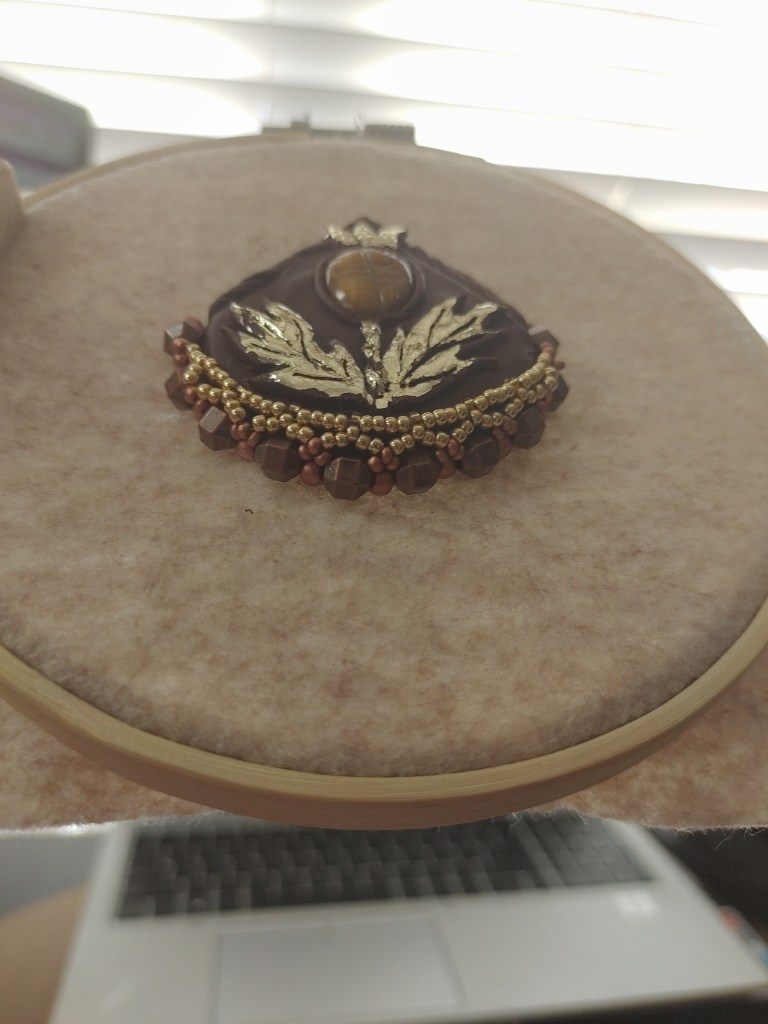
I decorated the thistle pendant with free-form weaving with beads and seed beads that I came up with on the fly.
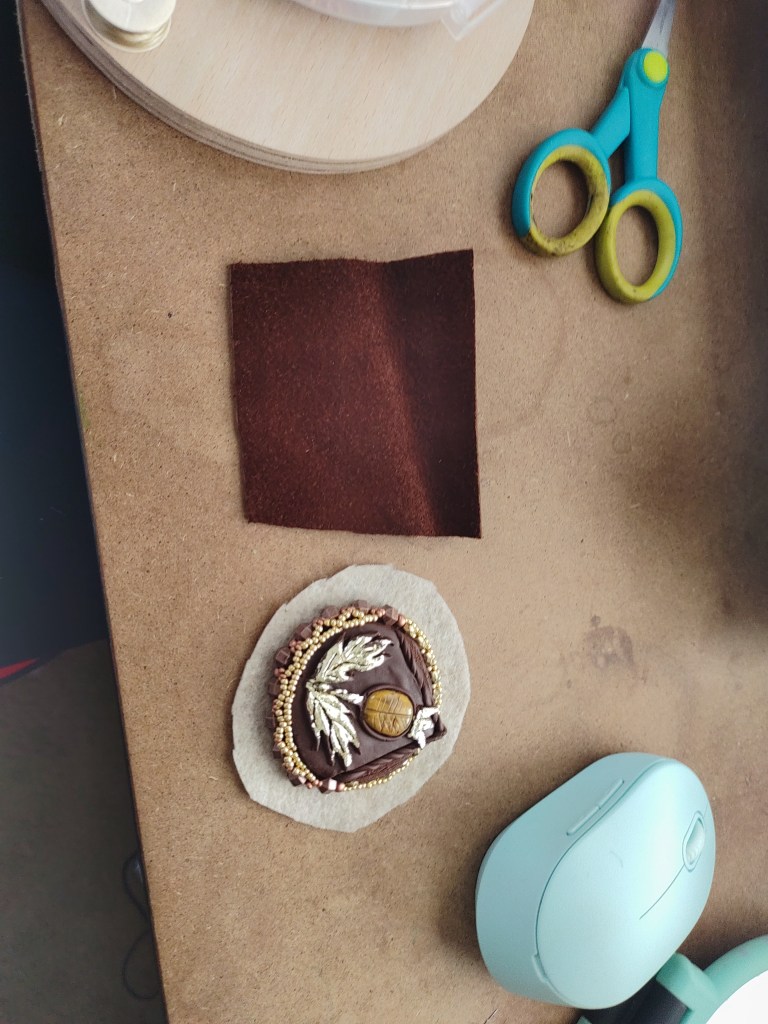
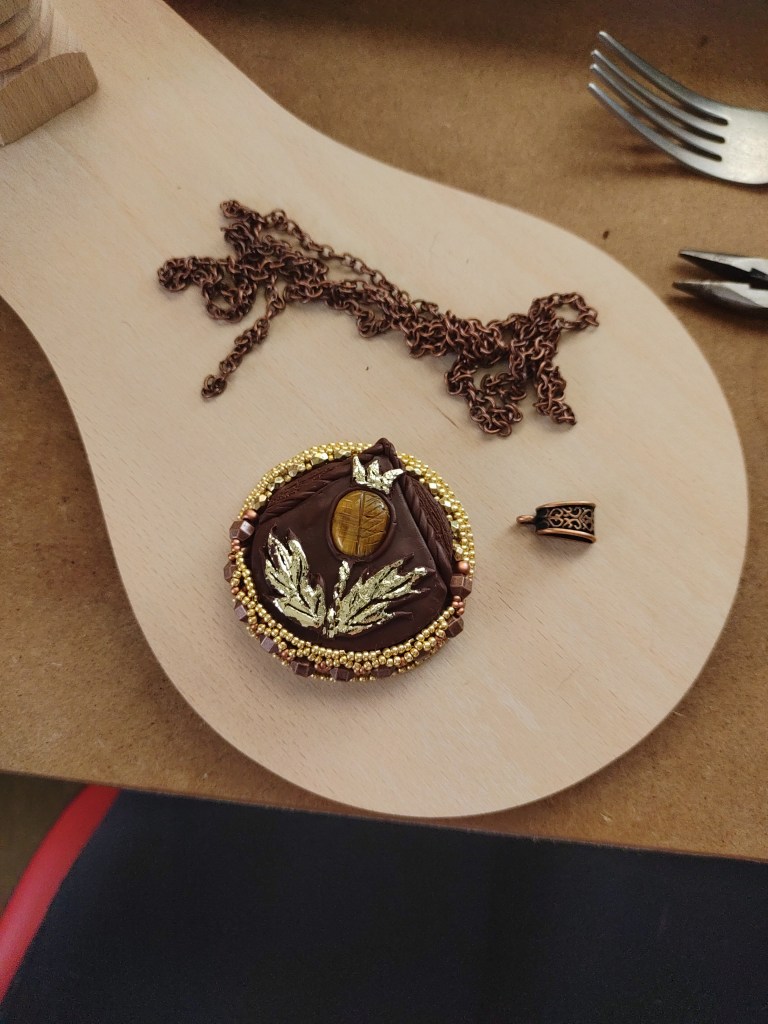
At the very end, I assemble the final piece with the chain and other jewelry findings. The piece is generally lighter and more fragile, but it can live a long life with proper care.
The process is not as time-consuming as it seems and is actually a lot of fun. I plan on playing with modern designs to improve my skills in working with fine details and then dive back into more period designs.
 Phoenix Safe Place