
This blog post is a documentation adaptation of my entries for the Kingdom Arts and Science Festival 2023 persona pentathlon. The series will have 5 blog posts for each item separately.
Tunic
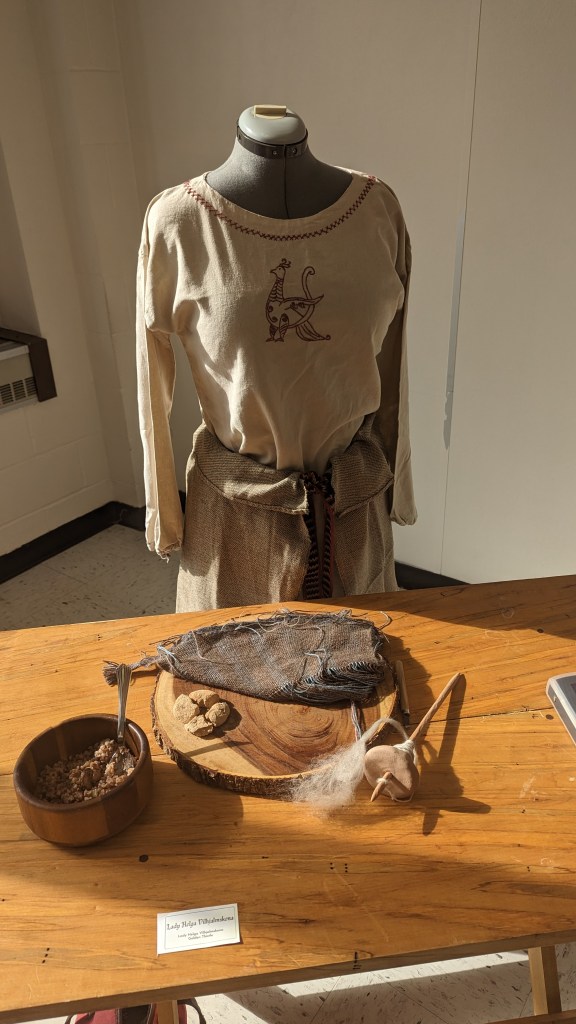
The tunic is the main clothes of eastern Slavs that men and women wore. The difficulty in researching the pattern is that many Slavs were burned in their clothes and belonging as a burial ritual. Another difficulty is that preserving the fabric in the ground is not easy in the swamp environment where most Slavic tribes are located. In addition, many cities were destroyed and burned to the ground when Mongolians ran through Europe. Most of our resources and patterns are related to the later period. Nevertheless, researchers assembled the piece based on visual anthropology techniques, mainly with the help of archeological fabric findings.
Archeology and visual anthropology analysis.
Below are the fabric examples found in Novgorod and other Slavs state territories. The first piece is unwoven but prepped to set up the wrap piece for the drop weight loom on that I based my experiment for the paneva skirt (next section).
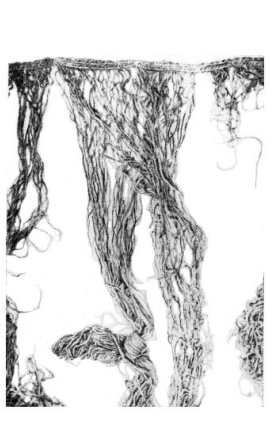
Fabric set up from the vertical loom.
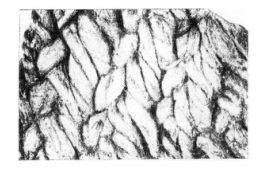
Knitted fabric
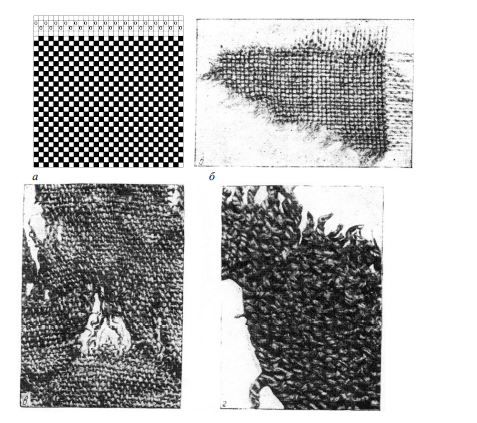
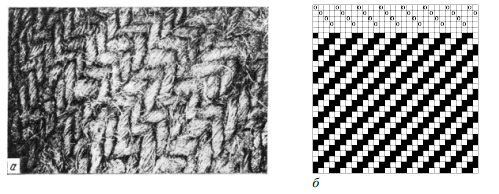
Fabric weft options
Please, be advised that this is just a tiny amount of fabric weft; however, the most popular one is found in burials.
Most fabric presented and preserved was either linen, hemp, or wool. However, silk was also available to some people in the region. As silk was imported from China and Byzantine through several trading paths, silk was mainly used as decoration for clothes, like trims and patterns sawn to the clothes.
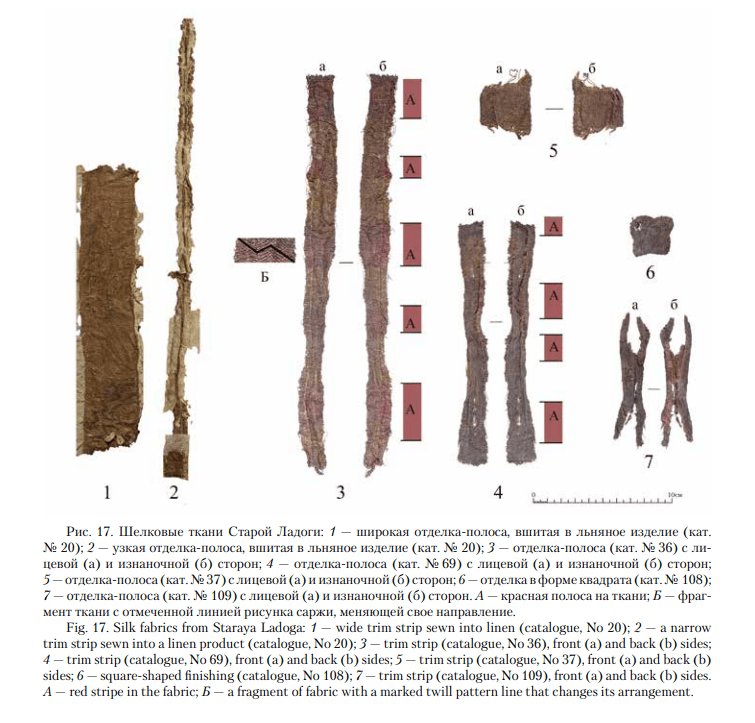
Silk trim samples found in Ladoga burials.
So far, there are mostly bits and pieces of clothes found in the burials, but archaeologist was lucky to allocate the tunics pieces that helped replicate the way clothes were sawn.
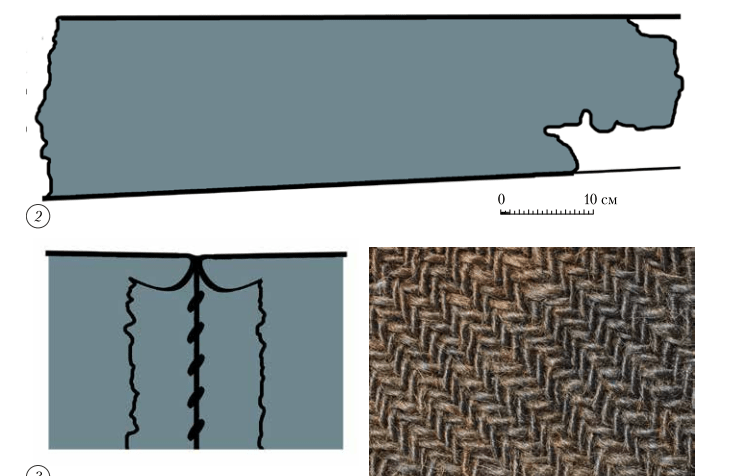
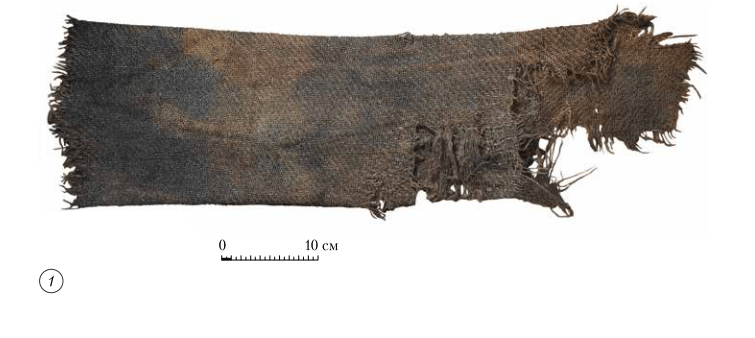
A sleeve fragment was found in Novgorod.
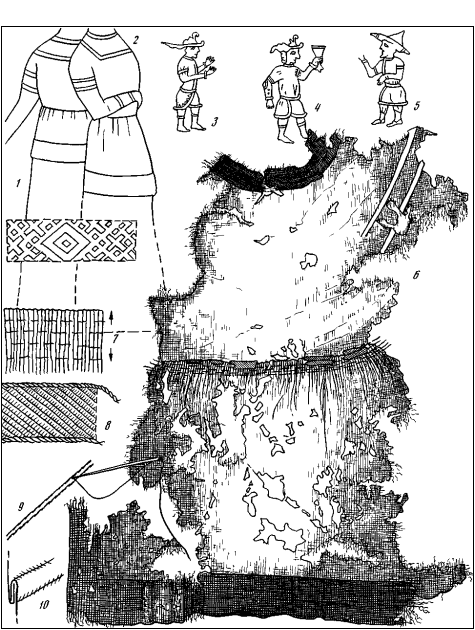
Saburova dress recreation based on the findings. XII-XIII century.
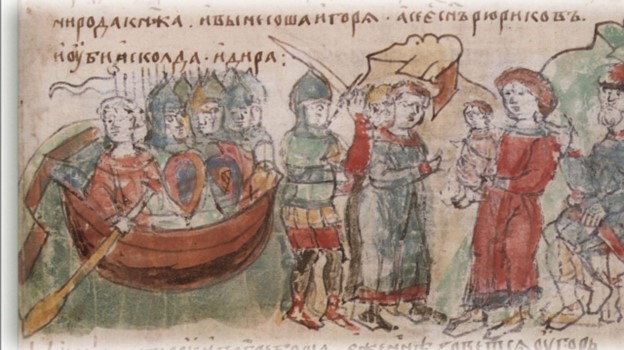
Chronicles scene.
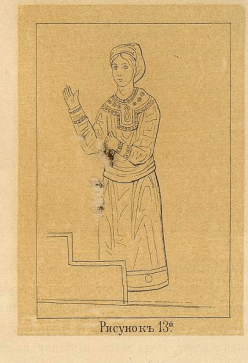
Married woman. XI-XII century sketch.

Knyazev tunic. XIX century sketch from the museum. The original piece was lost in the revolution.
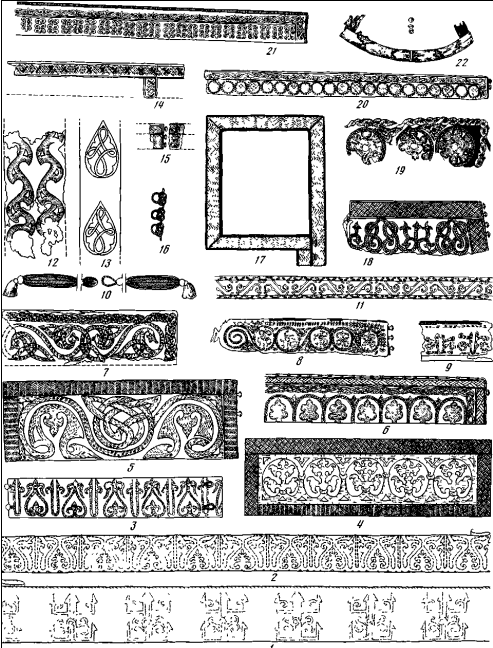
Fragments of embroidery.
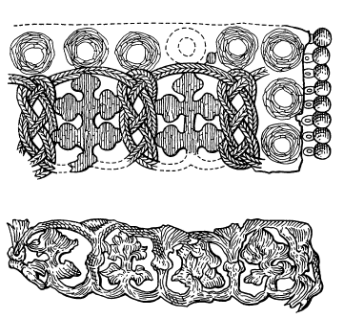
Embroidery samples.

T-tunic pattern.
Based on the research and found samples, it is safe to suppose that the main tunic pattern used was the t-tunic pattern, also used in many other west Slavs and Western cultures at the same time, that influenced the Slavs from the history of the close neighborhood (before migration) and trading which led to cultural exchange.
As dresses and tunics unified, the embroidery, trim, and decorations made the human pop look unique.
Embroidery and trims were also added as ritual protection, where the placement around the hands and chest came from.
Production.
I proceeded with a manufactured natural color linen for my tunic.
I followed the T-tunic pattern and assembled the pieces, starting with the body and the neckline, then sawn sleeves and attaching sleeves to the body. In the end, I attached gores and hemmed the bottom of the dress.
Tunic was hand-sawn using stem stitch and then hemmed in various techniques.
Embroidery was completed around the neck using a basic fishbone stitch. The bird design was embroidered using a stem stitch I found in several embroidery samples listed in anthropology research.
The design, however, was taken from Dmitrov’s church, built approximately in the XII century. As my research suggested, the different designs were transferred from craft to craft.
The embroidery placement is unusual, as a central piece on the chest was not commonly found in archeology and visual resources. However, some items presented in the section above point out that it is possible to have embroidery on the chest piece.
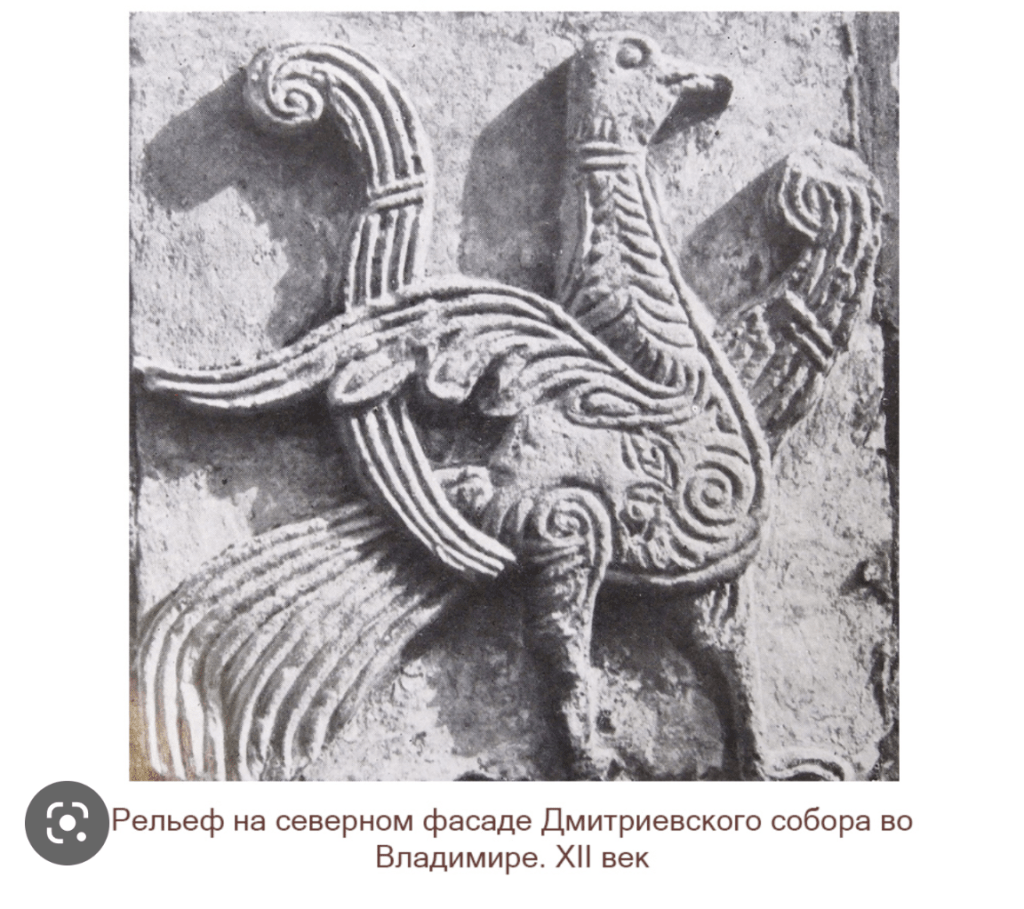
Relief on the north side of Dmitrov’s church in Vladimir. XII century.
Threads used: linen for embroidery, cotton for sewing and hemming to keep it strong.
For the sleeves, I made a cord using the lucet technique. I have used brown New England wool as a material for it. I ran the cord through the fabric loop I made ahead of time and tied the cord around my wrist.
References
Alpatov, S. V. (n.d.). Birch Barks in the context of folklore and literacy culture. Folklore and Ethnography, 123-128. Retrieved from http://www.drevnyaya.ru/vyp/stat/s4_18_10.pdf
Kochkurkina, S. I., & Orfinskaya, O. B. (2014). Ladoga’s Kurgans culture – Technological textile reasearch. Petrozavodsk: Korelian science center.
Koledinskiy, L. V. (1991). Vitebsk Upper Castle.
Kuzmina, O. V. (n.d.). Women Costumes in XIII cetury. Retrieved from https://slavmoda.com/jenskiy-kostum-xiii-veka/
Lozina-Lozinskya, A. S. (1936). In Flora URSS (pp. 702-704). Kiev: Academy of Sciense USSR .
Nahlik, A. (n.d.). Novgorod Textiles. Research Materials in USSR Archeology, 228-313.
Orfinskaya, M. A. (1997). Ancient Rus. Customs and culture.
Orfinskaya, O. (2020). Old Ladoga Textile during the era of Vikings.
Orfinskaya, O. V., & Engavatova, A. (2009). Medieval textiles from the necropolis of Dmitrov Kremlin, Russia. Archaeological Textiles Newsletters.
Procopius. (VII). History of Wars.
Prohorov, V. (1881). Historical materials about clothes and folk customs. St. Petersburg.
Rybakov, B. A. (1953). After Ancient Cultures: Ancient Rus.
Saburova, M. (1997). Ancient Rus. Customs and culture.
Saburova, M. A. (1997). Ancient Rus costume. Moscow: Science.
Sedov, V. (n.d.). Ancient East Slavic Garb in VI-IX cc.
Sedov, V. V. (1982). Eastern Slavs in Vi-XIII century. Moscow: Science.
Sitdikov, A. G. (2017). The Volga Region Archeology. Tatarstan.
Štih, P. (2010). V. Wiped Out By The Slavic Settlement? The Issue Of Continuity Between Antiquity And The Early Middle Ages In The Slovene Area.
Strekalov, S. (1877). Russian historical Clothes X-XIII century. Saints Petersburg.
Zvelev, N. N. (1996). Flora Europae Orientalis. St. Petersburg, Russia. doi: ISBN 5-90016-28-X
 Phoenix Safe Place
One thought on “Persona Pentathlon – Tunic”