
Beadwork
“Beads are not period.” “Beads are not the best way to replicate the accessories; you should use metal.” I heard it a lot. And I am afraid I have to disagree. I hope my display will change your mind too. Or will inspire you. Or will you enjoy it?
The items selected for this virtual display were made with beads, and my special love, seed beads, work for different eras, cultures, and styles. These items were selected to represent different areas where pearls can be used in reenactment, and trust me; those areas are not limited.
Bead embroidery with cabochons
Bead embroidery is a type of beadwork that uses a needle and thread to stitch beads to a fabric surface, suede, or leather.
From the Middle French word caboche (meaning “head”), a cabochon is a gemstone shaped and polished instead of faceted. The resulting form is usually a convex (rounded) obverse with a flat reverse. Cutting en cabochon (French: “in the manner of a cabochon”) is generally applied to opaque gems, while faceting is usually called transparent stones.
To imitate period jewelry, you can use metal and natural stones color seed beads, pearls, and stone beads to stitch around the cabochon. More information on how-to can be found here.
Byzantine ring
On display, I present a piece replicating Benzatine-style jewelry with a wider edge.
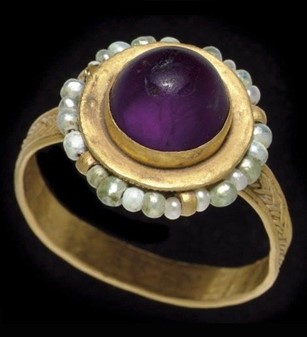
Byzantine garnet openwork ring, VIII century
Please, notice that even original works use pearl seed beads. The only difference with my work is the type of material I chose to make the base and surroundings. Obviously, metalwork techniques are much different from metalwork. More information on the item can be found in this blog post.
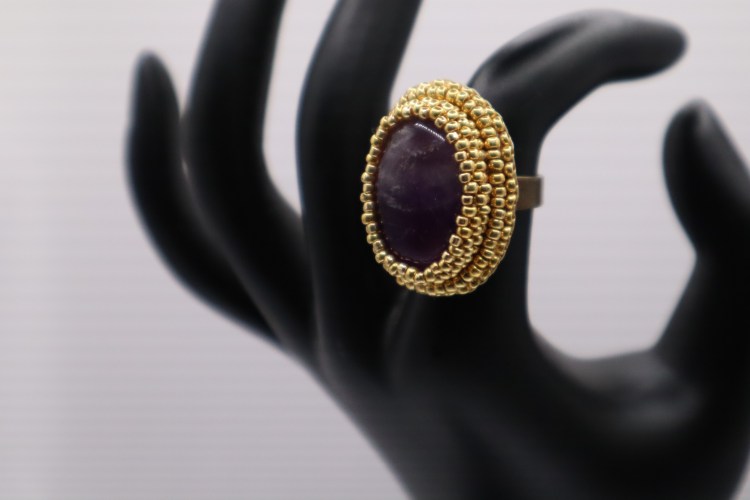
Roman necklace
The stones and beads are separately connected with the use of golden wire, the same way the ancestors did. I tried to choose the material that could be used back then – color, saltwater pearls, amethysts, and semi-precious gemstones. The material is presented in several works from that era. More information on the item can be found in this blog post.
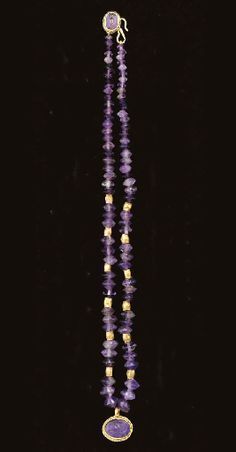
A roman gold and amethyst necklace circa I century b.c.-I century a.d.
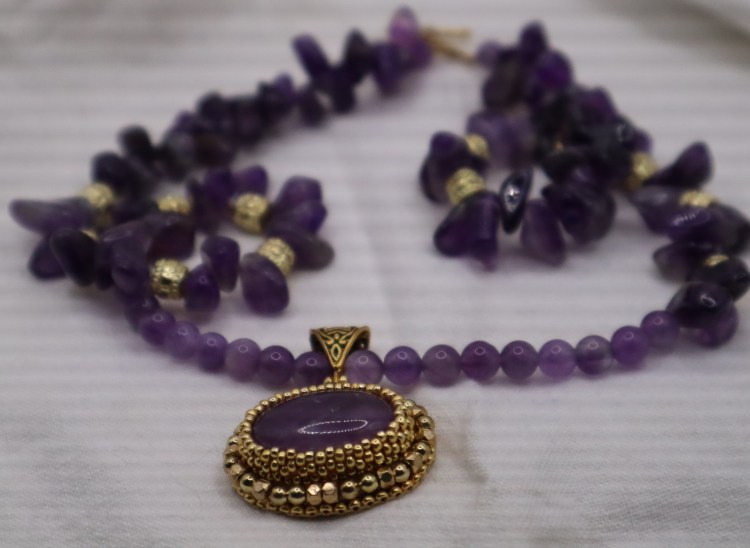
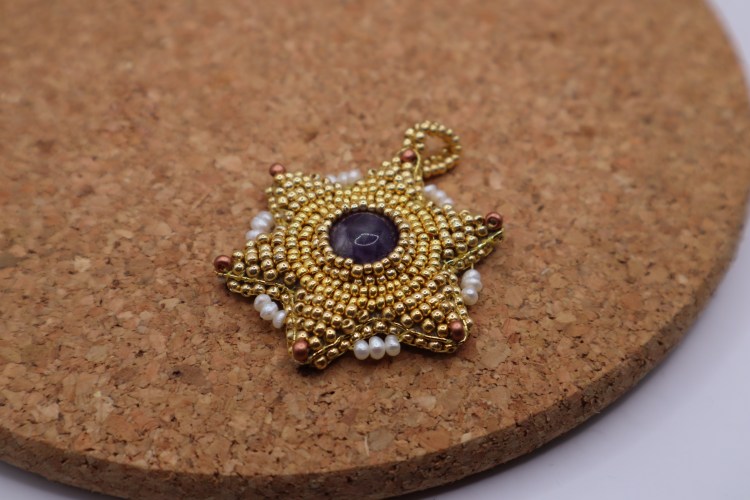
David star ring-necklace
The necklace was supposed to be a ring, but after the embroidery, I realized it was too big to be worn on the finger comfortably.
I used different shades of gold seed beads, amethyst cabochon, and freshwater pearls for this piece. It was embroidered with gold silk thread.
I used several techniques of seed beads embroidery and completed the edges with a gold cord to cover the extra material. More information on the item can be found in this blog post.
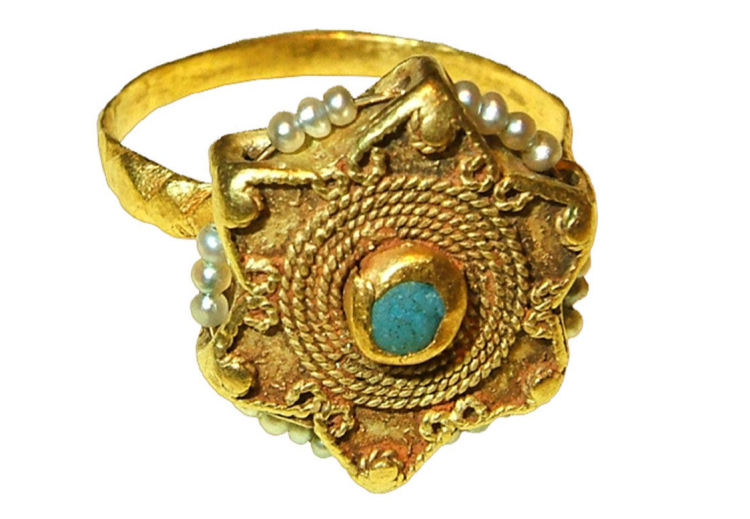
Fatimid Ring. 9th-11th century, Southern Spain.
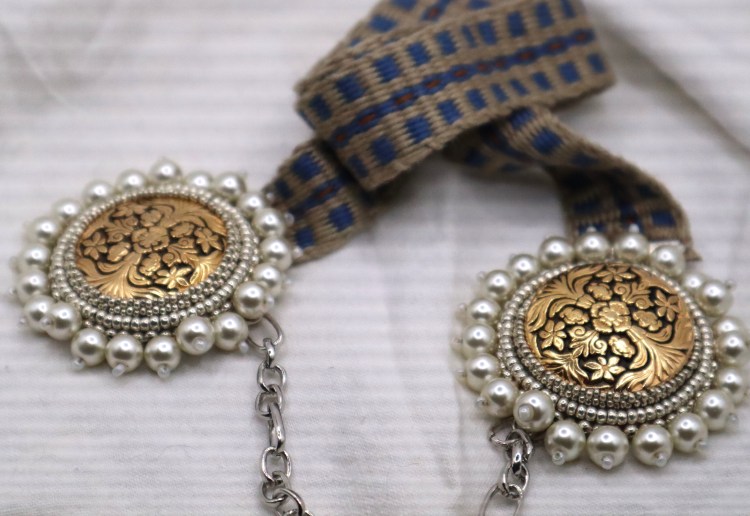
Belt
The belt replica made using the beading embroidery with the cabochon technique is on the jewelry picture. For the belting part of this piece, I used the rip provided by Mistress Finnech. I think it looks pretty close, do you? More information on the item can be found in this blog post.
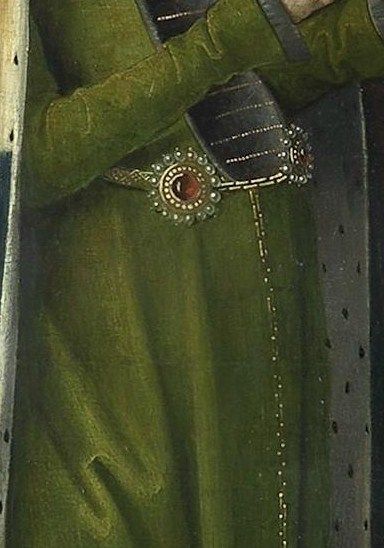
De legende van de Heilige Lucia
Bead necklaces – Byzantine and French
There are two different necklaces presented on display. They both can be used as an example of beads being used without embroidery involvement in period accessories reconstruction. First, let’s discuss Byzantine necklaces with collars and pearls.
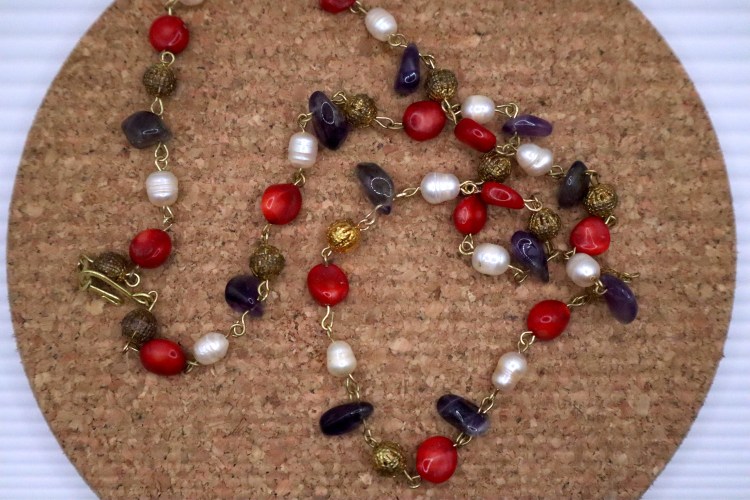
Byzantine necklace
The stones and beads are separately connected with the use of golden wire, the same way the ancestors did. I tried to choose the material that could be used back then – color, saltwater pearls, amethysts, and semi-precious gemstones. The material is presented in several works from that era. In the original piece, coral was not used; instead, it was more than likely emerald, but I used coral to represent my Coral Branch.
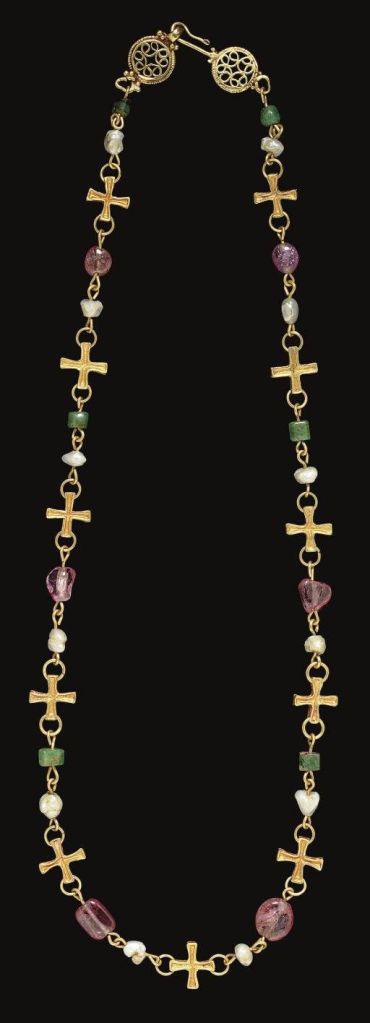
A necklace of eleven byzantine gold crosses circa 7th century a.d.
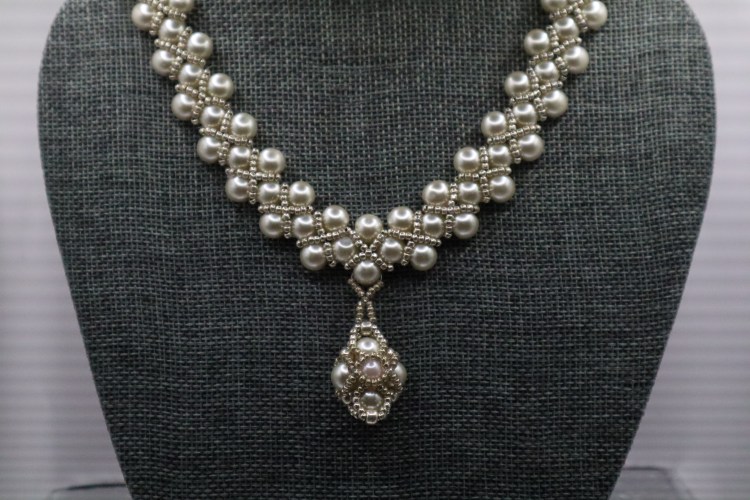
French necklace
Another necklace is the French necklace replica from the XIV century, to which I added some of my artistic vision.
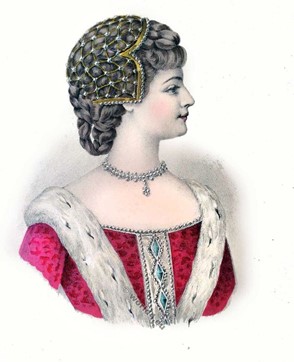
French fashion history in the reigns of John II and of Charles V. from 1350 to 1380. Celebrities in the Reign of Charles V. Le Sage.
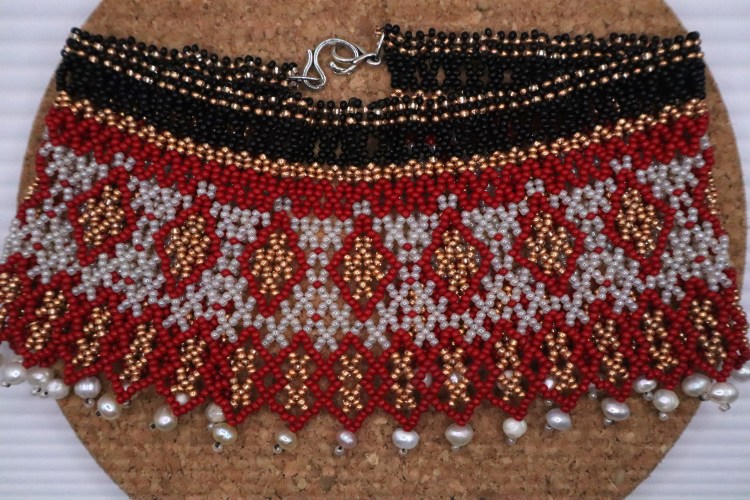
Slavs gerdans
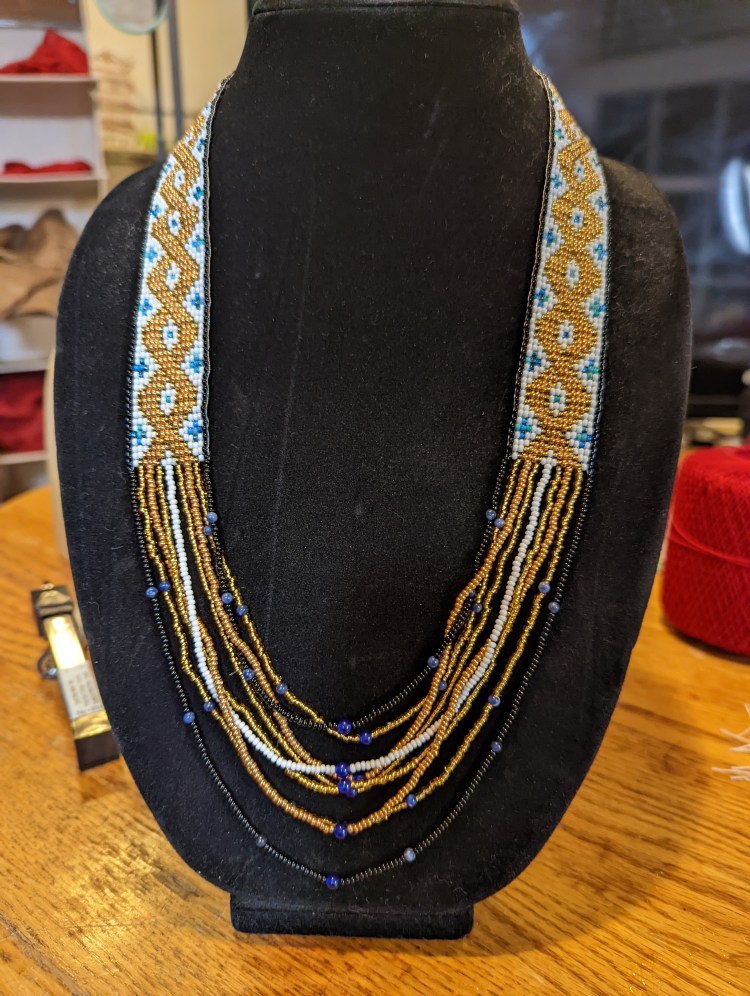
Two items (one presented on display – red, white, black, and gold netted necklace), another one is presented with a picture as it has been given away for a knighting present.
Both items represent various slavs amulets made for both men and women. Gerdan or Gaitan is a rope with special protective motives worn for ceremonies and into battles by men. Usually, a weaving accessory was made using threads or threads and seed beads.
Gerdan from the picture does not have period motives, it was supposed to represent a chain, but the technique used was a looming (when you set up silk threads on the loom and weave seed beads through it.
Unfortunately, due to the nature of seed beads items, we only have various descriptions and methodologies passed through centuries on how to make those. If lucky, we do not have an actual archeological finding to replicate the gerdans, only visual anthropology.
Additional samples of my beadwork
Three additional samples of my beadwork presented in the pictures are:
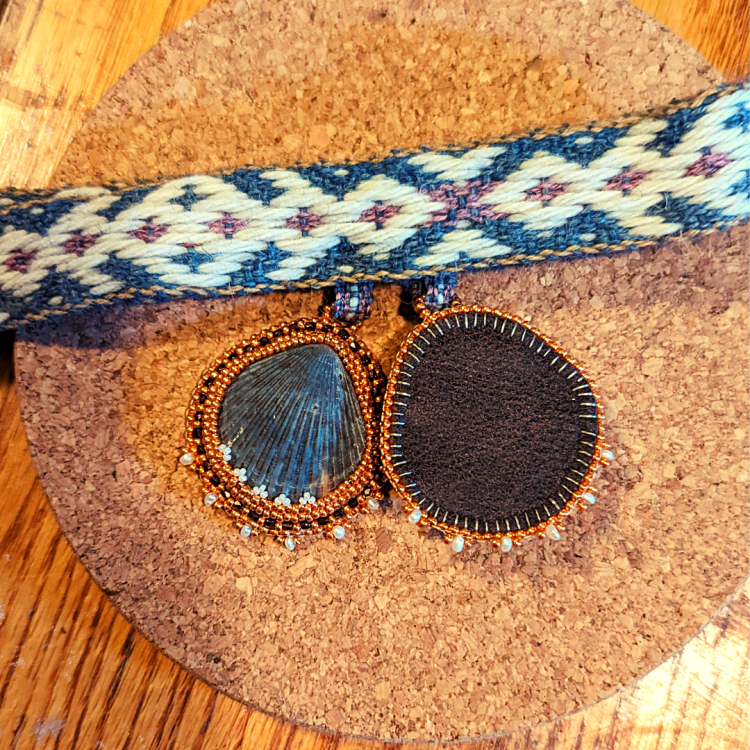
Order of the pearl temple rings
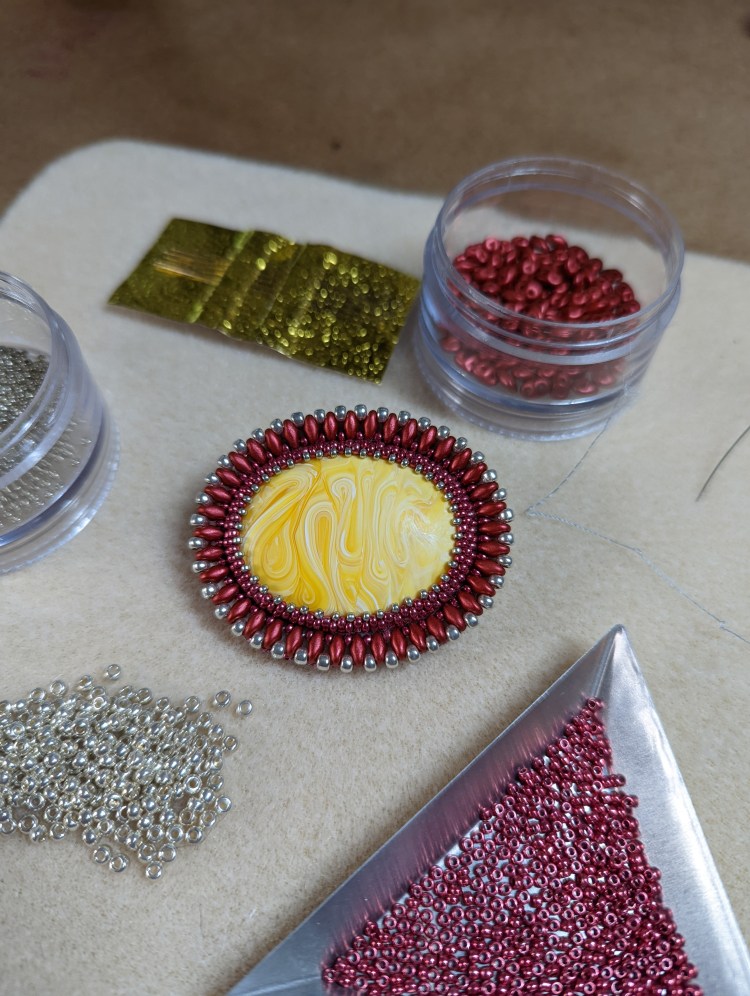
Yellow stone Broche.
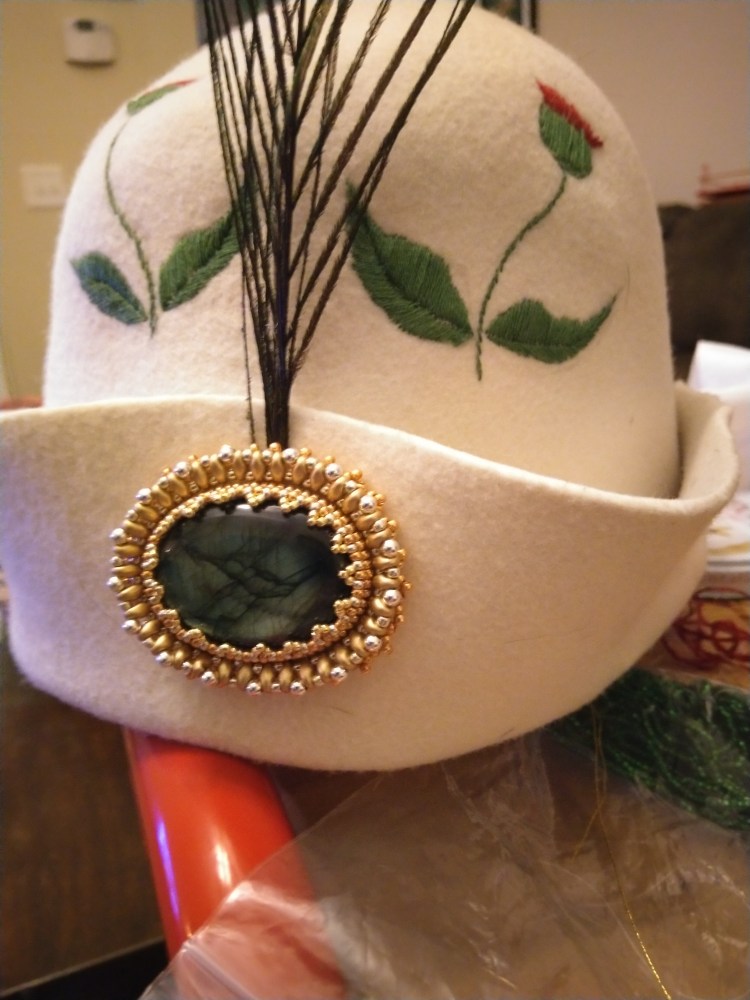
Green and Gold broche (blog post about this creature).
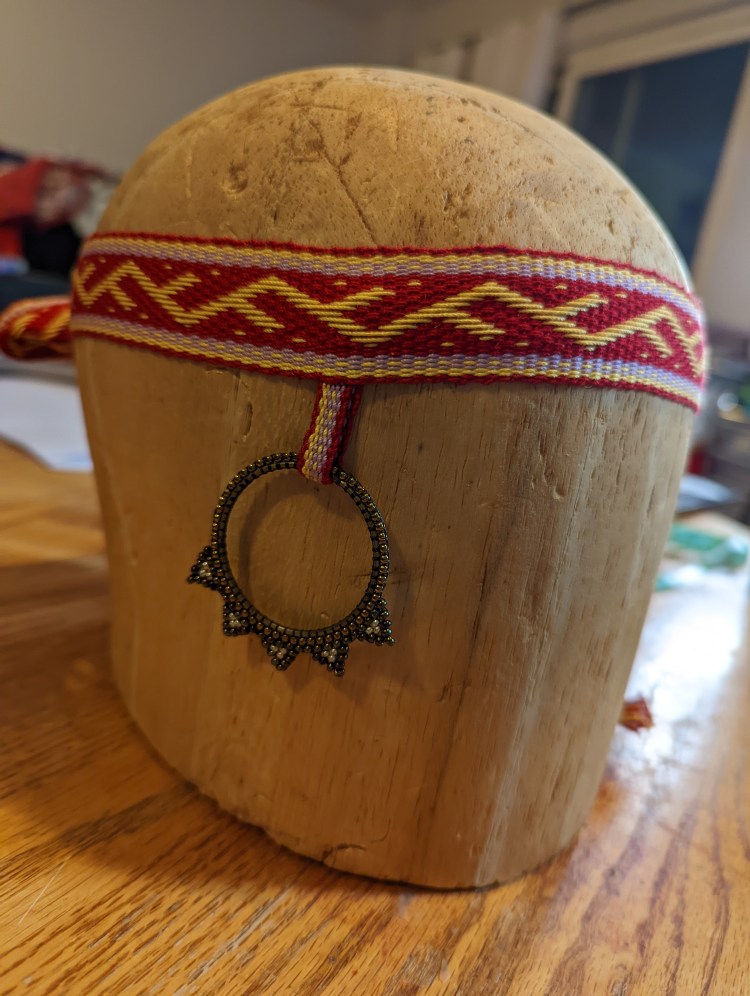
Replica of temple rings with seed beads
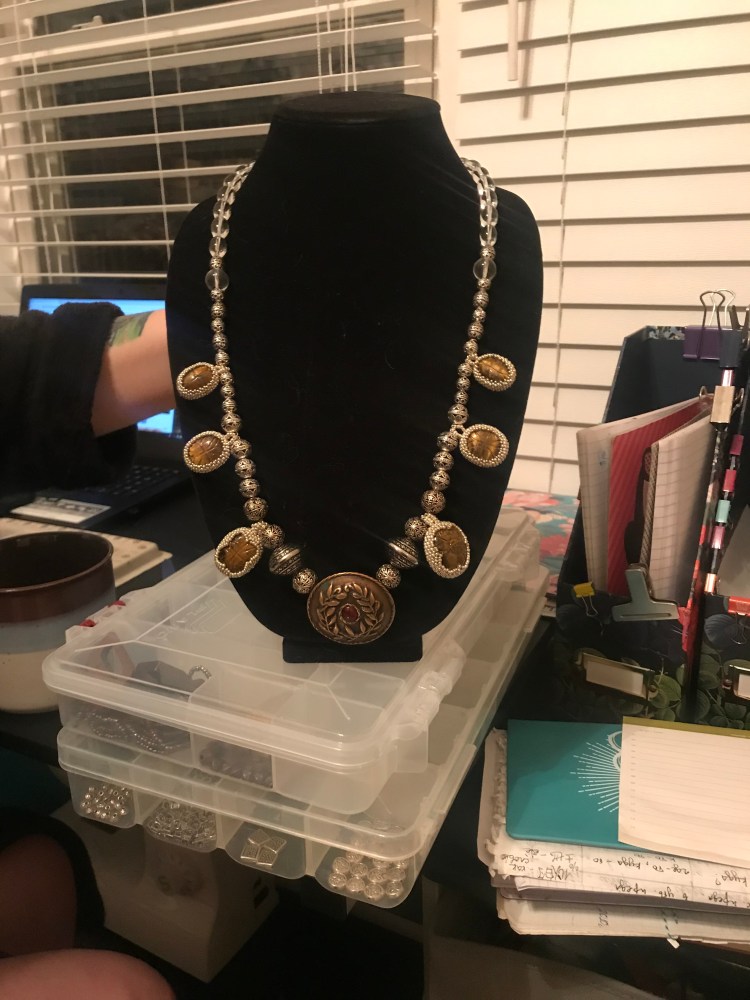
The iron age Laurel necklace.

Golden thistle pendant.
Some of these items are pure LARP, and they bring joy to my heart because they were delivered as presents to dear people, and I see them wearing them. That is what makes my Dream.
 Phoenix Safe Place
One thought on “Beadwork and reenactment”