
Maslenitca is probably the second time I have been excited as a child in the year. The First one is New Year. From a historical perspective, those two celebrations are similar.
This year I will be able to share this experience with others at the Kingdom of Atlantia festival Ymir, which will take place in North Carolina, Barony of Windmaster Hill. I was lucky enough to celebrate two important things on the same day – MAslenitca and my seventh anniversary in the SCA game.

Boris Kustodiev. Maslenitca. 1916
Enough sugar-sweet emotions, Helga. What is Maslenitca?
Maslentca is a traditional folk celebration in the eastern Slavic culture. The equivalent of this celebration can be found in many other cultures, including the Catholic church – Mardi Gras, which was taken from pagan cultures in Europe to involve traditions to a new faith.
In the pagan culture, Maslenitca is a celebration of the spring coming, a solar equinox. This outs the celebration at the end of march and not in February-early March as it is celebrated in the modern days due to ties to the Orthodox church Easter and great lenten.
According to the research, ancient slavs celebrated Maslenitca by making bread flapjacks based on water, herbs, and buckwheat to make it red to represent the sun. It was baked or fried.
The more bread was made and eaten, the reacher will be the harvest. There is a theory that Slavs would celebrate God Veles (Volos), the God of livestock. Later this God will be assumed by Saint Blaise in the Orthodox religion.
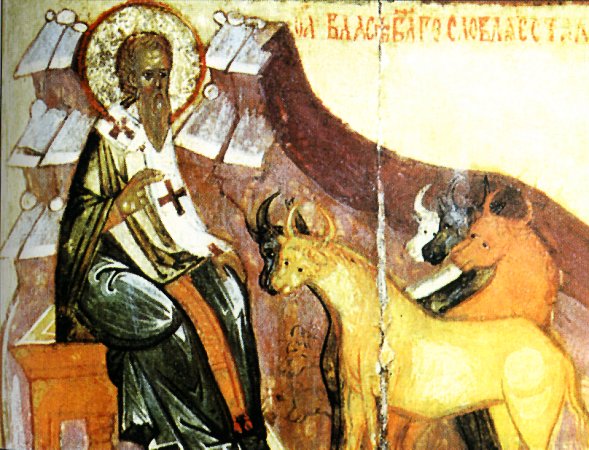
Saint Blaise. Russian icon (fragment). 15th century.
During the celebration, Slavs would burn the sandman of the “Winter” to “born new,” and ashes would be spread among the fields for a better harvest. Also, they would visit their ancestors’ graves to make celebrations there so the ancestors would influence the land to give more food during the short summer period.
Many unmarried people would participate in games and rituals to meet their half to start a family and reproduce. Yes, it is all about harvest, family richness, and well-being. All those parts were aligned with the fact that the village and nation shall survive and blossom with as many challenges as possible.
Another wonderful tradition is a fistfight. Fistfight till the death. Later it would become “till the first blood.” In pagan times, it would be defined as the best warriors, and many young men would strive to fight in those “battles,” even if it would mean death. Their blood could be possibly considered a gift to gods, along with various foods.
After Slvs was converted to an Orthodox religion (all at different times), the Orthodox church tried to get rid of the pagan celebrations, including maslenitca, as their celebration was in the middle of a great lenten. Fortunately, the only thing the church could do was modify some of the traditions and rituals.
Siegmund Freiherr von Herberstein provided the first description of Maslenitca in the west literature in the XVI century. He mentioned that the week is called “Syrnaya,” meaning cheese, and everyone in Moskowia eats dairy produce and blini (crepes).
In other eastern slavs cultures, along with blini, people cook vareniki, syrniki, and other traditional dishes in order to celebrate. Some cultures eat a lot of meats and other food available, but some do not.
Blini is the most essential part of maslenitca to this day. Every family has its own recipe for blini and dipping sauces, fillings, etc.
How do I cook and celebrate?
I prefer to cook mine on a hot skillet using sunflower oil:
- 5 eggs
- 1000 ml of milk (half cold, half warmed)
- pinch of salt
- pinch of soda
- 1 tablespoon of sugar
- flour (to make butter close to a consistency of heavy cream)
- add some oil to the butter
Use a skinny skillet for ease of flipping.
Once done, eat it hot. Dip in sour cream mixed with sugar or melted butter. You can dip it in jam or condensed milk if you want something more extravagant. Share with all the neighbors!
Celebrate the spring!

References
T. A. Agapkina. “Mythological basis of Slavic folk calendar. spring-summer cycle”. 2002
S. B. Adonyeva. “Sandman. project principles of folk practices.” 2008
B. A. Rybakov. “Paganism of ancient slavs”. 1981
Siegmund Freiherr von Herberstein. “Notes about Moskowia”. XVI century.
N. Dubrovskiy. “Maslenitca.” 1870
T. N. Edelman. “History of the Feast. Traditions. Customs. Habbits.” https://www.youtube.com/watch?v=oPWhg2QBKrI&t=891s
 Phoenix Safe Place