
Introduction
Quite some time ago, I was challenged with a task – create towels for a knight’s vigil that a historically accurate for the future knight persona – Rus Woman, XII century.
This request came from a good person for a good person, and I certainly did not want to disappoint them. However, I had doubts I had the tools and skills available to me to fulfill their request. Yet, here we are. Those towels were completed 2 years ago, and it seems like they were like a lot (at least, I hope so).
And yes, I am pretty a procrastinator regarding blog posts.
Research
Period towels are a complicated subject. The problem is that few sources have been saved from pre-Christianity and even early Rus times.
Towels were used as an element of the ritual life – from birth to death, towels followed the Rus human from every social level. Every unique towel will have its own ornaments with specific meanings.
The towels would be very long; however, usually only 30-45 cm in width, it is possible because women would weave towels at home, and most looms were that width.
I found one of the examples in Rybakov’s books with the towel forms the Novgorod region XII century. This is the towel I used as a base for my embroidery. Very possibly, this towel was used during labor since it pictured the woman during birth surrounded by nature.

Embroidery is an even more complicated subject. Embroidery was a sacred ritual. All the elements had their own meaning and goal. The reason we know that those particular symbols were used for different purposes.
Since there was no specific purpose for knighting back in Medieval Rus, I decided to turn to the subject of birth. The new knight is born; I thought it was pretty symbolic.
Below are samples I found in different archeological books regarding the embroidery on the textile and based on them, I built my pattern for the first towel, which you can see in the section below.
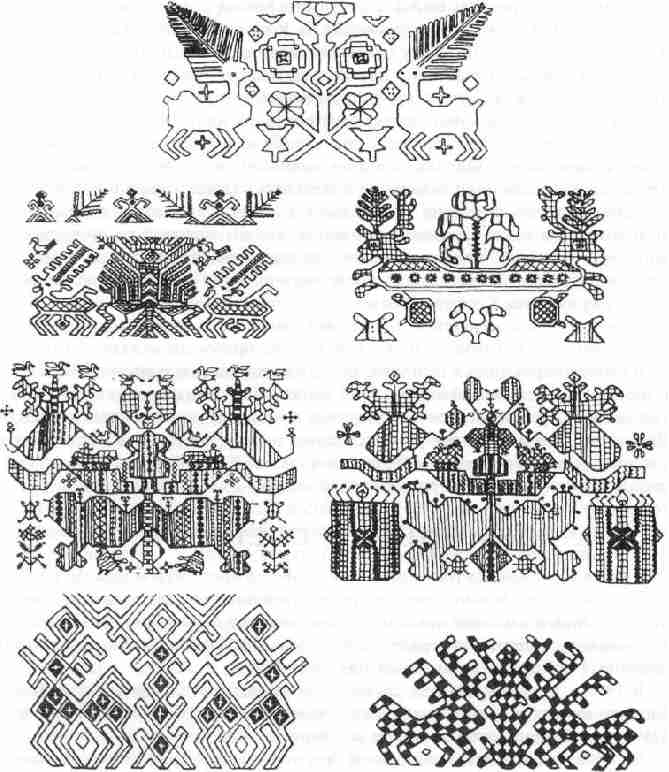
Moose and Deer in the Russian embroidery.

Embroidered Calendar with the Orthodox and Pagan celebrations

Meeting the Spring. In the center is Makosh, and on the sides are women on horses.
Surprisingly, during Christianity, people still used pagan motives and even put those towels to cover saints’ icons in the “red corner.” If one God doesn’t help, others will. Makes sense.
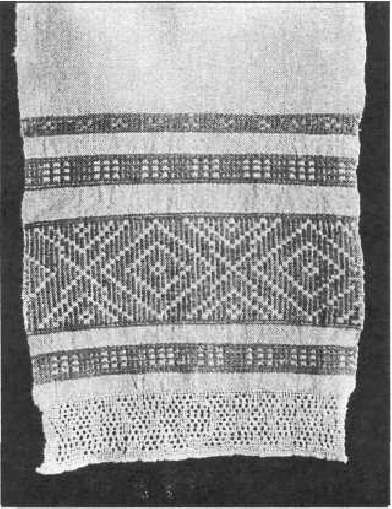
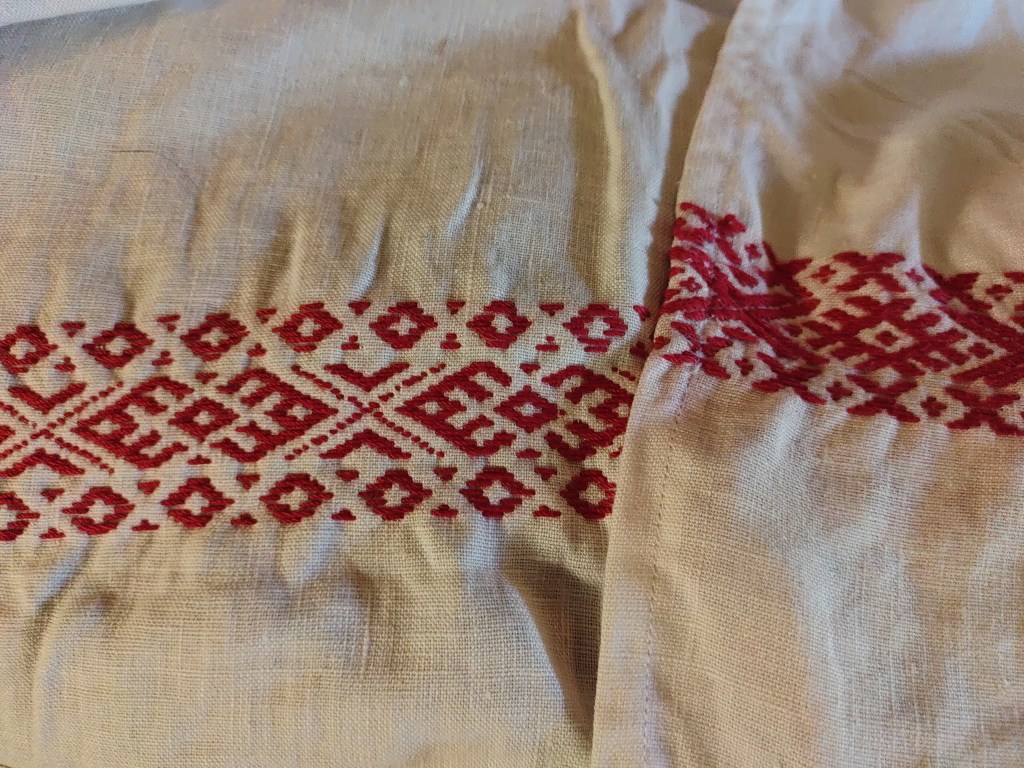
This is another example of the traditional towel. The towel is saved from a later century, but we can assume this technique could have been used long before that. The embroidery is done using a two-faced stitch (the same way I performed the embroidery on the traditional towel. Red cotton treads were used for embroidery on the white linen.
Period Embroidery towel
As you can tell, my research left me with several options. Hardcore embroidery with samples from period findings and weaved (or a replica of it done with embroidery), which is not quite period but traditional and what was wanted. I consulted with requesters, and it was decided to make both.
The first towel has embroidery on both sides, where two stags (just like found in my research) running away from a female figure which in the period sources used to be Makosh, the goddess protecting the family, helping women in birth, etc., that I replaced with a polearm female fighter.
In addition, I added the period motifs as a wrap-up.
I bought a natural color linen fabric and red linen thread for embroidery.

I washed the fabric and ironed it. I measured almost half the width and several yards in length (we going period) and cut out pieces.
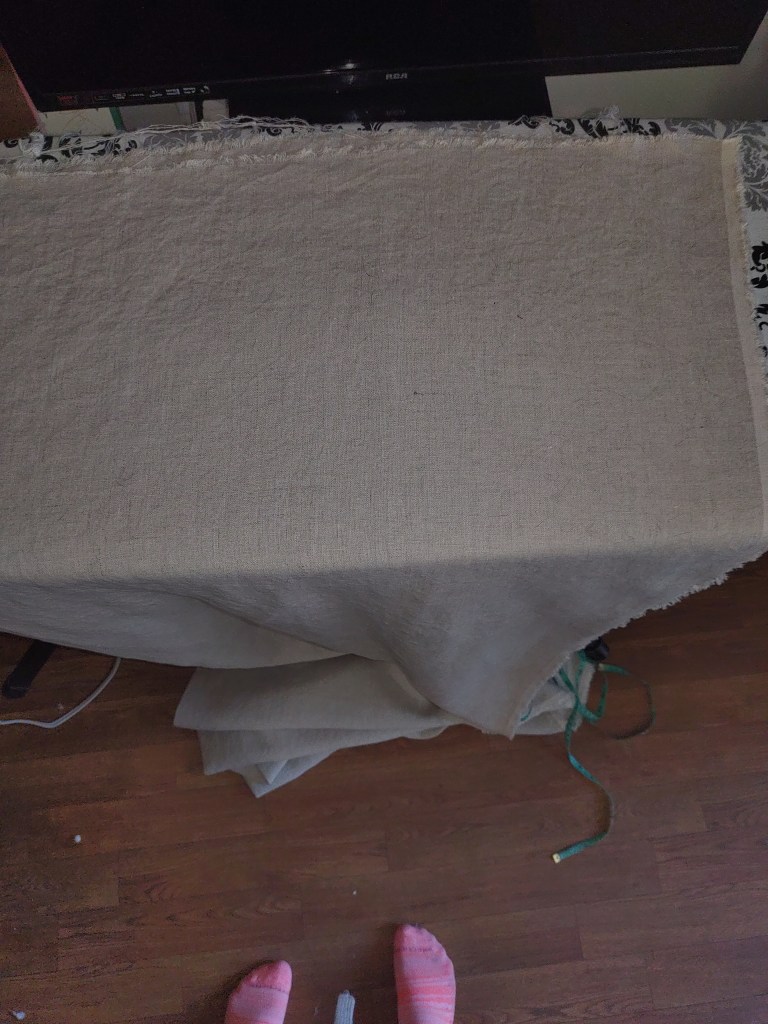
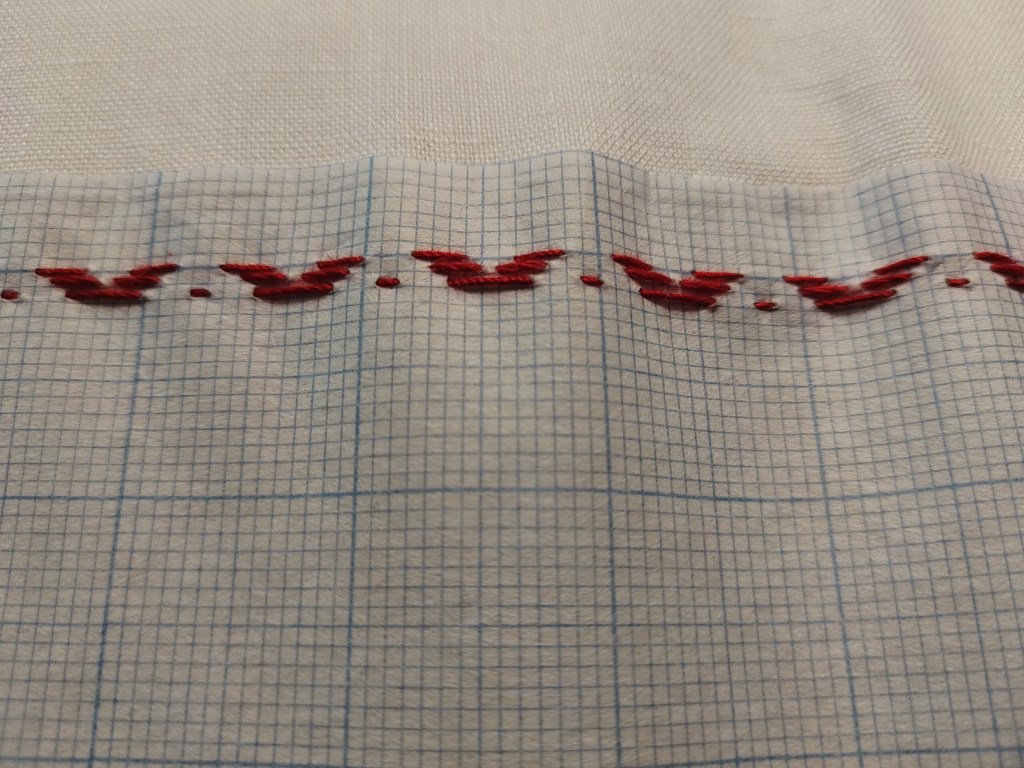
I have decided to use the rip-off paper for the embroidery machine instead of trying to do pencil work on the fabric. Also, this helped me ensure the embroidery elements were somewhat symmetrical.
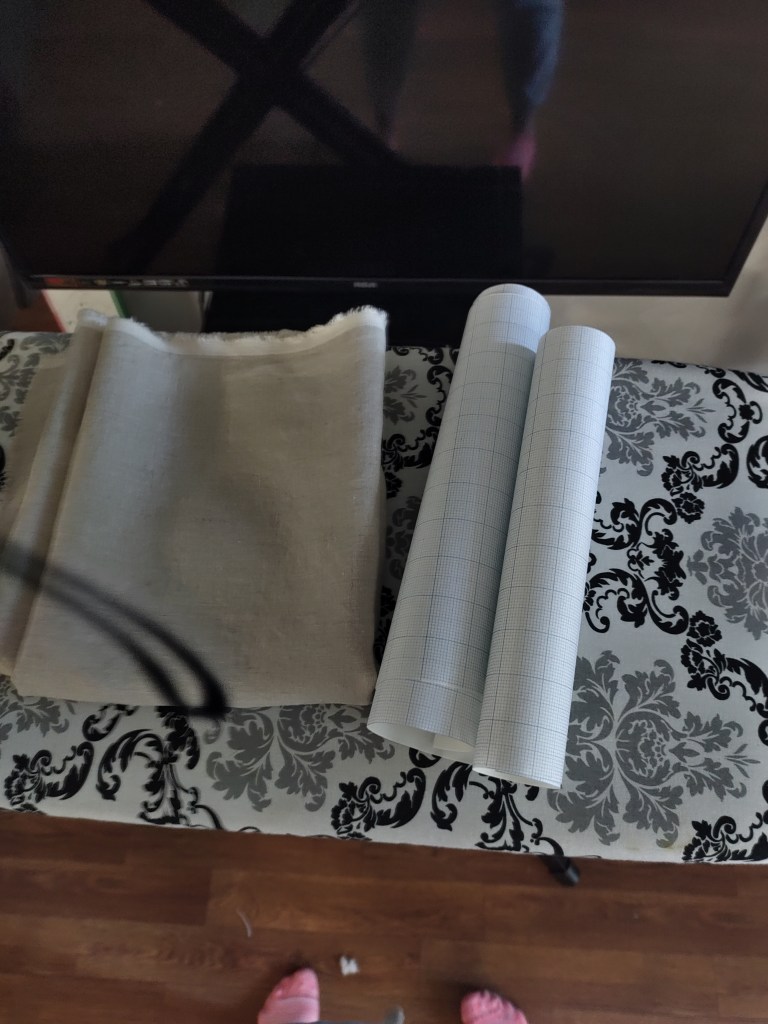

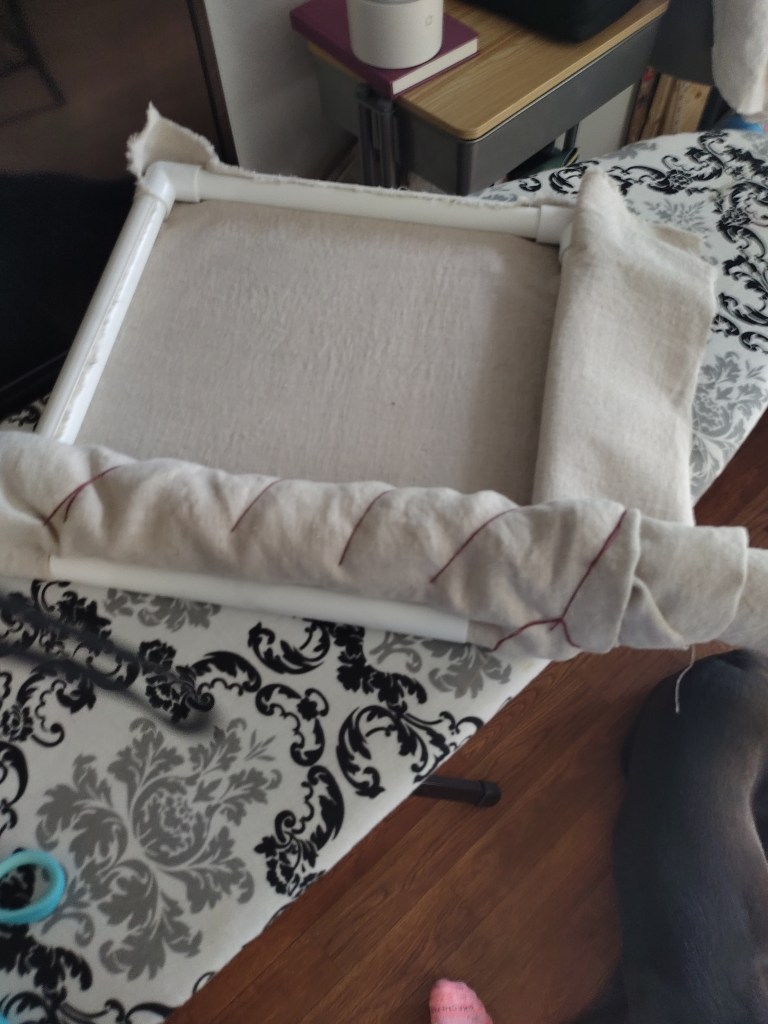


After the embroidery was finished on one side, I wet the fabric and ripped the paper. I’m not going to lie; it took me several hours to pick all the little pieces out.

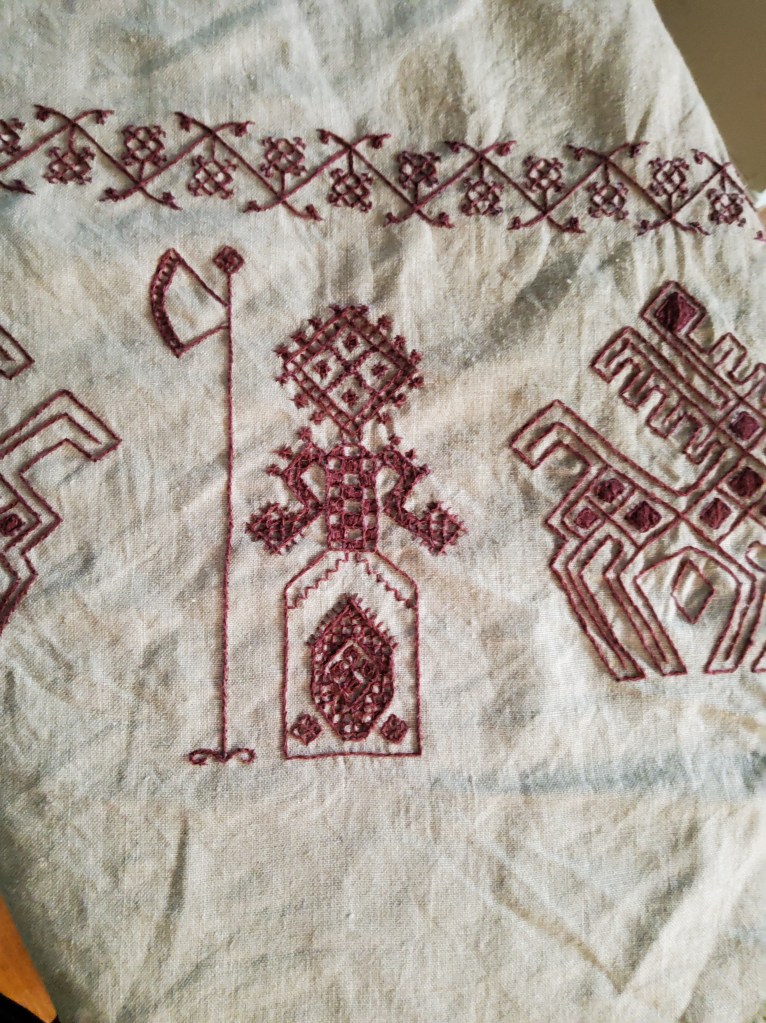
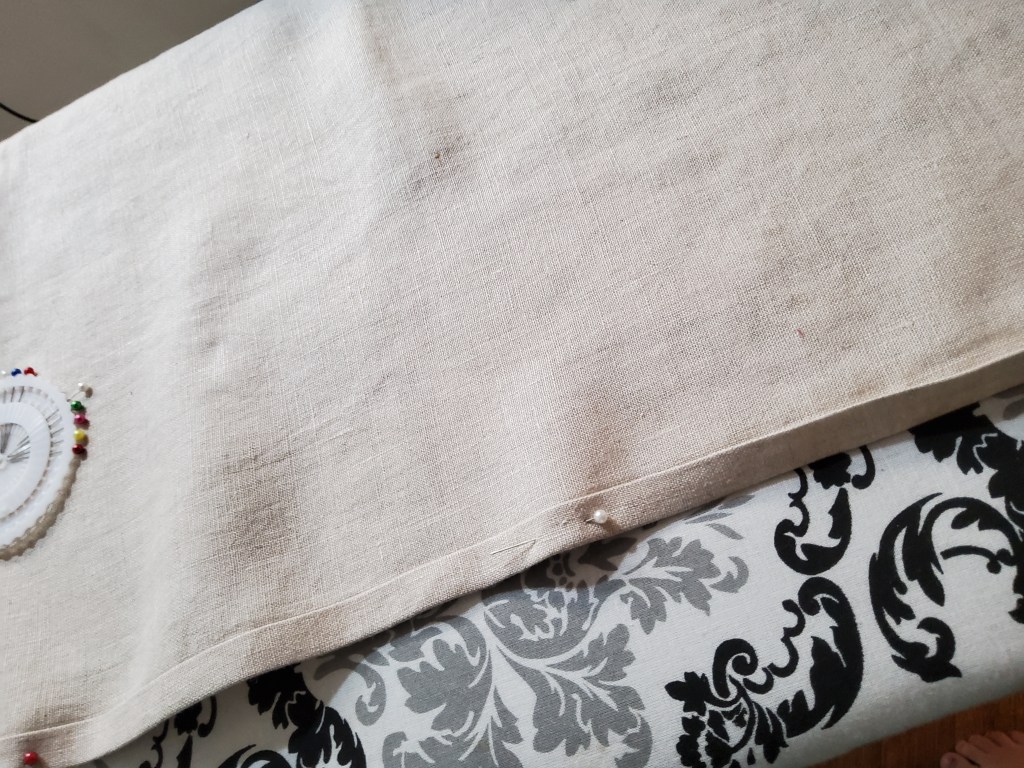
I repeated the process on both ends and then ironed the edges so I could hem them. I hemmed the edges with a running stitch using a grey-colored linen thread.
Weaving replica/embroidery towel
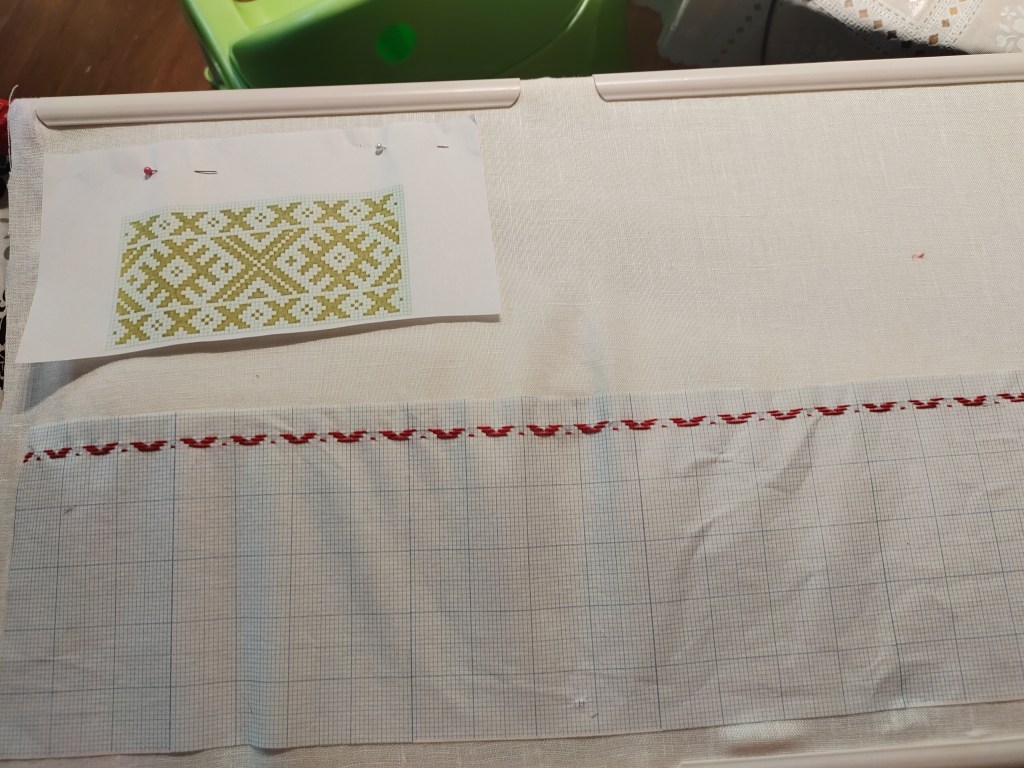
I decided to use white linen and red cotton thread for this towel. This is a TRADITIONAL towel, not a period one. Those towels were either embroidered or weaved using the pick-up technique. I did not have time to weave the towel, but this embroidery method is relatively fast.

References
T. N. Manushkina. “Ancient Rus Embroidery in the Zagorsk museum collection.” Album. 1983
B. A. Rybakov. “Ancient elements in Russian craftsmanship.” 1948
B. A. Rybakov. “Ancient Slavs Paganism.” 2002
 Phoenix Safe Place