
Garters
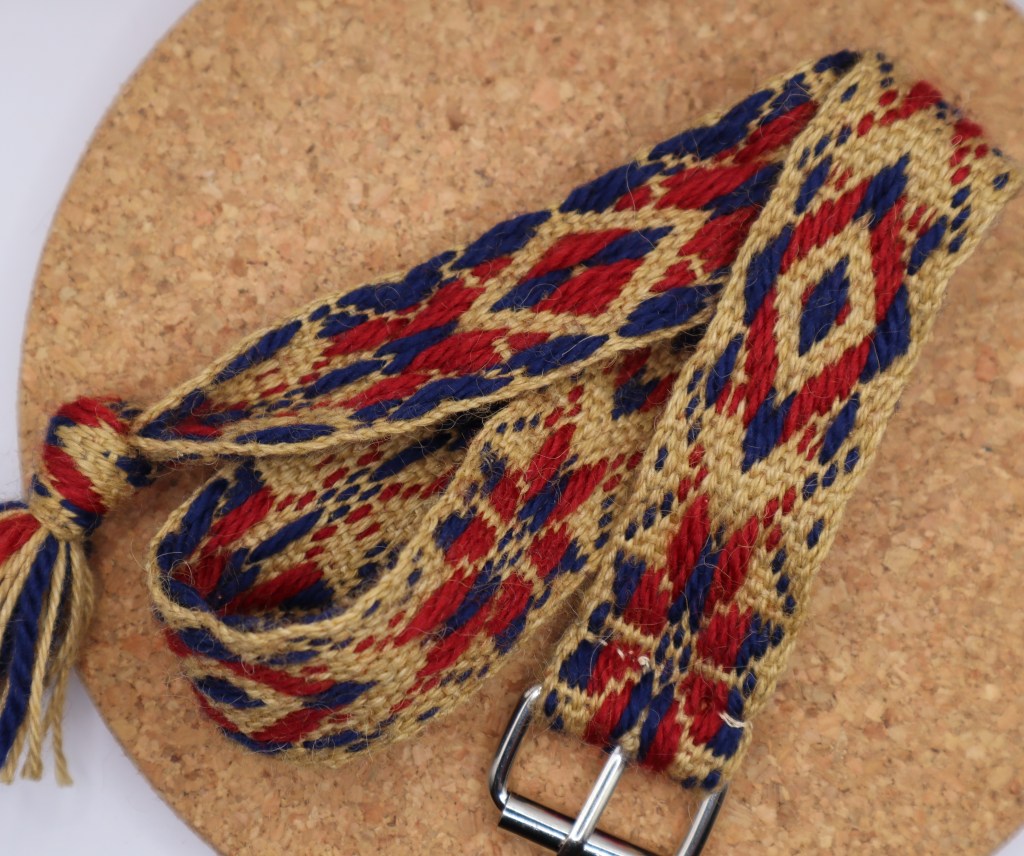
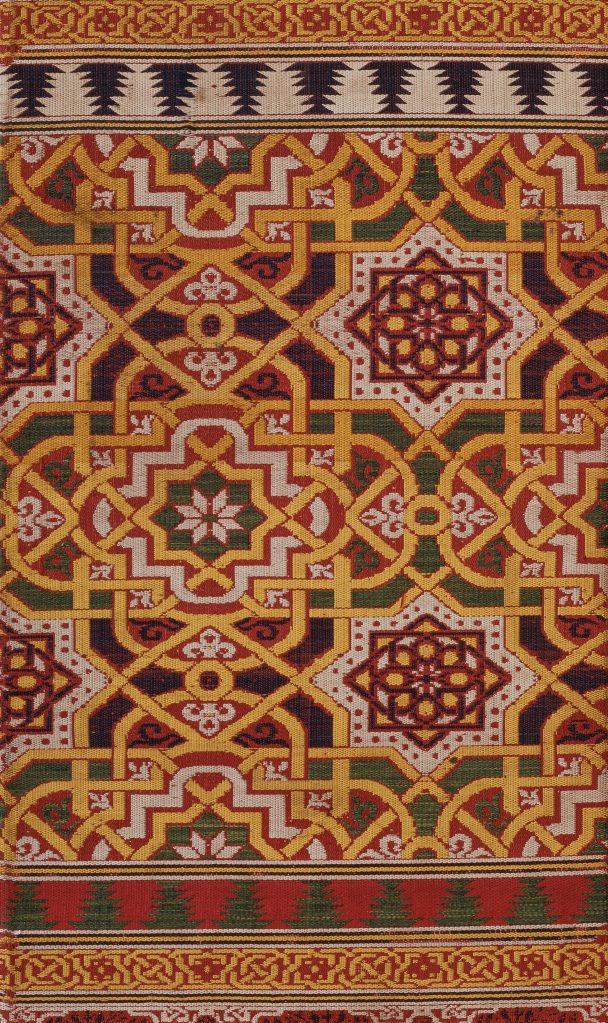

The garters were completed with Baltic weaving, using wool of different thicknesses. Silver buckles are modern made; I failed to find anything looking more period in the store around me.
From the historical perspective, garters are a piece of cloth or leather that holds the pants/socks on your leg. It is a supportive accessory worn by men mostly as their tunics got shorter, according to Cynthia Sebolt’s research.
If the garters were woven, they were done on the box loom using the card weaving method, opposite inkle/baltic weaving. This method gave much stronger textiles and was used more often in medieval Europe.
To learn more on baltic weaving, please follow my page; I will post my tutorials shortly.
Necklace and earrings
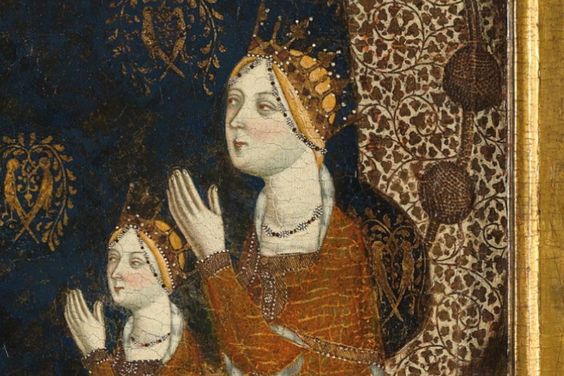
The necklace below was completed using the freeform weaving technique with the design inspired by the Lady of Villena portrait. I used artificial pearls (glass) in order to achieve a perfect form, which is hardly achievable with seawater pearls due to differences in sizes. I used smaller freshwater pearls to decorate the top and bottom edges. The large blue beads are from the Lapis stores. The entire necklace was weaved with a golden wire cord for sturdiness and to support the weight of the material.

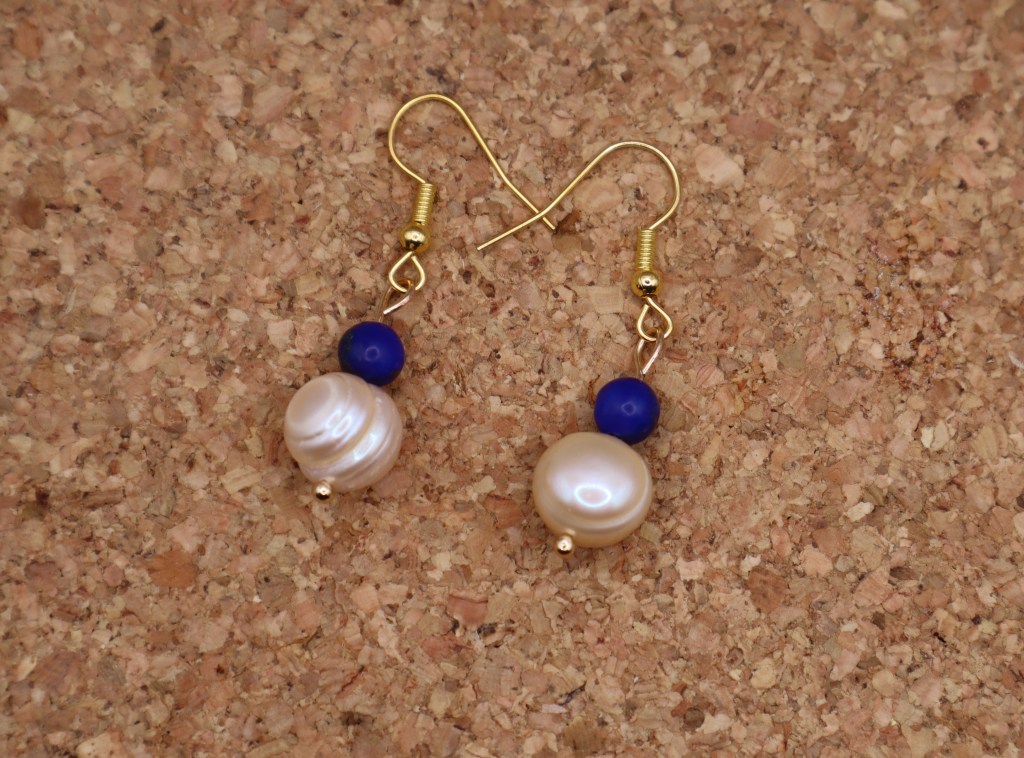
The earrings are completed with seawater pearls and small Lapis beads sitting on a gold cord with gold shvenza.
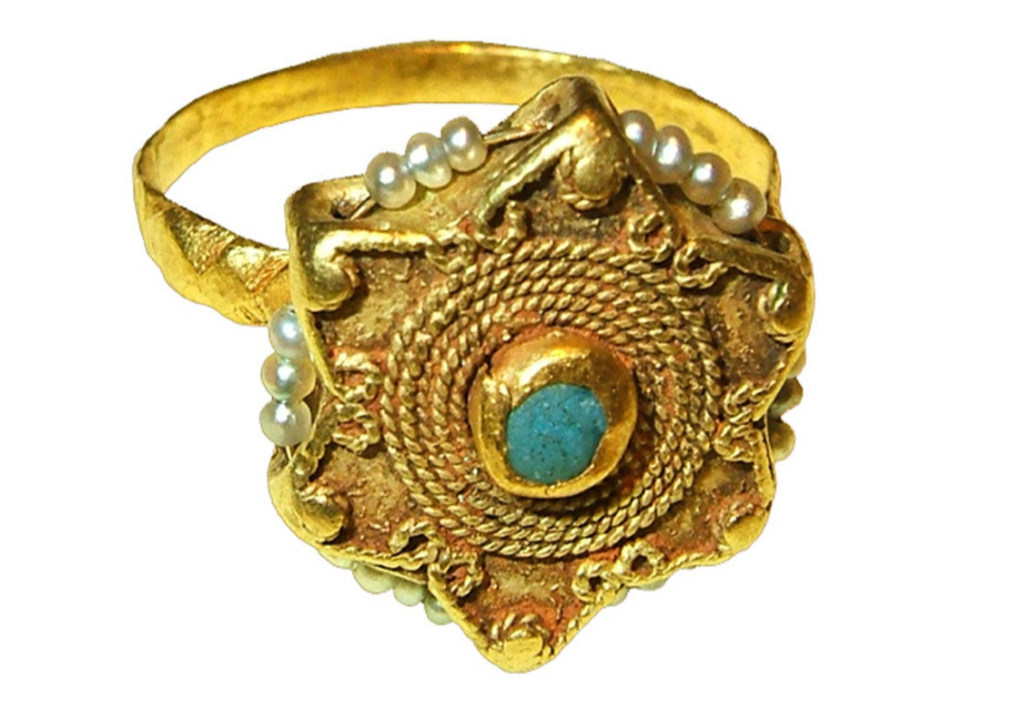
David star ring-necklace
The necklace was actually supposed to be a ring, but after the embroidery was complete, I realized it was too big to be worn on the finger comfortably.
For this piece, I used different shades of gold seed beads, amethyst cabochon, and freshwater pearls. It was embroidered with gold silk thread. For more details on embroidery – click here.
I used several techniques of seed beads embroidery and completed the edges with a gold cord to cover the extra material.

Conclusion
While I was collecting information to come up with a design, I realized that Spain of the XIII-XIV centuries was a culture pot. Everything from European to Arabic and Jewish cultures was involved together. What would be the better representation of that than the gifts to their Majesties from their court, made by a mixed mutt (yours and only)?
References
Real Academia. https://dbe.rah.es/biografias/13535/juana-manuel
Fatimid Ring. https://www.1stdibs.com/jewelry/rings/more-rings/fatimid-ring/id-j_64250/?
Medieval Islamic Textiles in Iberia and the Mediterranean. https://maxvanberchem.org/en/16-histoire-de-l-art/68-medieval-islamic-textiles-in-iberia-and-the-mediterranean
Arab Weavers. https://abegg-stiftung.ch/en/collection/sa2020/
Cynthia Sebolt. Red and Black Wool Garters from Late Fourteenth Century England. 2015 https://www.academia.edu/25642326/Red_and_Black_Wool_Garters_from_Late_Fourteenth_Century_England_by_Cynthia_Sebolt
 Phoenix Safe Place
One thought on “Spanish accessories”