
Overview
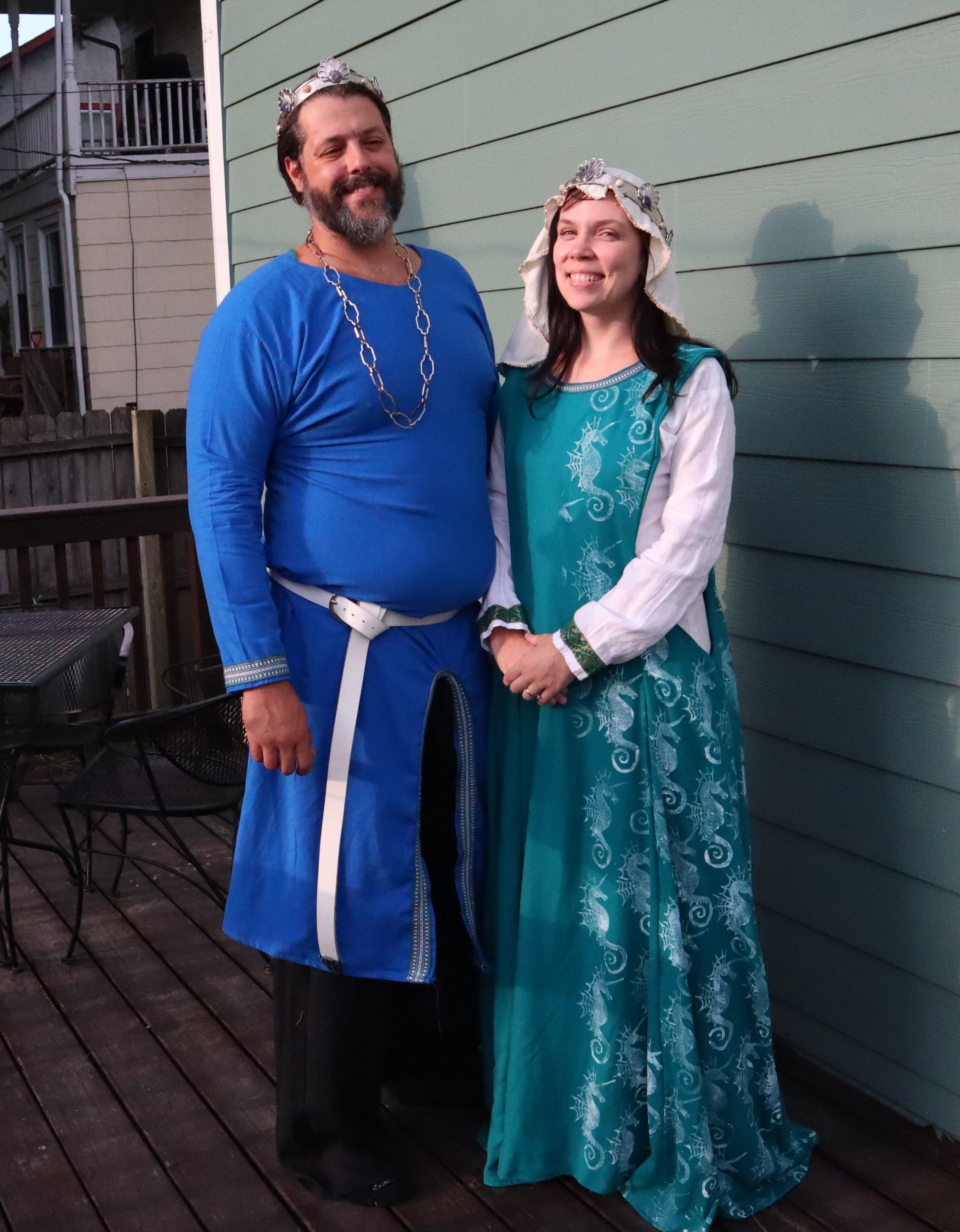
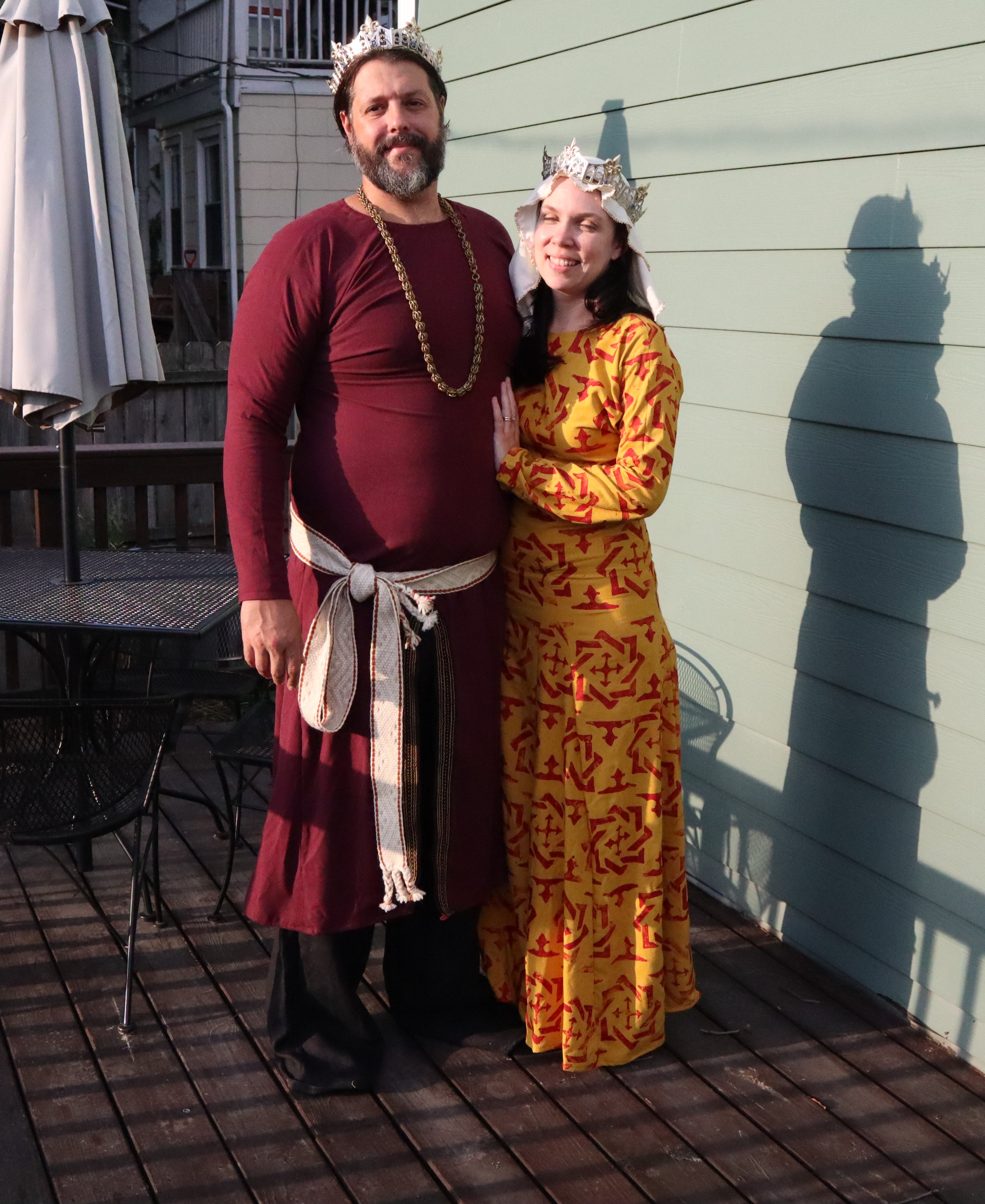
Continue talking about the big project for Their Royal Highnesses. since their themed reign is focused on the Spain XIV century, I was up to the challenge to make matching outfits for them along with accessories.
I have chosen to make two sets of clothes, the same tunic pattern for His Highness and different dress styles for Her Highness. Along with that, I made some necklaces for Her Highness, Lady Genevote la Feseresse made Her majesty a beaded veil, and Mistress Finnech inghean Labhrainn made A/B pattern trim for their outfits.
I also made a woven white belt for His Highness.
Jewelry
Necklaces
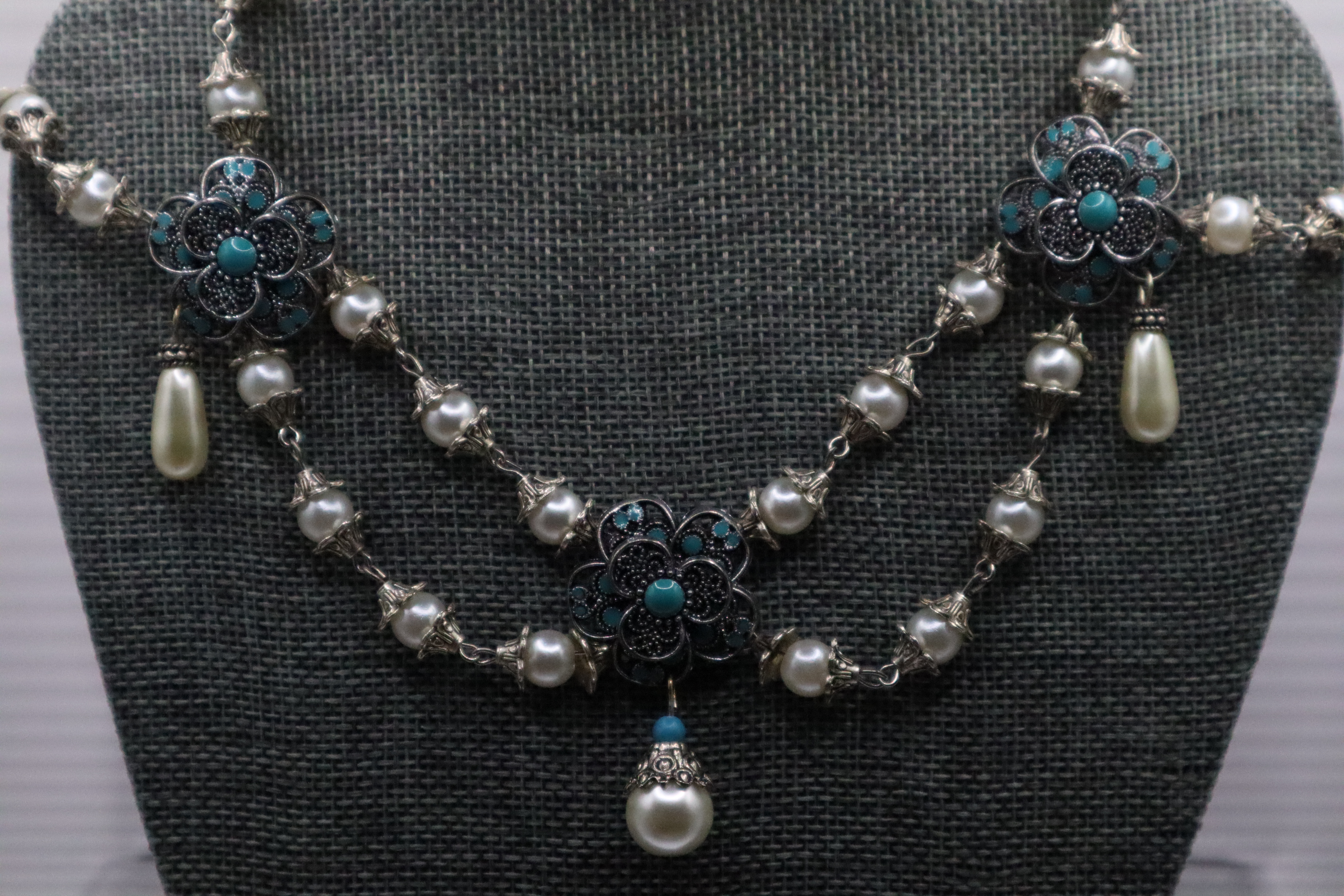
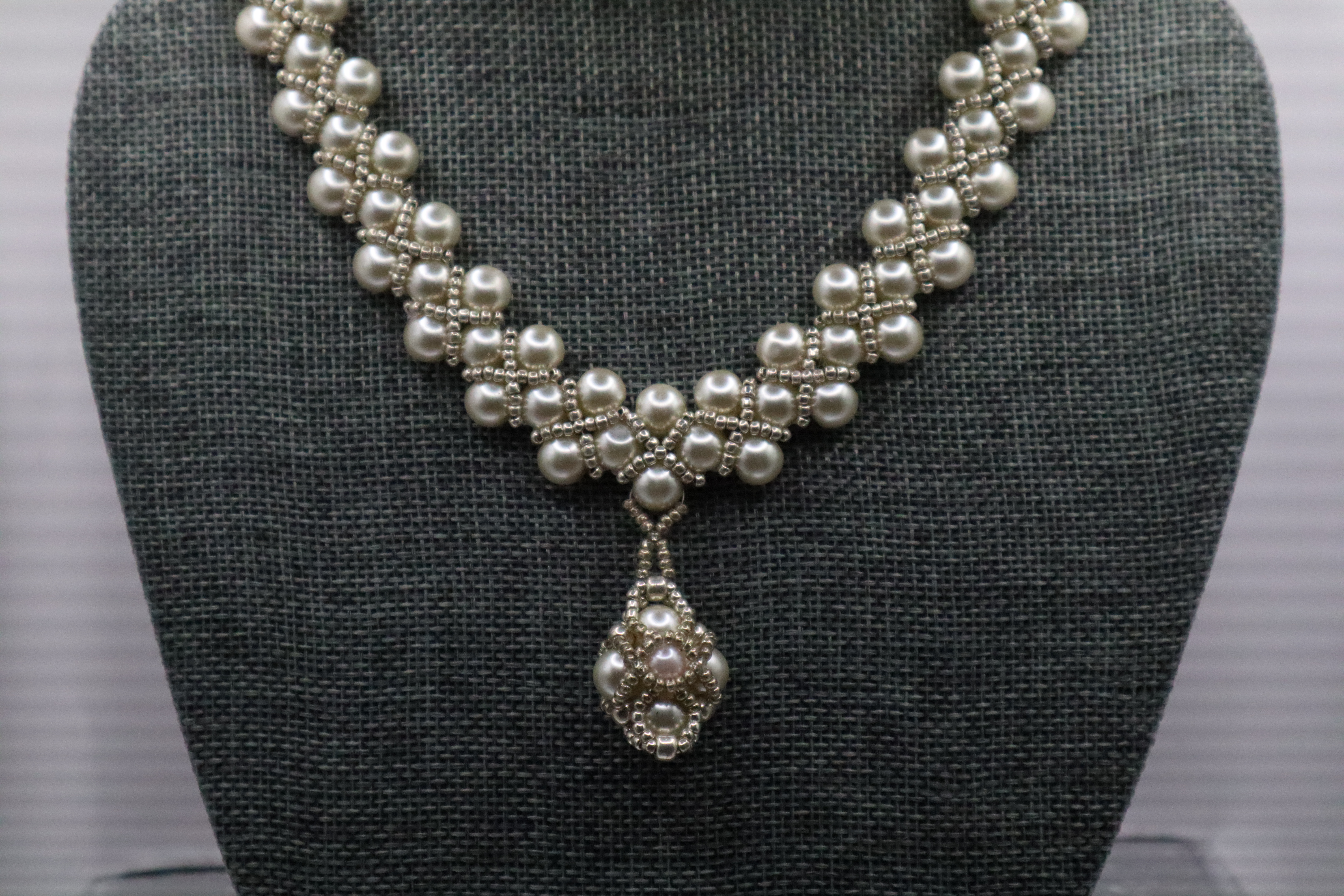
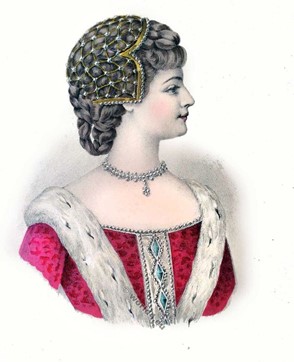
Those necklaces are replicas of visual representations of the necklaces in different parts of Europe during a given period of time (XIII-XIV century). even though one of them is french, nothing would stop a rich noblewoman from having one – trading is a thing.
Both necklaces use artificial pearls.
The first necklace was simply made by using silver wire, pendants, and beads (pearls) to build a pattern.
Another necklace is the replica of the French necklace replica from the XIII century, to which I added some of my artistic vision.
Belt
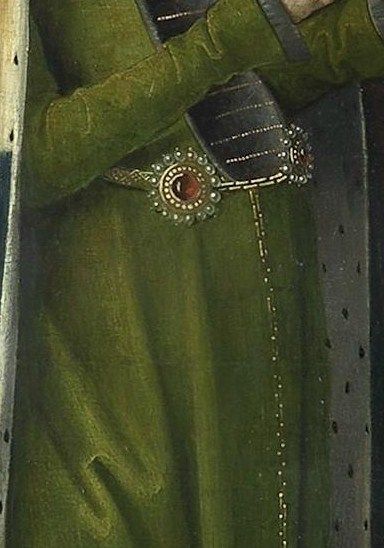
The last piece of jewelry is the replica of the belt made using the beading embroidery with cabochon techinque (click here to find more). For the belt part of this piece I used the rip provided by Mistress Finnech. I think it looks quite close, do you?

Woven Belt
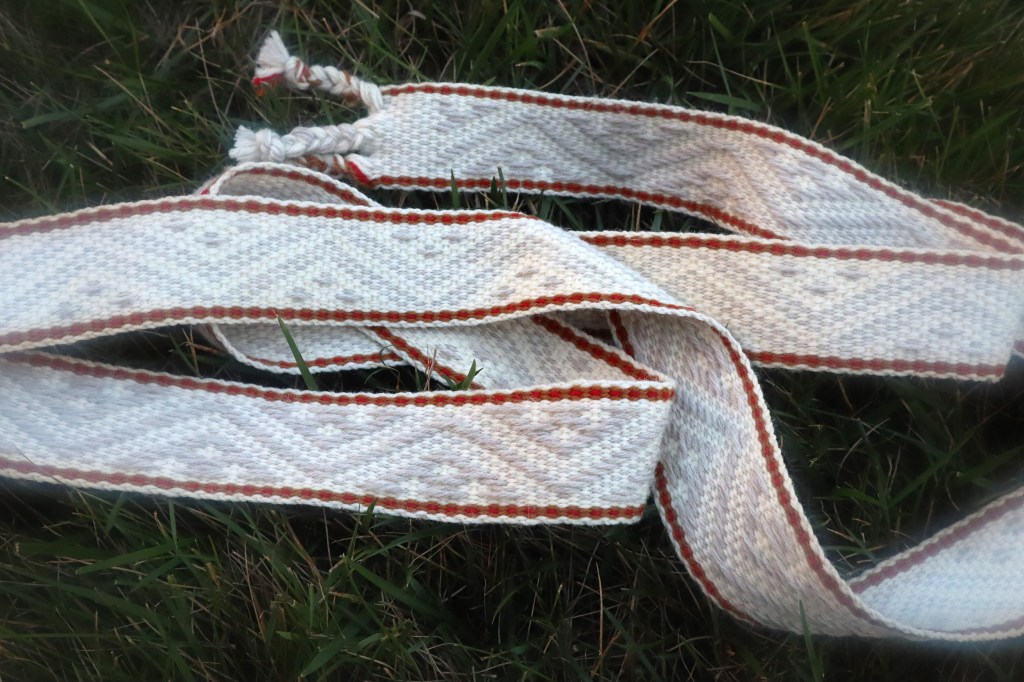
The belt Design was inspired by the Three Stars, and it was easily adopted by the Baltic weaving.
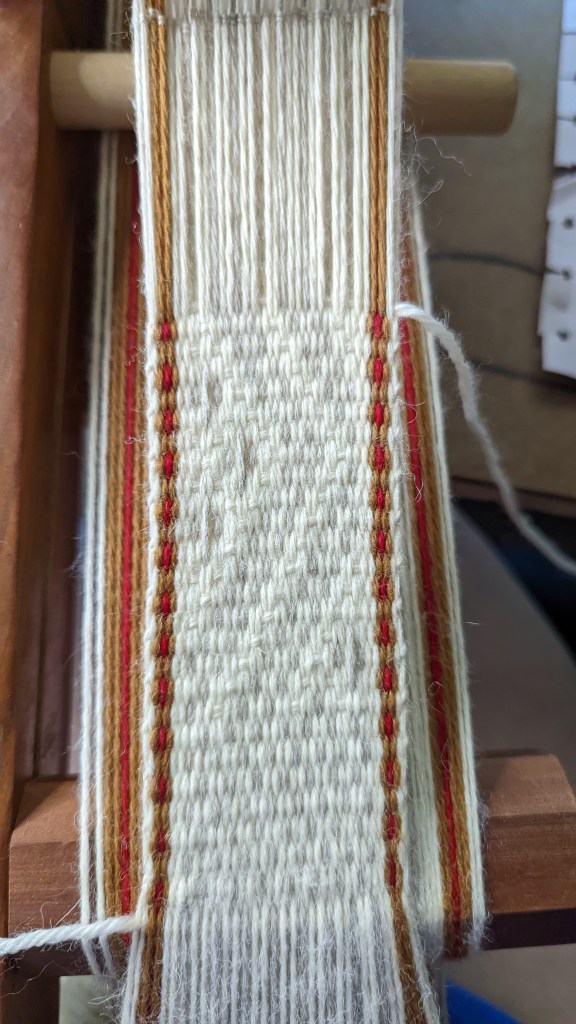
For the belt, I used new wool of white, red, rust gold, and grey colors. Red and gold colors were used for a simple A/B pattern on the edges to imitate the gold knight’s chain and red color as one of the heraldry colors of His Highness.
I set up the medium inkle loom and used its full potential for the length (around 4 yards).
Dresses
The dresses were requested to be gothic style, which means tight. I decided to tweak a T-Tunic pattern a little. I made the neckline wider and the waistline lower. I did not use any buttons on the sleeves, which would be period, but I have a “thing for buttons” and try to avoid them as much as possible. Instead, I made sleeves tight and ensured the widest part of the palm could go through.

Sideless dress
Sideless dress is another period type of dress available for the selected time period. Below is an example.
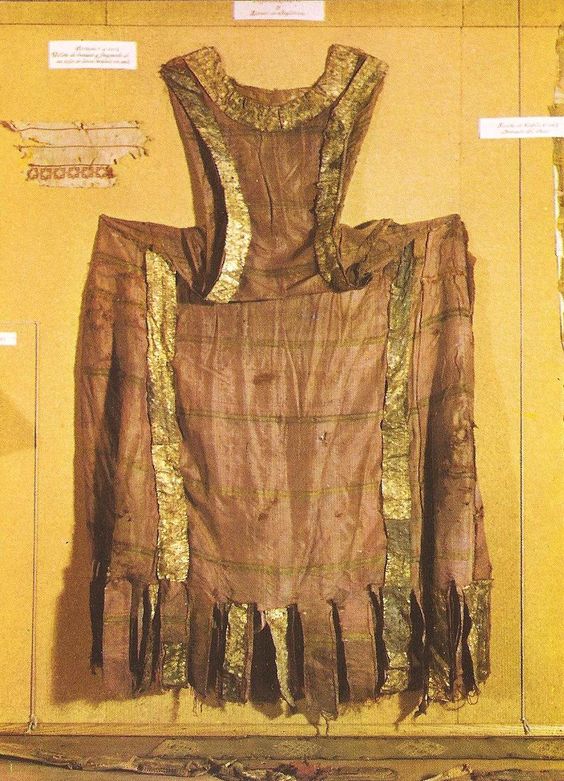
I made the white t-tunic (just like in the first case) for the undertunic and then used one of the available patterns for the green overdress. On the neckline of overdressing, I used the blue A/B pattern trim provided by Mistress Finnech.
Fabric Printing
Fabric printing was selected since I did not have time for decent embroidery and trims. Also, because it is beautiful.
I run into issues – I have never done this before, and I am not even sure what I am looking at technology-wise. I turned to my dear friend, Baroness Ingegerd, and begged for help.
I have provided her with a design I found in my research. She magically made them digital and found Runa aff Ravenstorm made us blocks cut out of the wood. I am the luckiest, I know.
From here on, I would like to share the process that I was taught and documented for future times, but let me mention – most of the work was done by Inge.
- Fabric can be precut or not. I have precut and surged all of the pieces involved in dresses.
- Fabric shall be washed and thoroughly ironed.
- An eye can distribute the design, or you can draw the schema on the fabric with soap or chalk.
- Prepare flat and clean surface and lay out fabric clean.
- Mix Acrylic paint with Liquitex 1 to 1. there are plenty of other ways to do it, but we have selected this way.
- We also have tried the colors on the fabric scraps to make sure the color looks like it is planned.
- Evenly cover the block for printing with a thin layer of paint
- Put the bloc to a designed spot and ensure the pressure is evenly distributed.
- Hold down the fabric and pull the block up.
VOIS LA
Repeat and be happy with the result. And remember – A little mess is, period. Or at least that is what I am telling myself.
After the printing was complete, we had air dried, and then the hair blower dried the fabric. Once I got home, I used the drier on medium heat and dried the fabric once again for the die to settle.
Tunics
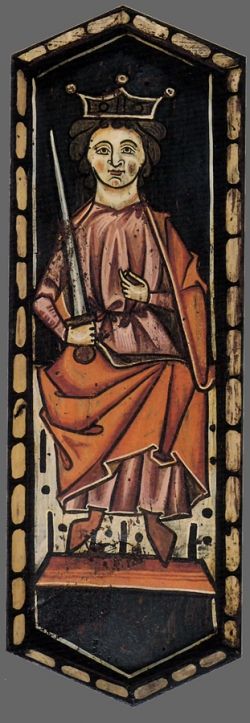
Due to the time constraints, I have decided to proceed with His Highness tunics without printing. However, I decided to attach some trim provided by Mistress Finnech.
Just like in the case with Her Highness, I decided to adjust the t-tunic pattern so popular around Europe and made the extended variation of those tunics with a cut on the front and the back. I proceeded with blue linen and Bordo color linen for both tunics and the trims. That color scheme matched the best.
 Phoenix Safe Place
2 thoughts on “Spanish Royal Outfits”