
Let me first tell you what I am even talking about.
Bead embroidery is a type of beadwork that uses a needle and thread to stitch beads to a fabric, suede, or leather surface. This is straightforward.
A cabochon, from the Middle French word caboche (meaning “head”), is a gemstone that has been shaped and polished as opposed to faceted. The resulting form is usually a convex (rounded) obverse with a flat reverse. Cutting Cabochon (French: “in the manner of a cabochon”) is usually applied to opaque gems, while faceting is usually applied to transparent stones. However, in history, you can meet clay and stones of any form and glass cabochons in different forms and sizes.
What can you use it for, in historical reenactment, you ask me? For so many-many-many things, I’ll answer.
First, you can use it for embroidered clothes decorations. This would be the most historically accurate way to implement this craft. This can be used for gloves, hats, dresses, bags and even book covers décor.
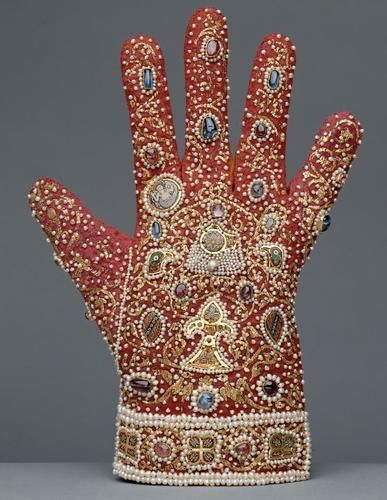
Sicilian glove XIII century (approx)

Fragment of ancient Russian sewing with precious stones, pearls, and gold. The Zagorsk Museum.
Books decoration is another great way to use cabochons and implement embroidery.
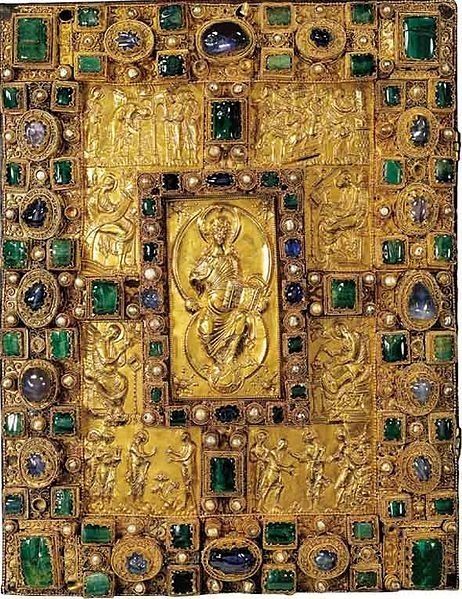
Codex Aureus of St. Emmeram
The other way to use embroidery with cabochons is to imitate metal work involving stones. Below are the examples of period pieces and my interpretations using that witch crat that I will share with you today.
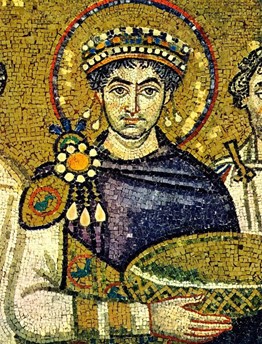
San Vitale (Ravenna) – Mosaic of Iustinianus I
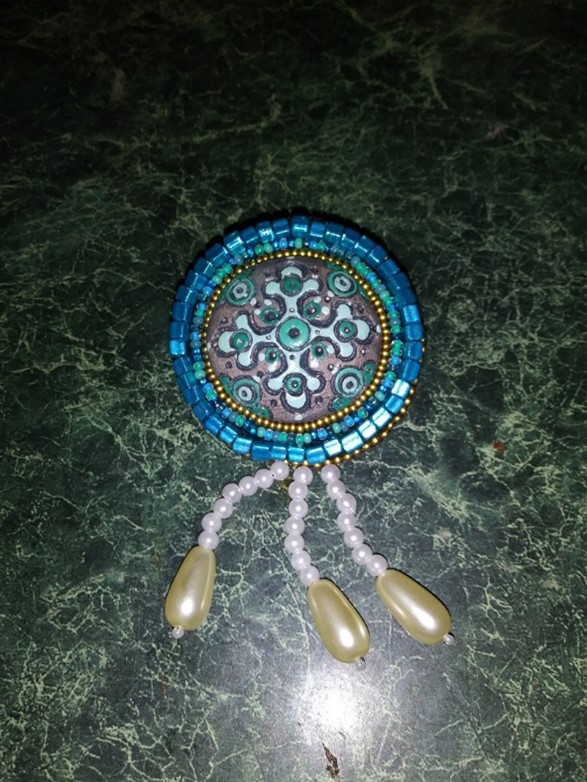
San Vitale (Ravenna) – Mosaic of Iustinianus I Broche – creative replica

Belt Buckle, 550–600, Visigothic, Metropolitan Museum
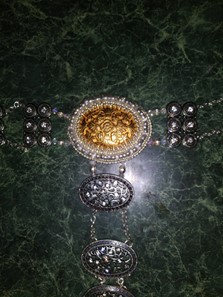
Belt Buckle, creative replica

Artist unknown (Flemish). Marguerite de Bavière, ca. 1363-1424. Oil on wood; dimensions unknown. Lille: musée de l’Hospice Comtesse. Photo (C) RMN-Grand Palais / Jacques Quecq d’Henripret. Source: L’Agence Photo RMN.
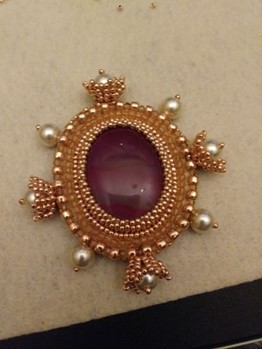
Hat accessory creative replica
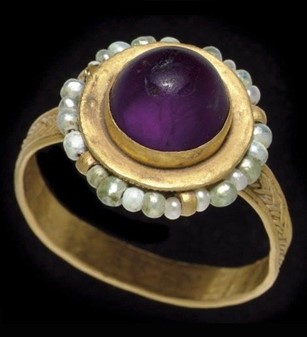
Byzantine garnet openwork ring, 8th centur
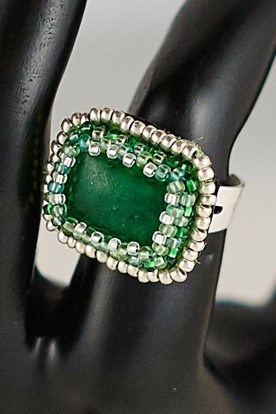
Ring creative replica
So, let us see an example of how to make this magic
We will be making the ring, just like the one above. It is straightforward and yet will give you a sense of the craft, and you will be able to repeat it on more significant pieces. Also, embroidering around the oval and round parts is the easiest way to start, and I would be the happiest if you could continue this journey because it is fantastic.
What would you need?
Materials:
- Seed beads of various sizes. I prefer to work with sizes 10/0 and 11/0 for the base and then use size 15/0 for the top part to “close” a Cabochon
- Different beads, pearls, and crystals for outer décor
- Ring base
- Pieces of felt
- Piece of leather
- Thread (silk or synthetic beading thread)
- Cabochon
- glue
Tools:
- Scissors
- Bead needle
- Pliers
- Hoops (optional)
Process:
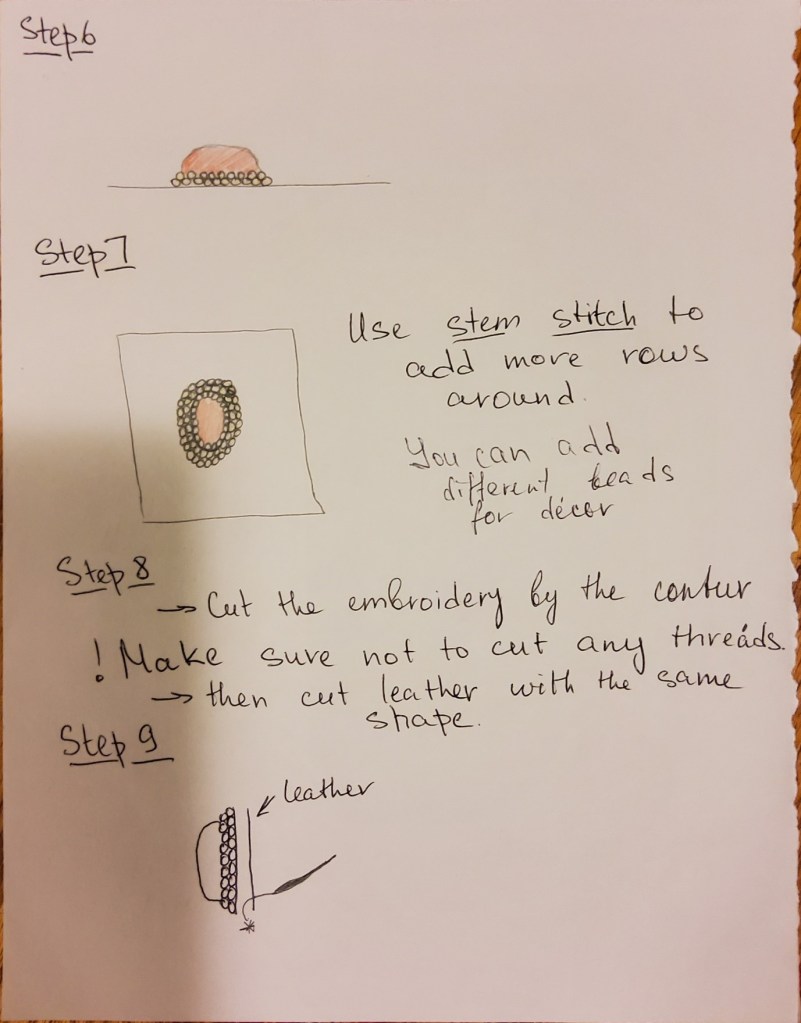
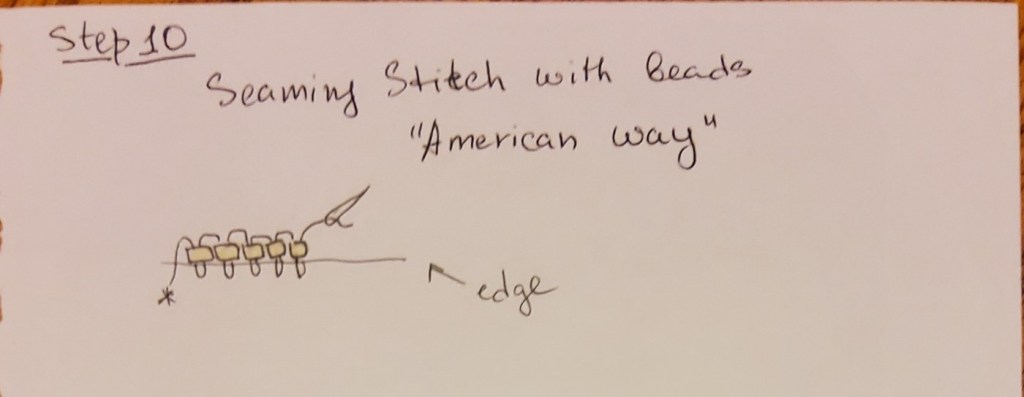
You can follow the awesome doodles I draw to understand a process or view my video series on how to make the piece.

 Phoenix Safe Place
4 thoughts on “Embroidery with Cabochon and how can I use it for History reenactment.”